

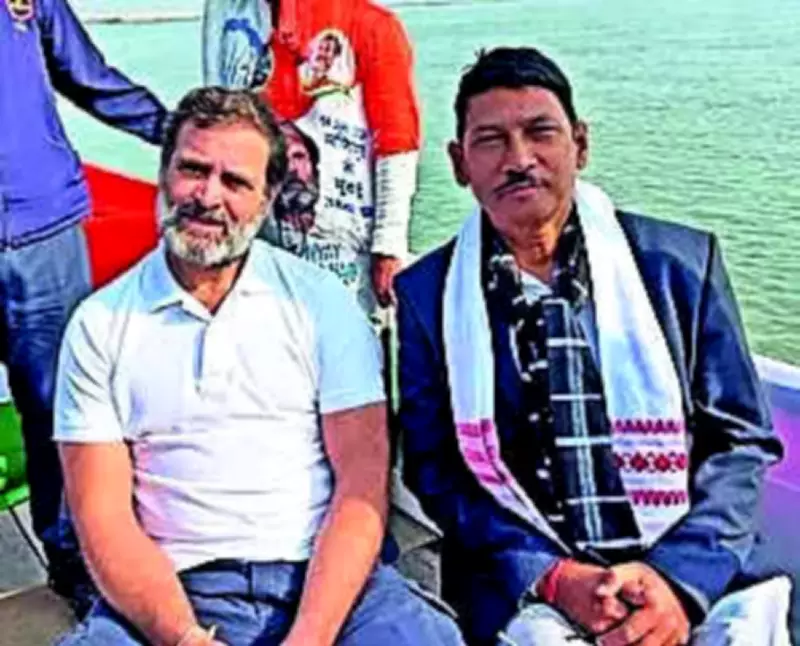
Congress Faces Internal Rebellion in Assam's Titabor Constituency
The historic Titabor constituency in Assam, once the epicenter of state politics under the Congress government and represented by former Chief Minister Tarun Gogoi from 2001 to 2016, is now witnessing a significant internal rebellion within the Congress party itself. This development marks a dramatic shift in the political landscape of this traditionally Congress-dominated region.
MLA Resigns and Files as Independent Candidate
Sitting MLA Bhaskar Jyoti Baruah made a bold move on Monday by officially quitting the Congress party and subsequently filing his nomination papers as an Independent candidate. This decisive action came after the Congress high command denied him the party ticket for the upcoming elections, a decision that has sparked considerable controversy and debate within political circles.
Baruah, who is widely considered to maintain close ties with current Chief Minister Himanta Biswa Sarma, believes this association may have contributed to his exclusion from the Congress ticket. However, he was quick to clarify the nature of his relationship with the CM, stating emphatically that his interactions were solely focused on ensuring the proper implementation of government schemes for his constituents rather than seeking any personal benefits or favors.

MLA's Statement on Corruption and Local Pressure
In an exclusive statement to The Times of India, Baruah expressed his disappointment with the party's decision, highlighting what he described as the "most unfortunate part" of the situation. "Despite being 100% corruption-free and despite my best efforts to implement government schemes as an opposition MLA, I was denied a ticket," he revealed, underscoring his commitment to ethical governance and public service.
The former Congress MLA further explained that immense pressure from local residents in his constituency played a crucial role in his decision to defy the party high command. "There was immense pressure on my family and me from the locals of my constituency to defy Congress high command's decision, and that is why I collected my nomination papers yesterday and filed them today," Baruah stated, emphasizing the grassroots support that motivated his independent candidacy.
Allegations of Caste-Based Politics
Baruah pointed to another significant reason behind his ticket denial: what he described as Congress's alleged tendency to think along caste and community lines when making political decisions. This criticism sheds light on the complex social dynamics at play in Assam's political arena and raises questions about the party's candidate selection process in diverse constituencies like Titabor.
Political Landscape and Competing Candidates
The BJP has strategically fielded former All Assam Tea Tribes Students' Association (AATSA) president Dhiraj Gowala from Titabor, recognizing the constituency's status as a Congress bastion with approximately 22% tea tribe voters. This demographic consideration makes the tea tribe vote bank a crucial factor in the upcoming electoral battle.
In response to this challenge, Congress sources indicate that the party has nominated tea tribe leader Pran Kurmi as their candidate, aiming to secure the support of tea garden voters and maintain their traditional stronghold in the region. This move demonstrates the intense competition for the influential tea tribe community's allegiance in Titabor's political equation.
Historical Significance and Current Implications
Titabor's political significance cannot be overstated, having served as the representative constituency for former Chief Minister Tarun Gogoi during his tenure. The current rebellion within Congress ranks signals potential vulnerability in what was once considered an impregnable party stronghold. As Baruah's independent candidacy introduces a new dynamic to the electoral contest, political observers are closely monitoring whether this internal dissent will fracture traditional voting patterns or create unexpected alliances in the constituency.

The unfolding situation in Titabor reflects broader tensions within Assam's political landscape, where shifting allegiances, demographic considerations, and internal party dynamics are reshaping traditional power structures. With multiple candidates now vying for influence in this historically significant constituency, the upcoming election promises to be a closely watched political battleground with implications extending far beyond Titabor's borders.





