

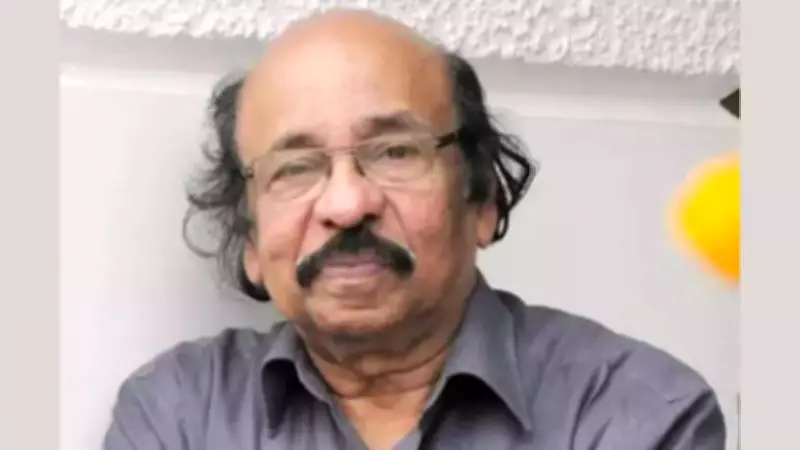
CPM Launches Conciliation Bid with Pro-Left Writer Satchidanandan Amid Political Tensions
In a significant political development, the Communist Party of India (Marxist) on Tuesday initiated efforts to pacify prominent writer and Sahitya Akademi president K Satchidanandan, whose recent critical remarks had caused considerable embarrassment to the ruling Left Democratic Front government just ahead of crucial assembly elections in Kerala.
High-Level Meeting at Writer's Residence
CPM district secretary K V Abdul Khader and Sahitya Akademi vice-president Asokan Charuvil visited Satchidanandan at his residence in what was widely perceived as a conciliation attempt. Following their discussion, both leaders attempted to downplay the controversy, claiming that Satchidanandan had clarified his statements were general observations rather than specific references to Kerala's political situation.
According to Khader and Charuvil, the writer also alleged that certain media outlets had distorted some of his remarks during their reporting. However, despite these attempts at damage control, Satchidanandan maintained a firm stance on his original position regarding the dangers of political continuity in power.

Satchidanandan Stands Firm on Democratic Concerns
The writer explicitly stated that he stood by his warning about the perils of repeatedly returning the same political formation to power. Drawing from personal experience, he referenced witnessing the degeneration of the communist party in West Bengal as it remained in power for extended periods.
"I have seen the degeneration of Bengal communist party firsthand," Satchidanandan emphasized. "As the party came to power repeatedly, more corrupt and power-hungry individuals flocked into its ranks. Dictatorial tendencies can firmly grip any party that remains in power for prolonged periods. This phenomenon isn't limited to CPM but applies to any political organization."
He clarified that his concerns weren't about advocating for automatic changes every five years but rather highlighting the broader dangers to democracy when any political formation maintains power for excessively long durations. This statement came in response to criticisms from former finance minister T M Thomas Isaac.
Rejecting Feudal Comparisons and Cyber Attacks
Satchidanandan strongly rejected suggestions that he shouldn't criticize the government that provides his salary as Sahitya Akademi president, dismissing such notions as "reminiscent of reactionary feudal thinking that equates the relationship between Akademi president and government with that of landlord and tenant."
The writer also addressed the cyber attacks launched against him by Left sympathizers, stating that "the virtual fools' paradise of cyber crowds failed to comprehend the implications of my message, which became completely lost in the verbal bullfight on this Lilliputian platform."
Mixed Reactions from Political Quarters
General Education Minister V Sivankutty took a harder line, alleging that Satchidanandan had criticized without conducting proper homework or analyzing political ground realities. In contrast, CPI leaders adopted a more conciliatory approach toward the writer's remarks.
CPI state secretary Binoy Viswam and Minister K Rajan stated that the LDF considers Satchidanandan a genuine ally whose criticisms would be received with utmost respect. They assured that there would be no attempts to stifle dissenting voices from friends of the Left like Satchidanandan.
Opposition Support for Critical Voices
Meanwhile, opposition leader V D Satheesan continued to support criticisms by both Satchidanandan and activist-writer Sarah Joseph against the CPM-led government. Satheesan asserted that these cultural leaders were actually giving voice to the opinions held by a vast majority of people across Kerala.
The entire episode has highlighted the delicate balance within Kerala's political landscape as elections approach, with cultural figures increasingly becoming vocal about democratic concerns and political accountability.






