The political landscape in Karnataka has taken a complex turn as Dalit legislators within the Congress party are mounting significant pressure for recognition of their contributions to the party's sweeping victory in the 2023 assembly elections. While Chief Minister Siddaramaiah and his deputy DK Shivakumar have called a temporary truce in their ongoing tussle for the top post, the party high command now faces additional demands from influential Dalit leaders.
The Third Force Emerges
Dalit functionaries have positioned themselves as a powerful third front in the ongoing leadership discussions. They argue that their organizational work played a decisive role in consolidating SC and ST votes under the guidance of Congress president Mallikarjun Kharge, himself a prominent Dalit leader. The community constitutes approximately 24% of Karnataka's population, making their electoral influence substantial.
Home Minister G Parameshwara and Public Works Minister Satish Jarkiholi have emerged as key figures representing Dalit and tribal interests respectively. Both leaders have positioned themselves as counterweights to Deputy Chief Minister DK Shivakumar. Jarkiholi has even sought to replace Shivakumar as the Congress state president and represents a faction calling for three or four deputy chief ministers to ensure fair representation for major communities including OBCs, Lingayats, and minorities.

Election Performance Strengthens Their Case
The Dalit legislators' demands are backed by impressive electoral results. Kharge reportedly tasked Parameshwara with overseeing 36 SC-reserved constituencies, of which Congress won an impressive 32 seats. Similarly, Jarkiholi handled campaigning in 15 ST-reserved seats, with the party securing 14 victories. Their supporters claim they successfully consolidated Dalit votes even in general constituencies beyond the reserved seats.
As Jarkiholi pointed out, "Only a couple of functionaries are taking the credit, but many others are directly and indirectly responsible for the win. Credit should be given where it is due." This statement reflects the growing sentiment among Dalit leaders who feel their contributions have been overlooked in the current leadership discussions.
Complex Leadership Dynamics
The question of who should lead Karnataka has become increasingly complicated. A senior party functionary revealed, "The party high command has stepped in to resolve the issue, and the breakfast meeting of the CM and DCM was the first step. However, it is no longer between Siddaramaiah and Shivakumar. There are other stakeholders, and the high command must figure out a way to keep them all in good humour."
Tensions had escalated last week after Shivakumar's camp reiterated claims of a chief minister seat-sharing pact in which Siddaramaiah was expected to hand over the post by mid-November. The dispute spilled into caste politics, with the Vokkaligara Sangha and community pontiffs backing Shivakumar, while Ahinda leaders aligned with Siddaramaiah.
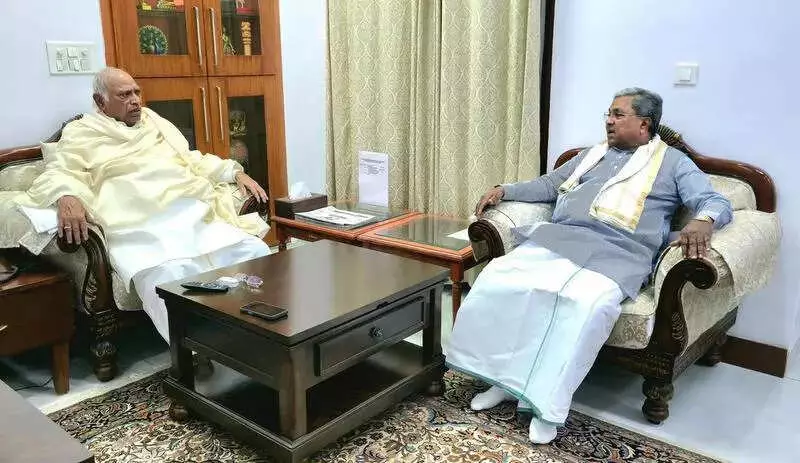
Concerned by the public display of discord, the central party leadership directed both leaders to meet and talk. Following Saturday's breakfast meeting, both Siddaramaiah and Shivakumar stated they would abide by whatever decision the high command takes. Siddaramaiah is expected to visit Shivakumar's residence for lunch this week, and both may be summoned to New Delhi for further discussions.
Shivakumar attempted to downplay the tensions on Sunday, stating, "There is no difference of opinion between the CM and me. We will work together. Our aim is the 2028 elections. We both will go to Delhi if a call comes from the high command."
Competing Claims to Victory
Supporters of Siddaramaiah argue that he rightfully earned the chief ministership by leading the party's 2023 campaign and consolidating votes from minorities and OBCs. Meanwhile, Shivakumar's supporters counter that Congress surged to victory under his stewardship as KPCC president.

The Dalit functionaries have added a new dimension to this debate, forming a pressure group soon after the government was sworn in. Their presence in New Delhi last week, at the peak of the stand-off between Siddaramaiah and Shivakumar, signaled their determination to be heard. With several members indicating Mallikarjun Kharge as their preferred choice for chief minister, Rahul Gandhi met Kharge and his son, minister Priyank Kharge, in the national capital.
These developments have added a fresh twist to the political imbroglio in Karnataka, ensuring that the Congress high command faces a multi-dimensional challenge in resolving the leadership question while keeping all factions satisfied ahead of the crucial 2028 elections.