Darjeeling's Political Landscape Transformed by Nepali Rap Revolution
In a striking cultural-political fusion, the poll-bound hills of Darjeeling are witnessing an unprecedented musical movement. Taking direct inspiration from Nepal's Prime Minister and rapper Balen Shah, local political parties have unleashed their own Nepali rap tracks to capture the imagination of young voters. The songs 'Parivartan' (meaning change) and 'Torch Light Balne Bela Aayo' (It's Time to Light the Torch) represent a seismic shift in election campaigning, blending contemporary beats with potent political messaging.
The Balen Shah Effect: From Kathmandu to Darjeeling
The phenomenon traces its roots to Nepal's 2025 political awakening, where Balen Shah's revolutionary tracks 'Balidan' (Sacrifice) and 'Ma Nepal Haseko Dekhna Chahanchu' (I Want to See Nepal Smiling) became anthems for Gen-Z protesters. These songs fundamentally altered Nepal's political landscape, propelling Shah to become the country's youngest Prime Minister. Now, Darjeeling's political aspirants are adopting the same strategy to connect with their own youth demographic.
Ajoy Edwards' Rallying Cry for Transformation
Leading this musical charge is Ajoy Edwards, better known as the proprietor of Darjeeling's landmark Glenarys establishment. Edwards, who has established the Indian Gorkha Janshakti Front, has commissioned the track 'Parivartan' as his campaign centerpiece. Composed by local musician Gopal Mothay, the song serves as a powerful rallying cry for a generation hungry for political transformation.

The composition masterfully blends contemporary musical arrangements with themes of resilience, identity, and defiance. Edwards explained that the track aims to resonate with young voters who feel disconnected from traditional political discourse, offering them a medium that speaks their language both literally and culturally.
Bharatiya Gorkha Prajatantrik Morcha's Beacon of Hope
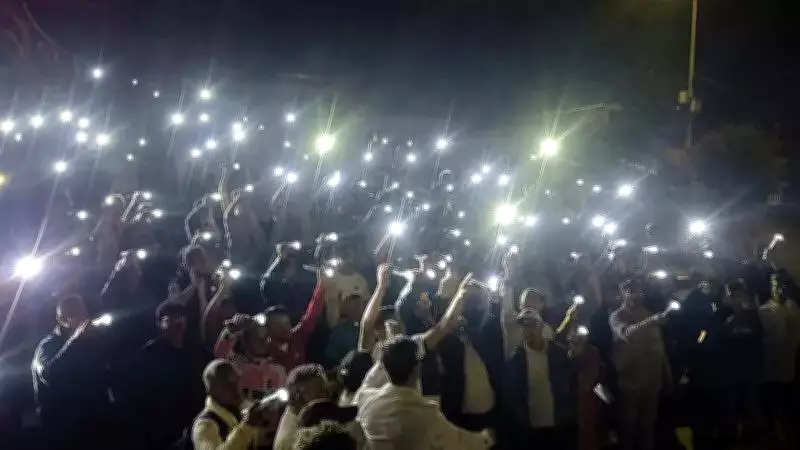
Not to be outdone, the Bharatiya Gorkha Prajatantrik Morcha, an ally of the Trinamool Congress, has released its own campaign anthem titled 'Torch Light Balne Bela Aayo'. The song strategically revolves around the party's election symbol, portraying it as a beacon of hope and progress for the hill region.
The lyrics deliver a clear political message, arguing against divisive politics and emphasizing that "the movement is neither about caste nor falsehood, but about truth and development." The track highlights tangible improvements in infrastructure, specifically pointing to better roads, enhanced healthcare facilities, and improved schools reaching grassroots communities.
BJP's Counter-Narrative Through Musical Critique
Adding another layer to this musical political battle, the Bharatiya Janata Party released its own rap song in 2026 focusing on what it describes as Trinamool Congress's "corruption" and misrule. While releasing the track on April 12, BJP representatives emphasized that "this is more than just music; it's a reflection of growing public anger" against the incumbent administration.
The Broader Implications for Political Communication
This emergence of Nepali rap as a political tool represents several significant developments:
- Cultural Resonance: By using Nepali language and contemporary musical styles, parties are connecting with the region's distinct cultural identity
- Youth Engagement: The strategy specifically targets Gen-Z voters who have shown increasing political awareness but traditional disengagement
- Cross-Border Influence: The direct inspiration from Nepal's political transformation demonstrates how political strategies now transcend national boundaries
- Message Amplification: Music provides an emotional and memorable vehicle for political messaging that traditional speeches often lack
As Darjeeling approaches its elections, these musical tracks have become more than campaign tools—they represent a fundamental shift in how political parties communicate with constituents. The success of this approach may well determine whether other regions with distinct cultural identities adopt similar strategies in future elections.

The phenomenon underscores how political communication is evolving in the digital age, where cultural relevance and emotional connection often prove more powerful than traditional policy statements. Whether this musical revolution will translate into electoral success remains to be seen, but it has undoubtedly changed the soundscape of Darjeeling's political discourse.