Dehradun's VIP Stretch Rajpur Road Descends into Daily Gridlock Chaos
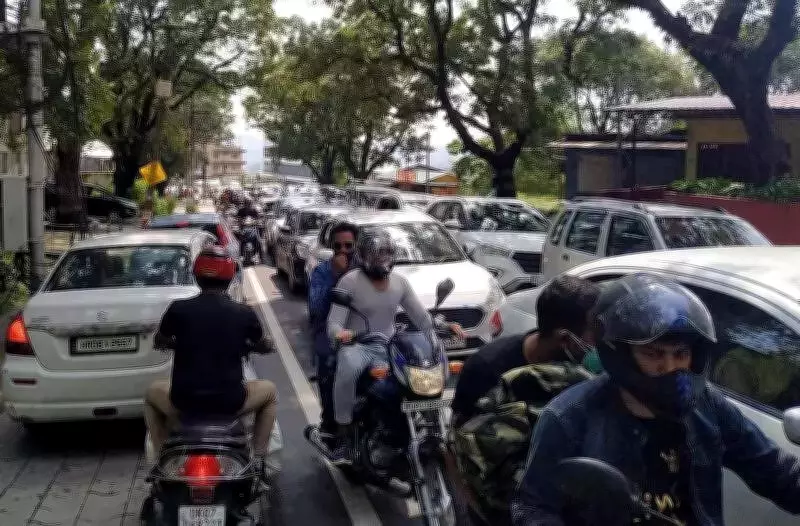
Rajpur Road in Dehradun, once a relatively open and efficient arterial lifeline, has now become synonymous with chronic choke points and near-perennial gridlock. The congestion is so severe that it regularly spills over onto the adjacent Mussoorie Road, transforming the entire corridor into a daily bottleneck that frustrates residents and commuters alike.
Rapid Commercialisation and Vehicle Surge Blamed for Traffic Nightmare
Local residents and traders trace the alarming slide into traffic chaos directly to the rapid commercialisation of the area and a steady, relentless surge in vehicles. What was previously a more navigable stretch is now densely lined with new shops, market complexes, and numerous roadside vendors, squeezing an already narrow road to its limits.
"Earlier, there were far fewer commercial establishments along Rajpur Road," explained Radhe Jha, a trader operating from Raj Plaza. "Now shops open regularly and vendors occupy the margins constantly. Illegal roadside parking alone consumes nearly half the carriageway. Since Rajpur Road cannot be widened physically, and with vehicle numbers increasing every single year, the chaos is inevitably bound to grow worse."

The traffic pressure intensifies dramatically near Dilaram Bazaar, particularly during the evening peak hours, when vehicle movement slows to an agonizing crawl. This daily ordeal highlights the severe infrastructure strain facing Dehradun's key thoroughfare.
Poor Coordination Among Government Agencies Exacerbates Problems
Compounding the traffic crisis, residents report bafflingly poor coordination among various government agencies responsible for road maintenance and civic works. A frequent commuter described the frustrating cycle: "One department completes its work and relays the road surface. Soon after, another agency digs it up again for different utilities. This destructive cycle continues throughout the year. For VIP movements, damaged stretches receive temporary fixes, only to be broken up again days later. The lack of basic coordination is simply baffling and wasteful."
Missing Footpaths and Encroachments Force Pedestrians onto Roadways
Encroached upon or entirely missing footpaths add another critical layer of strain to the already overwhelmed infrastructure. Pedestrians, including schoolchildren and elderly residents, are forced onto the main carriageway for lack of safe walking space. This dangerous practice further narrows the usable road space and slows vehicle traffic to a halt. Ongoing civic construction projects and school dispersal hours intensify the congestion peaks, with residents lamenting that no lasting, effective solution has emerged from authorities despite years of complaints.
Old Mussoorie Road Transformation Reflects Broader Traffic Crisis
Along Old Mussoorie Road, the transformation has been particularly stark and troubling. Resident Reenu Paul observed, "Until around 2016, heavy vehicles were rarely seen here. Now traffic of every kind—cars, buses, trucks—moves constantly all day long. People cannot walk safely anymore. After the Covid-19 pandemic, commercialisation surged unexpectedly and traffic became a permanent, noisy presence. Weak enforcement during peak hours has made the entire area chaotic and hazardous."
By the time traffic funnels into the main Mussoorie Road, especially on weekends and during local festivals, the situation often spirals completely out of control, creating kilometres-long jams that trap vehicles for hours.
Traffic Police Point to Policy Decisions and Proposed Solutions
Avneesh Singh, a local cab driver, emphasized, "Encroachment remains the single biggest issue. Tourists and even locals park haphazardly without concern. With vehicles increasing everywhere in Dehradun, unless regulation becomes much stricter and consistently enforced, the chaos will simply continue unabated."

Traffic police officials, however, indicate that their operational response depends largely on broader policy decisions and infrastructure limitations. SP (Traffic) Lokjeet Singh stated, "To ensure that tourist traffic does not overload Rajpur Road excessively, we have implemented strategic diversions via Shimla Bypass Road through Supply Road, and from Kuthalgate towards Sai Mandir. During peak hours, weekends, and major festivals, we deploy additional personnel proactively to regulate movement and minimize disruptions."
Officials added that a significant transition from manual traffic regulation to more efficient signal-based traffic management systems is being seriously considered, provided it demonstrably helps ease the chronic congestion plaguing Uttarakhand's capital city. This potential shift represents a glimmer of hope for residents desperate for relief from the daily gridlock.