Deve Gowda Defers to Modi and Shah on Kumaraswamy's Chief Ministerial Prospects in Karnataka
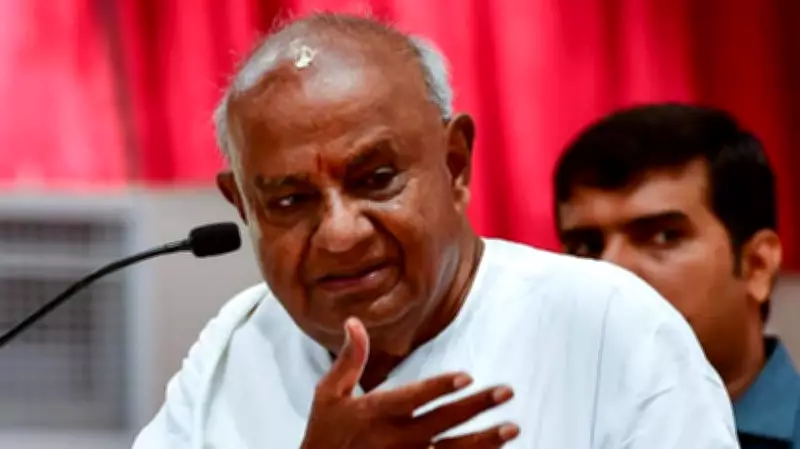
In a significant political statement, former Prime Minister and Janata Dal (Secular) patriarch H.D. Deve Gowda has indicated that the decision regarding his son H.D. Kumaraswamy's potential ascension to the Chief Minister's post in Karnataka rests with Prime Minister Narendra Modi and Union Home Minister Amit Shah. This remark underscores the Bharatiya Janata Party's (BJP) pivotal role in shaping the state's leadership landscape, reflecting the complex alliances and power dynamics at play.
Political Context and Implications
Deve Gowda's comments come amid ongoing speculation about Karnataka's political future, particularly following recent electoral developments and coalition talks. He emphasized that the BJP, as a dominant force in national politics, holds considerable sway over key appointments in states where it has influence. This acknowledgment highlights the strategic positioning of regional parties like the JD(S) in navigating alliances with larger national entities.
The statement has sparked discussions about the autonomy of regional leadership decisions versus central party directives. Observers note that such deference to Modi and Shah could signal a deeper alignment between the JD(S) and BJP, potentially affecting governance and policy implementation in Karnataka. It also raises questions about the future of coalition politics in the state, where parties often balance local interests with national agendas.

Historical and Current Dynamics
H.D. Kumaraswamy, a former Chief Minister of Karnataka, has been a prominent figure in state politics, known for his tenure from 2006 to 2007 and again in 2018. His potential return to the top post has been a topic of debate, especially given the JD(S)'s historical alliances with both the BJP and Congress at different times. Deve Gowda's remarks suggest a pragmatic approach, recognizing the BJP's current dominance and its ability to influence state-level outcomes.
This development is seen as part of broader trends in Indian politics, where central leadership increasingly plays a role in state affairs. Analysts point out that similar patterns have emerged in other states, where national parties exert control over regional appointments to ensure cohesive policy execution and political stability.
Reactions and Future Scenarios
Political commentators have reacted with mixed views to Deve Gowda's statement. Some interpret it as a realistic assessment of power dynamics, while others view it as a potential erosion of regional party independence. The BJP has not issued an official response, but insiders suggest that the party is closely monitoring the situation as it prepares for upcoming state elections and national strategies.
- Increased focus on BJP's role in Karnataka's governance.
- Potential shifts in JD(S) alliances and voter perceptions.
- Implications for Kumaraswamy's political career and leadership aspirations.
As Karnataka continues to be a key battleground state, Deve Gowda's remarks add a new layer to the political narrative, emphasizing the interplay between local leadership and national influence. The outcome of this dynamic could shape not only the state's immediate future but also broader patterns in Indian federalism and party politics.