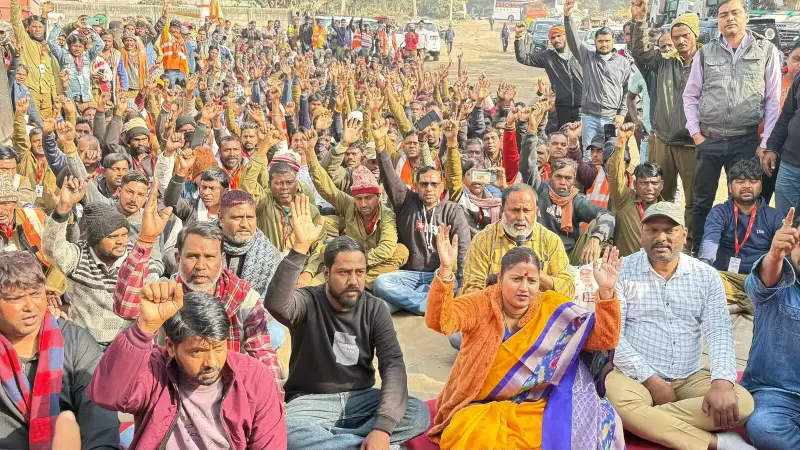
Political tensions have escalated in Dhanbad as a strike by sanitation workers of the Dhanbad Municipal Corporation (DMC) enters a critical phase. The agitation, now in its third day, has drawn strong political backing, with Jharia MLA Ragini Singh launching a sharp attack on the municipal administration for its alleged apathy.
MLA's Stern Warning to DMC Administration
Ragini Singh, the local legislator, has come out in full support of the protesting workers, declaring all their demands as justified and legitimate. She expressed deep disappointment that the workers were forced to resort to a strike while officials appeared indifferent. Singh specifically criticized the role of the municipal commissioner, stating he should have taken suo motu cognizance of the simmering issue much earlier.
Issuing a firm ultimatum, the MLA announced that if no positive dialogue is initiated with the sanitation workers by Friday, she will begin an indefinite sit-in protest from the following day in solidarity with them. This move is expected to significantly increase pressure on the civic body to resolve the crisis.

Roots of the Agitation: Workers' Key Demands
The sanitation work in DMC areas is outsourced to a private agency named Ramky. The workers employed under this contract have been staging a sit-in protest for the past three days. Their primary grievances include:
- Rectifying discrepancies in their wages.
- Ensuring timely payment of salaries.
- Putting an end to alleged misbehavior by officials of the agency.
The protesters have vowed to continue their agitation until their demands are met, leading to a visible breakdown in the city's cleanliness system and causing inconvenience to residents.
Municipal Corporation's Response and Public Impact
In response to the strike, the DMC has activated contingency plans. Municipal Commissioner Ravi Raj Sharma stated that the corporation has deployed its own staff as an alternative arrangement to manage garbage collection and sanitation work across the city. He assured the public that every possible effort is being made to prevent garbage from accumulating in any area.
However, the stop-gap measures are unlikely to match the scale of regular operations, and the city's sanitation infrastructure remains under severe strain. The ongoing stalemate between the contracted workers, their agency, and the municipal corporation highlights deeper issues of labor welfare and contract management in urban civic services.