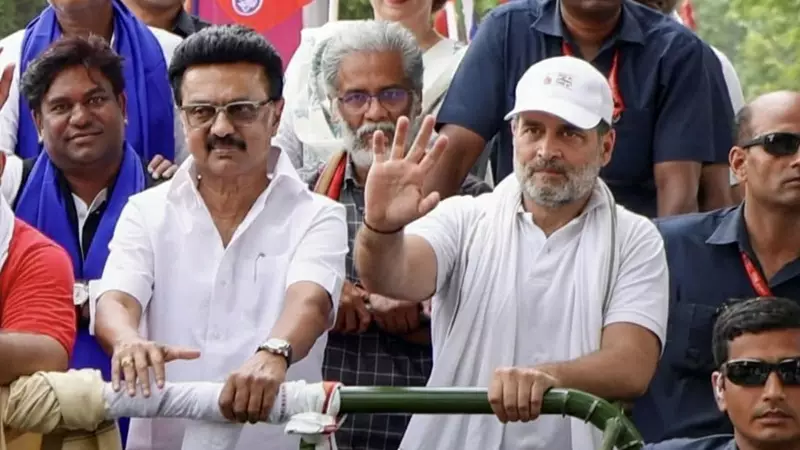
The long-standing political alliance between the Dravida Munnetra Kazhagam (DMK) and the Indian National Congress in Tamil Nadu is showing signs of significant strain as the state gears up for assembly elections later this year. At the heart of the friction are unresolved seat-sharing negotiations and a growing demand from a section of the Congress for a formal power-sharing agreement within the ruling coalition.
Seat-Sharing Stalemate and Internal Dissent
Congress leaders have revealed that a delegation led by the party's state in-charge, Girish Chodankar, met Chief Minister M.K. Stalin on December 3, 2025, to initiate seat-sharing talks. However, more than a month later, the DMK leadership has yet to respond to the proposal, creating anxiety within the Congress camp. The party had hoped to finalize the arrangement by December 15, 2025, to allow its top leaders to commence campaigning in their allotted constituencies promptly.
Congress Lok Sabha Whip Manickam Tagore publicly articulated the party's stance, stating that the demand for a greater share of power stems from the reality that no single party, including the DMK, is poised to secure a majority on its own. He reminded the DMK that "every party needs allies" and referenced the Congress's support to the DMK at the Centre during the UPA tenure, suggesting a similar cooperative formula should apply in Tamil Nadu.
The Congress's electoral footprint in the state has been shrinking over the past decade. The number of seats it contested as part of the DMK-led alliance fell from 63 in 2011 to 41 in 2016, and further down to just 25 in the 2021 assembly elections. Correspondingly, its vote share has also seen a steady decline from 9.3% in 2011 to 4.27% in 2021.
The Vijay Factor and Ideological Dilemmas
Adding a complex layer to the political calculus are overtures from actor-politician Vijay's Tamilaga Vettri Kazhagam (TVK), which has indicated it views the Congress as a "natural ally." This has sparked restlessness among some Congress cadres who feel the party has failed to expand its organizational base despite being part of the ruling coalition.
However, the potential of an alliance with TVK is a deeply divisive issue within the Congress. Some MPs caution against abandoning a decades-old partnership for an uncertain new ally. "Where he (Vijay) will be tomorrow and what he will be, only God knows. We cannot look like opportunists," one MP stated, highlighting concerns over TVK's unclear ideological standing.
Others point to the personal rapport between Congress leader Rahul Gandhi and Chief Minister Stalin, whom Gandhi reportedly calls "brother." Aligning with TVK, which has criticized the DMK, could jeopardize this relationship. Furthermore, senior leaders emphasize that the alliance was originally stitched together by former Congress president Sonia Gandhi in 2004, and any drastic shift would require her consultation.
Broader Implications and the Road Ahead
The tensions were further ignited in late December when Congress data analytics head Praveen Chakravarty described Tamil Nadu's debt position as "alarming," a comment the DMK dismissed by pointing to Chakravarty's recent meeting with Vijay. The DMK's refusal to engage publicly underscored the growing communication gap between the allies.
DMK sources indicate they are willing to offer the Congress around 25-30 seats, but the Congress is pushing for about 10 more. A DMK MP stated they plan to resolve the issue through discussions with the Congress high command. The Congress, meanwhile, is wary of repeating the "mistake" of Bihar, where last-minute seat-sharing talks led to friendly fights and the alliance's defeat.
As Tamil Nadu, a state where the opposition is considered stronger than the BJP, heads to the polls, the stability of its principal alliance is under a cloud. The outcome of these behind-the-scenes negotiations over seats, power, and political loyalty will critically shape the electoral battle and determine whether this old political marriage can withstand the new pressures.