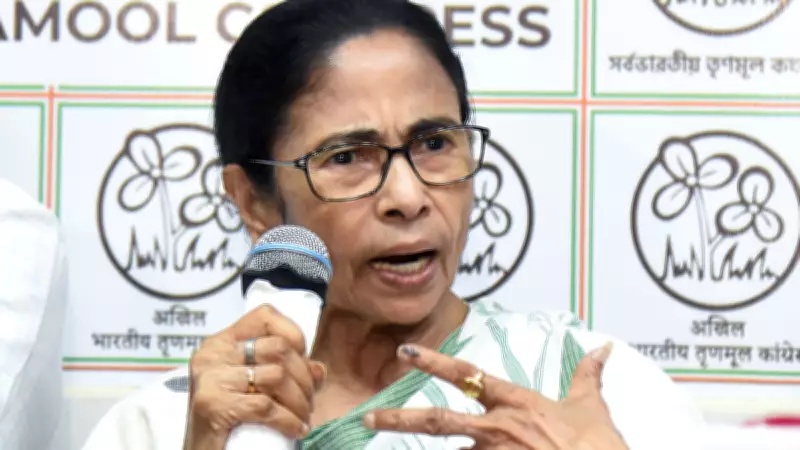
The Election Commission of India has officially notified the constitution of the new West Bengal Legislative Assembly, paving the way for the formation of a new government. This development comes amidst political turmoil as Chief Minister Mamata Banerjee has refused to resign following her party's drubbing by the Bharatiya Janata Party (BJP) in the recently concluded assembly elections.
EC's Notification and Its Implications
The notification, issued on May 6, 2026, marks the formal beginning of the new assembly's term. According to constitutional provisions, the new assembly must convene within six months of the notification. The Election Commission's move is seen as a procedural step to ensure the continuity of democratic processes in the state.
The BJP, which secured a decisive victory in the elections, has staked claim to form the government. However, Mamata Banerjee's refusal to resign has created a constitutional impasse. The outgoing chief minister argues that her party, the Trinamool Congress (TMC), still holds the majority and that she will not step down until a confidence vote is held.

Political Reactions and Standoff
The political landscape in West Bengal has been volatile since the election results were announced. The BJP has accused Mamata Banerjee of violating democratic norms by clinging to power despite losing the mandate. Party leaders have called for her immediate resignation to allow a smooth transition of power.
On the other hand, the TMC has maintained that the governor should invite the single largest party to form the government. Mamata Banerjee has stated that she will prove her majority on the floor of the assembly, challenging the BJP to a trust vote. This standoff has raised concerns about potential political instability in the state.
Legal and Constitutional Aspects
Constitutional experts have weighed in on the situation, noting that the chief minister's refusal to resign is not unprecedented. In Indian parliamentary history, there have been instances where outgoing chief ministers have waited for a confidence vote. However, the convention is for the incumbent to resign once the election results are clear.
The governor of West Bengal is now faced with the decision of whether to accept Mamata Banerjee's stance or to invite the BJP to form the government. The governor's role in such situations is crucial, as he must ensure that the government is formed in accordance with constitutional principles.
Public Response and Future Outlook
The public response has been mixed, with supporters of both parties staging protests and counter-protests. The situation has also drawn national attention, with political leaders from various parties commenting on the developments.
As the deadlock continues, all eyes are on the governor's next move. The coming days are likely to see intense political negotiations, and possibly legal challenges, as the state navigates this unprecedented situation. The outcome will have significant implications for West Bengal's political future and the broader dynamics of Indian federalism.