The political landscape of Tamil Nadu witnessed a significant transformation as the Election Commission of India delivered a decisive verdict in the ongoing leadership battle within the Pattali Makkal Katchi (PMK). In a move that has far-reaching implications, the commission officially recognized Anbumani Ramadoss as the legitimate president of the party, effectively sidelining his father and party founder S. Ramadoss.
The Election Commission's Landmark Decision
The controversy reached its climax when the Election Commission issued a formal order on Tuesday, settling the protracted leadership dispute that had been brewing within the PMK. This decision came after careful consideration of representations from both factions of the party, with the three-member commission panel thoroughly examining the constitutional validity of each claim.
What makes this ruling particularly significant is the timing - it comes just months before the crucial 2024 Lok Sabha elections, potentially reshaping the party's strategy and alliances. The commission's order specifically validates the organizational elections conducted on July 13, 2022, where Anbumani Ramadoss was elected as the party president, thereby granting him official recognition and authority over the party's symbol and organizational matters.
The Background of the Family Power Struggle
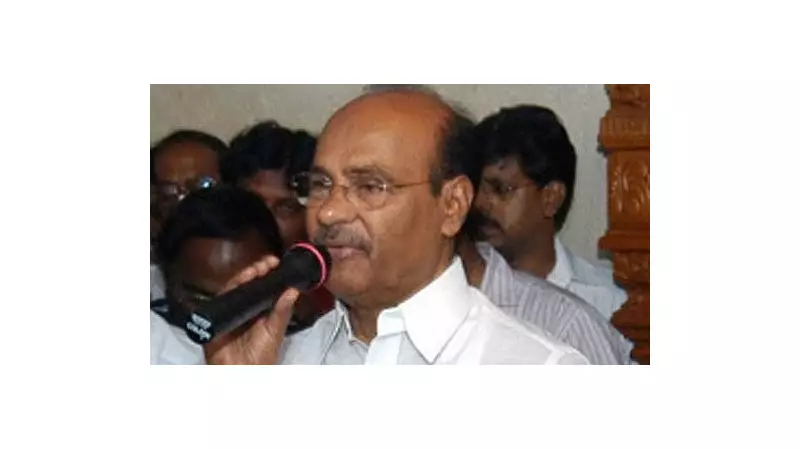
The roots of this political drama extend back to July 2022 when the PMK conducted its internal organizational elections. During this process, Anbumani Ramadoss was elected as the party president, marking a potential transition of power from the founding generation to the next. However, this move was immediately contested by his father, Dr. S. Ramadoss, who founded the party in 1989 and had led it for over three decades.
The situation escalated when the senior Ramadoss convened a parallel general council meeting in December 2023, where he declared himself as the permanent president of the party. This created an unprecedented scenario where both father and son claimed legitimate leadership over the same political organization, leading to confusion among party cadres and political observers alike.
The conflict reached the Election Commission's doorstep when both factions submitted separate applications, each seeking recognition as the legitimate office-bearers of the party. The commission's decision to side with Anbumani represents not just a legal victory but a symbolic passing of the torch within one of Tamil Nadu's influential caste-based parties.
Political Implications and Future Scenarios
The Election Commission's ruling has immediate and profound consequences for Tamil Nadu politics. With Anbumani Ramadoss now officially at the helm, the party is likely to witness significant changes in its political strategy, alliance choices, and organizational structure. The 55-year-old former Union Health Minister has been increasingly asserting his leadership style, which differs considerably from his father's approach.
For the senior Ramadoss, the options appear increasingly limited. Having lost control of the party he founded and nurtured for 34 years, he faces the difficult choice of either accepting a diminished role within the organization or potentially forming a new political outfit. Sources close to the development indicate that the 79-year-old leader might explore legal options, though the prospects of overturning the Election Commission's decision appear slim.
The timing of this decision is particularly crucial as Tamil Nadu prepares for the upcoming parliamentary elections. The PMK, with its significant Vanniyar community support base, remains an important player in the state's political arithmetic. The clarity in leadership could potentially strengthen the party's negotiating position with larger alliances, whether with the BJP-led NDA or the opposition INDIA bloc.
Political analysts suggest that Anbumani's leadership might bring a more moderate and development-oriented approach to the party, moving away from the aggressive caste-based mobilization that characterized his father's tenure. This could potentially expand the party's appeal beyond its traditional support base, though it remains to be seen how the existing cadre responds to this significant transition.
As the dust settles on this dramatic political development, all eyes are on how both father and son navigate this new reality. The coming weeks will reveal whether the party can unite under its new leadership or whether the internal divisions will deepen, potentially affecting its electoral prospects in the crucial 2024 elections.