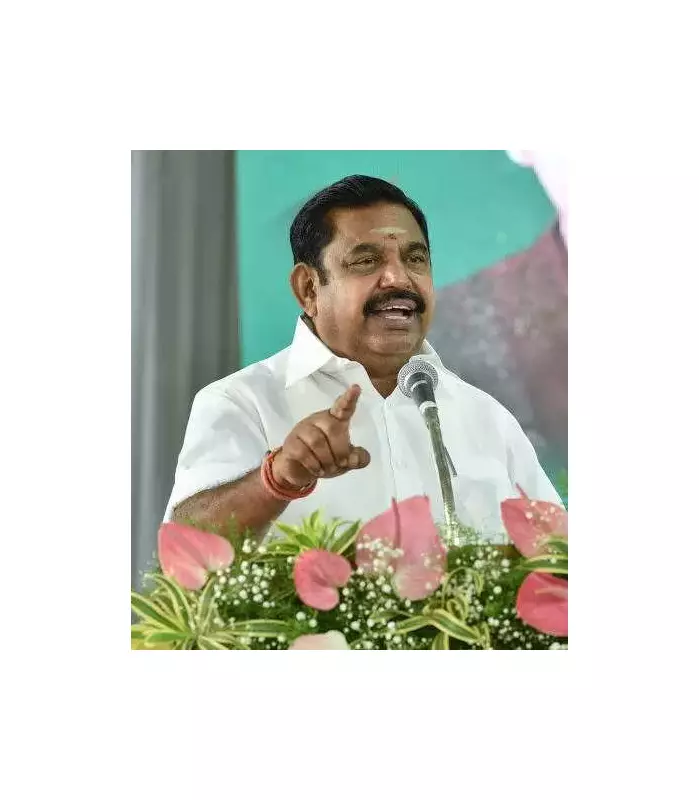
AIADMK general secretary Edappadi K. Palaniswami has launched a sharp critique against the ruling DMK government in Tamil Nadu, accusing it of failing to robustly defend the state's cherished two-language policy in the Supreme Court. The controversy centers on the establishment of Jawahar Navodaya Vidyalayas (JNVs) in the state.
Allegations of Weak Defense and Double Standards
In a strongly-worded statement issued on Wednesday, Palaniswami, often referred to as EPS, alleged that the state government presented weak arguments before the apex court, thereby facilitating the entry of these central schools. He charged the DMK administration with adopting a double standard on the language issue.
EPS emphasized that the Jawahar Navodaya Vidyalayas follow a three-language formula, which directly contradicts Tamil Nadu's long-standing two-language policy of Tamil and English. He described the two-language policy as the "soul" of the state and insisted that allowing JNVs would undermine this foundational principle.

A Call for Action and a Look at Past Success
The AIADMK leader pointed out that the Supreme Court had directed the state government to identify land for establishing JNVs in all districts. He asserted that Chief Minister M.K. Stalin has failed in his duty to safeguard the state's policy. "The CM should take necessary measures and engage the most senior advocates to defend the State's language policy," EPS demanded, urging Stalin to move beyond "publicity stunts."
Drawing a contrast, Palaniswami highlighted that the previous AIADMK government had successfully defended the same policy decision in 2011. He stated that his party had closely monitored the case pending before the court until 2021. However, he claimed that when the case came up for hearing on December 1, the state's legal team faltered, leading to the current situation.
The Stakes for Tamil Nadu's Linguistic Identity
The issue has escalated into a significant political battle, framing the debate as a fight to protect Tamil Nadu's linguistic and cultural identity from central imposition. EPS's statements position the AIADMK as the true guardian of the state's policy, putting immense pressure on the DMK government to demonstrate a stronger legal stance.
The outcome of this legal battle is being watched closely, as it has profound implications for the state's education policy and its autonomy in deciding its linguistic roadmap. The DMK government is now expected to recalibrate its legal strategy in the Supreme Court to counter these allegations and defend its position on the two-language policy.