

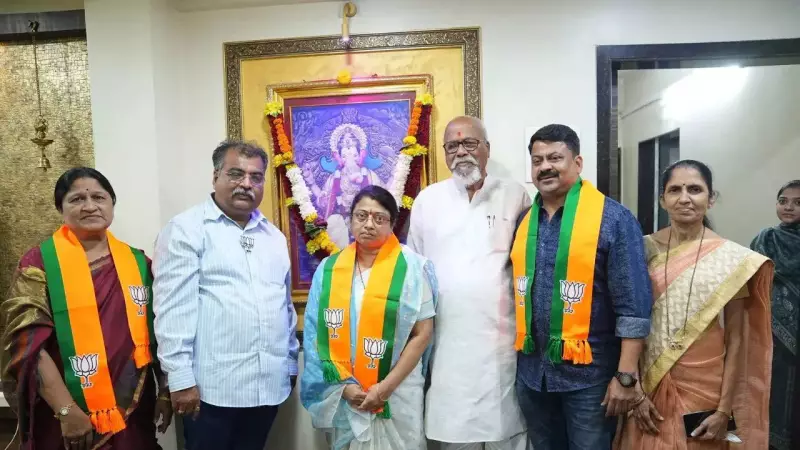
In a significant political realignment ahead of the crucial Kalyan-Dombivli Municipal Corporation (KDMC) elections, the Maharashtra Navnirman Sena (MNS) has been dealt a severe blow. Its prominent former corporator from Dombivli, Manda Patil, has officially quit the party and joined the rival Bharatiya Janata Party (BJP).
A High-Profile Defection
The formal induction ceremony was held in the presence of BJP State President Ravindra Chavan and senior leader former minister Jagannath Patil. Manda Patil was not just an ordinary member for the MNS; she represented the Patharli area in Dombivli East and held the influential position of the party's women's wing city president for the region.
Her exit from Raj Thackeray-led party is attributed to growing internal discontent. Reports suggest that recent organizational changes, specifically the appointment of new office-bearers within the local MNS unit, led to friction. Patil had expressed her dissatisfaction with these changes, which ultimately prompted her to resign from her post and her primary membership just days before formally switching sides.

Strategic Gain for BJP, Crisis for MNS
This move is widely seen as a strategic masterstroke for the BJP as it seeks to consolidate its influence in the Kalyan-Dombivli belt. By welcoming an experienced and locally known figure like Manda Patil, the BJP aims to bolster its grassroots connect and organizational strength in Dombivli East, a key area in the upcoming civic polls.
Conversely, for the MNS, this departure adds to a worrying trend of defections that challenge the party's stability and morale in the region. As the party prepares for the KDMC elections, losing a leader of Patil's stature represents a substantial setback, potentially impacting its electoral prospects and local cadre's confidence.
Implications for the Upcoming Civic Battle
The timing of this switch, just ahead of the municipal corporation elections, makes it particularly consequential. It signals a possible shift in local political loyalties and could influence voter perception. The BJP's move to absorb disgruntled leaders from other parties is a clear attempt to weaken opponents and expand its own base. For voters in Dombivli, this development highlights the intense behind-the-scenes maneuvering that defines Indian local politics, where allegiances can change rapidly based on organizational dynamics and electoral calculations.






