

Kerala Fishermen Clash with Government Over Dredged Sand Allocation for Highway Project
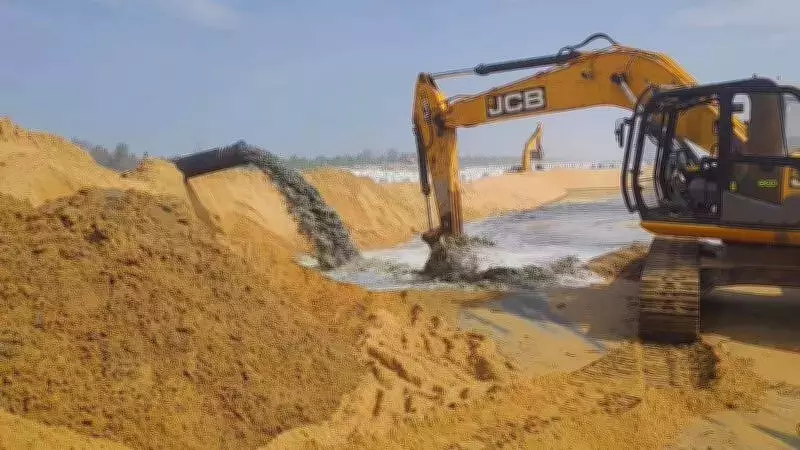
Fishermen from the Perumathura coastal village in Thiruvananthapuram district have launched a strong opposition against the Kerala state government's recent decision to supply dredged soil from Muthalapozhi harbour to the National Highways Authority of India (NHAI). The material is intended for use in the ongoing six-laning project of National Highway 66.
Local Demand for Sand to Combat Coastal Erosion
The fishing communities are vehemently demanding that the dredged sand be utilized locally to address the acute coastal erosion that is progressively threatening their homes, livelihoods, and the very shoreline they depend upon. The state government recently issued an official order permitting the supply of dredged sand, accumulated from harbour mouth clearing operations, to NHAI. This move aims to accelerate the NH 66 construction work between Kazhakkoottam and Kadampattukonam.
Officials have stated that the decision is designed to alleviate shortages of construction material and reduce overall transport costs for the highway project. However, the fishermen have taken strong exception to this plan, arguing that the sand is urgently needed along nearby beaches and eroding coastal belts.

Protesters Highlight Severe Environmental Threats
Over recent years, relentless sea action has caused severe land loss in the area, endangering critical fishing infrastructure and residential properties. "We are not against development," emphasized a fisherman leading the protest. "But why should this sand go to a highway project when our own coast is disappearing? If used here, it could help rebuild beaches, protect our harbour approaches and secure our livelihood," added a representative from the Matsyathozhilali Federation.
In response, the protesters are planning to stage sit-ins along the Perumathura coast. Their primary demands include a government reconsideration of the decision and an immediate redirection of the dredged material to erosion control works.
Contractor Reluctance and High Costs Complicate Issue
The controversy has deepened with reports indicating reluctance from the NH 66 contractor as well. The dredged sand has been fixed at a price of Rs 1,389.83 per cubic metre, with a recoverable rate of approximately Rs 952.36 after accounting for dredging costs. This high price has reportedly deterred the contractor firm from purchasing the soil, adding another layer of complexity to the dispute.
Fisheries representatives assert that the protests reflect broader discontent among coastal communities. These communities also harbor fears regarding the long-term impacts of harbour modifications, hard sea structures, and shoreline shifts, which scientists link to altered sediment patterns.
Historical Context of Coastal Agitations
Similar coastal villages have previously witnessed agitations over harbour siltation and erosion issues, including at Muthalapozhi itself. Last year, unresolved dredging problems at Muthalapozhi sparked demonstrations and disruptions of harbour operations, highlighting a persistent pattern of conflict between development projects and environmental preservation.
Government Response and Future Outlook
State authorities have acknowledged the erosion problem but maintain that using Muthalapozhi dredged sand for NHAI's highway project was approved to support critical infrastructure development. They have expressed commitment to continuing discussions with local leaders to find a balanced solution that addresses both coastal protection needs and the material demands for road projects.
However, protest leaders remain steadfast, insisting they will continue their agitation until a concrete and formalized plan is established to prioritize the use of dredged sand for local coastal protection measures. The standoff underscores the ongoing tension between infrastructure advancement and environmental sustainability in Kerala's coastal regions.






