In a significant move aimed at streamlining candidate selection, Union Minister Nitin Gadkari has publicly declared that neither he nor Maharashtra Chief Minister Devendra Fadnavis will personally intervene in allocating party tickets for the crucial Nagpur Municipal Corporation (NMC) elections. The announcement seeks to establish a clear, data-driven process amidst intense lobbying by aspirants.
Survey-Driven Selection: The New Mandate
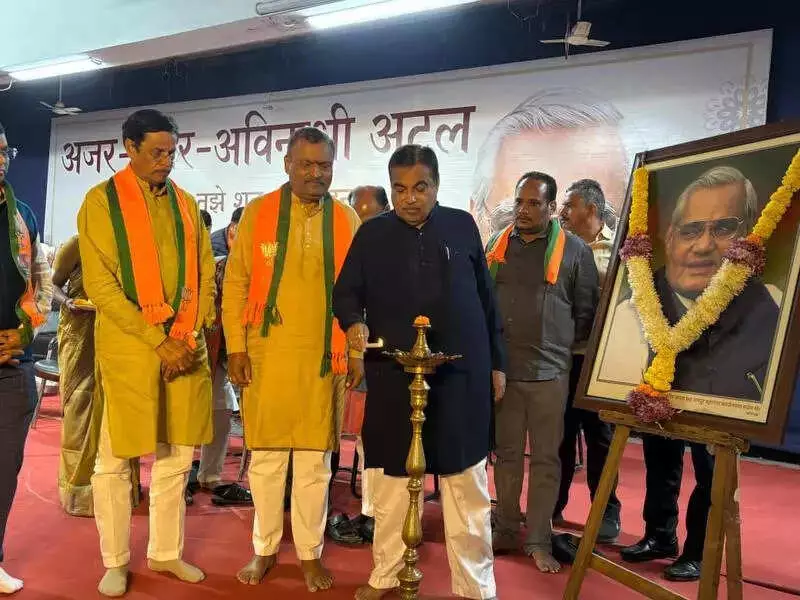
Speaking at an 'Atal Sabha' event marking the 101st birth anniversary of former Prime Minister Atal Bihari Vajpayee, Gadkari outlined the new transparent mechanism. He revealed that the Bharatiya Janata Party (BJP) would rely on four internal surveys—one conducted by him and three by CM Fadnavis—to finalize its candidates for the civic polls scheduled for January 15.
"Neither me nor Fadnavis has the mandate to decide candidates beyond survey findings," Gadkari asserted. "The selection would be purely based on which candidate the voters want to vote for and his or her work in respective constituencies." He emphasized that public acceptance and grassroots performance would be the ultimate deciders.

Ambitious Targets and a Warning Against Money Power
Setting a high bar for the party, Gadkari urged workers to ensure the BJP wins at least 10 more seats than its 2017 tally of 108 and secures the mayor's post. He considers this position symbolically crucial for the party in its long-standing stronghold of Nagpur.
In a strong critique of a prevalent belief, the minister cautioned against overconfidence rooted in financial muscle. "From ministers to corporators, many believe that if you have money, you can win elections. This thinking is wrong," he stated, adding unequivocally that "Money alone cannot deliver victory."
No Room for Caste or Religion in Ticket Politics
Gadkari firmly rejected identity-based appeals for tickets. He noted that many aspirants approach leaders claiming support from their community but have done little substantive work for them. "They just want to do politics on these factors. No one would be granted tickets on caste or religion. Tickets will be finalised only on surveys," he declared, reinforcing the party's commitment to a performance-based meritocracy.
The city MP acknowledged the internal pressures the party faces due to ward reservations and a surplus of capable candidates. "For almost every seat, we have at least five strong contenders. Because of reservations and permutations, it has become exhausting to give justice to everyone," Gadkari admitted, noting that disappointment was inevitable. He framed this as a test of character for party workers, stating, "The real test of a party worker is how he or she maintains dignity when denied a ticket."
In a lighter moment, Gadkari humorously described the election-season atmosphere where senior leaders are besieged by hopefuls, quoting a Hindi saying: "Ek anaar hai, sau bimaar hai" (There is one pomegranate, and a hundred patients desiring it).
He concluded by crediting grassroots effort for all electoral success, sharing that even a leader of his stature cannot win without door-to-door campaigning by dedicated workers. Gadkari also narrated an anecdote about a persistent woman aspirant who, driven by ambition, progressed from corporator to mayor and now seeks a ticket again, highlighting the relentless nature of political aspirations.