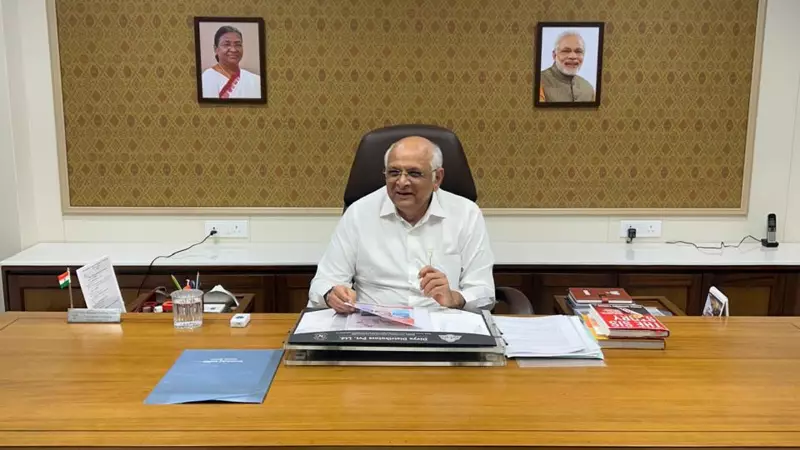
In an exclusive conversation, Gujarat Chief Minister Bhupendra Patel has laid out his government's definitive roadmap for the 2030 Commonwealth Games, placing dramatic improvements to the Air Quality Index (AQI) and public transport systems at the forefront of the agenda. Alongside constructing world-class sports facilities, the CM emphasized a vision that extends far beyond the event itself, aiming to leave a permanent positive imprint on the state's urban landscape.
Beyond the Games: A Blueprint for Sustainable Urban Life
Chief Minister Patel, in his interview, articulated a clear, legacy-driven objective. The goal is not merely to host a successful international sporting event but to ensure the investments catalyze long-term urban development. "We aim at not just hosting events successfully, but to leave behind infrastructure that continues to improve everyday urban life long after the Games are over," Patel stated. This philosophy underpins all planning, from environmental initiatives to transport upgrades.
On the critical issue of air pollution, the state government is collaborating with the United Nations Environment Programme (UNEP) to align Gujarat's AQI standards with global public health benchmarks. This partnership signifies a serious, scientifically-grounded approach to tackling environmental challenges ahead of the global spotlight in 2030.

Administrative Overhaul and Governance Reforms
Preparations are being bolstered by a significant administrative revamp. Patel's government has been actively implementing recommendations from the Gujarat Administrative Reforms Commission (GARC), appointed earlier in 2025. A major cabinet reshuffle in October saw new ministers inducted, including the appointment of Harsh Sanghavi as Deputy Chief Minister, who also handles the crucial sports portfolio.
To strengthen public service delivery, the administration has focused on filling long-standing vacancies. Over the past six months, thousands of teachers, health workers, and police personnel have been recruited. Patel highlighted a strategic shift from ad-hoc hiring to a systematic "binding 10-year recruitment calendar" to ensure sustained manpower planning.
Monitoring progress is streamlined through a Governance Performance Index (GPI), which the CM tracks personally via a dedicated dashboard. He noted that sectors like industries and investments are already performing well under this real-time tracking system. Furthermore, the SWAGAT (Statewide Attention on Grievances by Application of Technology) platform is being leveraged as an apolitical tool to resolve citizen grievances, particularly those related to land issues.
Financial Prudence and a Global Benchmark
With the memory of past Games' financial burdens in mind, the Gujarat government is conducting detailed economic impact assessments. The aim is to ensure all investments for CWG 2030 are "financially responsible and sustainable." Patel expressed confidence drawn from the state's proven experience in managing massive crowds during major concerts, festivals, and cultural events.
The ultimate ambition, as stated by the Chief Minister, is to set a new global standard. "Gujarat is working to ensure that the road to 2030 becomes a global benchmark – not just for hosting a sporting event, but for showcasing the idea of a truly Viksit Gujarat," he concluded. The countdown to 2030 is thus framed not just as an event preparation, but as a transformative journey for the state's environment, infrastructure, and governance.