Senior Citizens in Guwahati Demonstrate Strong Civic Duty with High Voter Turnout
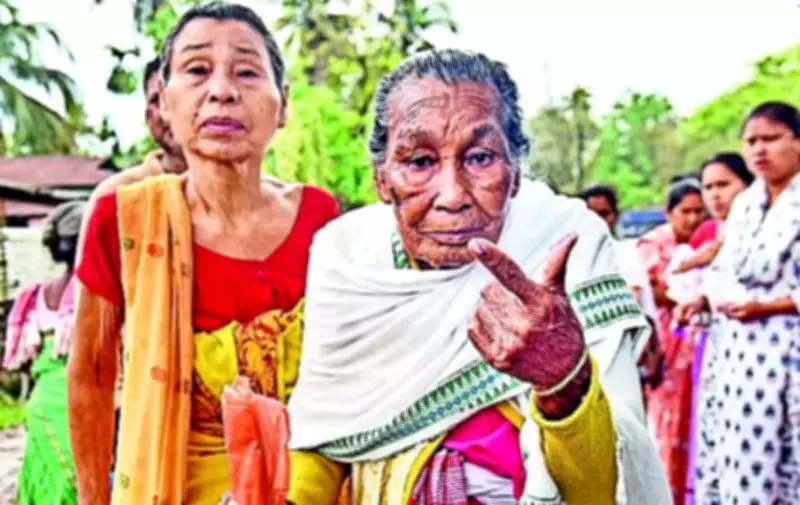
In Guwahati, senior citizens emerged as a significant force during the recent elections, turning out in steady numbers across the city. Many stepped out of their homes early in the morning to cast their votes, showcasing a profound sense of duty and decades of lived experience. For these elderly voters, casting a ballot remains one of the most valuable rights, viewed as a crucial means to bring decisive change in the functioning of the state and the broader fabric of society.
Personal Stories Highlight Decades of Voting and Hope for Change
While some senior citizens were accompanied by family members, others arrived independently, often leaning on walking sticks as they made their way to their respective polling stations. Their participation contributed significantly to the overall voter turnout of approximately 77.32% in the Kamrup (Metropolitan) district. Chitralekha Gogoi, a resident of Dispur who first cast her vote in 1967, shared that voting remains a steadfast expression of her resolve. "We have always cast our votes with hope and expectation that those elected would run the state judiciously and take decisions in its best interest. Back then, the administration felt more efficient. Now, I feel the need for a change. I just hope that whoever comes to power governs wisely, keeping the public’s interest first," she said.
Massadar Hussain, a resident of the city’s Machkhowa area who first voted in 1991, echoed similar sentiments. He expressed hope for a leader who is suave, capable of engaging in healthy electoral competition with grace, and one who governs not through fear, but through trust, dignity, and a genuine sense of responsibility. "Earlier, we looked up to leaders like Gopinath Bordoloi and Tarun Ram Phookan as role models, but the same cannot be said today. As citizens, we seek change, and it is encouraging to see the new generation stepping up. Development is what we need, not communal divisions," he emphasized.

Call for Humane Governance and Improved Infrastructure
Beyond voting, senior citizens articulated a clear desire for a state machinery that is humane, free from fear, and culturally enriching. They stressed the urgent need to strengthen governance by ensuring proper access to education and healthcare, especially in remote areas. Deepak Goswami, another resident, shared his vision: "I envision an Assam that is free from fear, prosperous, and humane, where equality prevails irrespective of caste, creed, or language. Most importantly, I hope for a future where access to quality education and healthcare is ensured for all, and where the youth are provided meaningful employment opportunities."
Meanwhile, residents living in the hill areas of the city urgently cited the need for good roads and proper infrastructure. Anukul Sarmah, a resident of Bonda, highlighted this critical issue: "During rains, the roads become very dangerous. I am shocked that our contesting candidates do not see this. It must be their responsibility to take up civic issues first, then talk about protecting the culture." This underscores the broader community concerns about basic amenities and development priorities.
The collective voice of these senior citizens reflects a deep-seated hope for transformative leadership and improved living conditions in Assam. Their active participation in the electoral process serves as a powerful reminder of the enduring importance of civic engagement in shaping a better future for all residents.