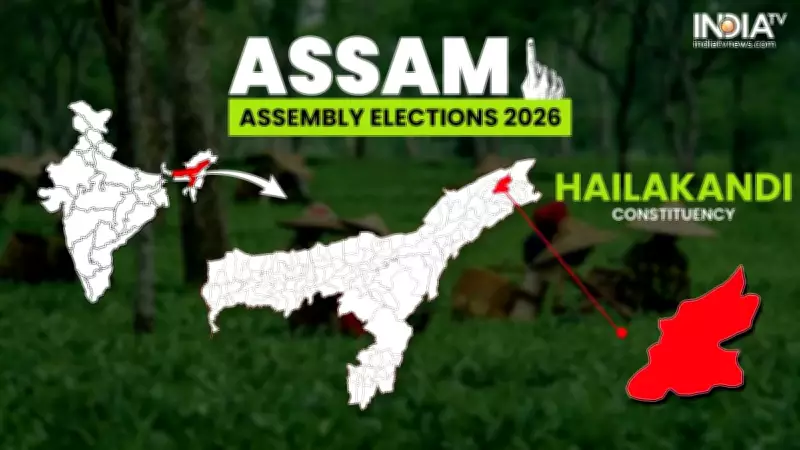
Hailakandi Assembly Constituency: A Crucial Battleground for Assam's 2026 Elections
As Assam gears up for the 2026 Legislative Assembly elections, the Hailakandi constituency emerges as a focal point of political interest. Located in the Barak Valley region, this seat has witnessed intense electoral contests, primarily between the Bharatiya Janata Party (BJP) and the All India United Democratic Front (AIUDF). The upcoming polls are expected to shape the political landscape of this diverse area, with both parties vying for dominance.
Historical Performance and Past Winners
In the 2021 Assam Assembly elections, the Hailakandi seat was secured by Jahidul Islam Laskar of the AIUDF. He triumphed over his nearest rival, Bimalendu Roy of the BJP, with a victory margin of approximately 8,000 votes. This outcome underscored the AIUDF's stronghold in the constituency, reflecting its appeal among the local electorate.
Looking back at previous elections, the 2016 polls saw Anwar Hussain Laskar of the Indian National Congress (INC) clinch the seat. However, the political dynamics shifted significantly in 2021, with the AIUDF gaining ground and the BJP making substantial inroads, indicating a volatile and competitive environment.

Key Electoral Margins and Voter Demographics
The victory margins in Hailakandi have varied over the years, highlighting the constituency's competitive nature. In 2021, the margin of around 8,000 votes was notable, but past elections have seen narrower wins, emphasizing the need for parties to strategize effectively. The electorate here is diverse, comprising various communities that influence voting patterns, making demographic analysis crucial for campaign planning.
Party-Wise Candidates and Strategic Alliances
For the 2026 elections, both the BJP and AIUDF are expected to field strong candidates, with potential nominations from other parties like the INC adding to the contest. The BJP, aiming to expand its presence in Assam, might leverage its national policies and local development initiatives. Conversely, the AIUDF is likely to focus on regional issues and minority representation to retain its base.
Strategic alliances could play a pivotal role, as seen in past elections where coalition politics impacted outcomes. Parties may form partnerships to consolidate votes, making candidate selection and campaign messaging critical factors in the race.
Future Outlook and Political Implications
The Hailakandi constituency is poised to be a bellwether for Assam's broader political trends in 2026. A win here could signal shifting allegiances or reinforce existing party strengths, influencing state-level governance and policy directions. Voters are anticipated to weigh factors such as development, representation, and national versus regional agendas when casting their ballots.
As the election approaches, all eyes will be on Hailakandi to gauge the pulse of Assam's electorate and predict the potential outcomes that could reshape the state's political future.