

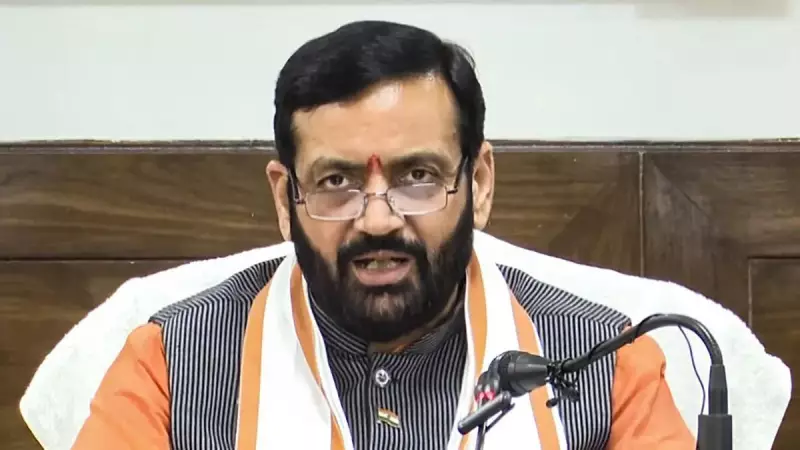
The political landscape in Haryana has been plunged into a fresh crisis as the Congress party has taken a decisive step to challenge the state's Bharatiya Janata Party (BJP) government. On the opening day of the Haryana Legislative Assembly's budget session, the principal opposition party submitted a notice for a no-confidence motion against Chief Minister Nayab Singh Saini.
A Direct Challenge on the Floor of the House
The move, spearheaded by Leader of Opposition Bhupinder Singh Hooda, marks a significant escalation in the ongoing political tussle. The notice was formally submitted to the assembly secretariat, setting the stage for a heated debate on the government's performance and stability. This action comes amidst a backdrop of simmering discontent and allegations from the Congress regarding the administration's policies and governance.
The Haryana assembly session, which commenced on Wednesday, December 18, 2024, was immediately overshadowed by this political maneuver. The Congress's strategy is clear: to put the Saini-led government on the mat and test its numerical strength in the 90-member House. The party has accused the BJP government of failing on multiple fronts, including law and order, farmer issues, and employment.

The Political Calculus and Government's Response
For the no-confidence motion to be admitted for discussion, it requires the consent of the assembly Speaker. Once admitted, it will lead to a debate followed by a floor test. The Saini government, which came to power after replacing former CM Manohar Lal Khattar in March 2024, will now have to prove its majority. The BJP, along with its allies and supporting independents, claims to have the necessary numbers to defeat the motion.
In response, the ruling BJP has dismissed the Congress's move as a "political stunt" and an attempt to disrupt the proceedings of the crucial budget session. Government ministers have expressed confidence, stating they are ready to face the motion and will easily sail through the trust vote. They have countered by alleging that the Congress is resorting to such tactics due to its own irrelevance and lack of a substantive agenda.
Implications for Haryana's Political Future
The introduction of the no-trust motion has several immediate consequences. Firstly, it ensures that the budget session, traditionally focused on financial matters, will be dominated by political drama. Key government business, including the presentation of the state budget, may be delayed or conducted under a cloud of uncertainty.
Secondly, it forces all legislators, especially independents and members of smaller parties, to publicly declare their allegiance. This could lead to intense lobbying and political negotiations in the corridors of the Vidhan Sabha in Chandigarh. The outcome of this motion will be a clear indicator of the current government's stability and its ability to complete its term.
Finally, this development sets the tone for the increasingly confrontational politics in the state as it moves closer to the next electoral cycle. The Congress, by taking this aggressive step, aims to project itself as a robust opposition and rally its cadre. Whether this translates into a political advantage or backfires remains to be seen, but one thing is certain: Haryana's political theater has just witnessed a major new act.






