Haveri District Grapples with Early Summer Water Scarcity Crisis
Haveri district, located in Karnataka with a population of approximately 16 lakh, is experiencing a severe water scarcity issue at the very onset of the summer season this year. This alarming situation persists despite the region receiving heavy rainfall during the last monsoon period. The district primarily depends on rivers and lakes as its main water sources, but a combination of factors including inadequate rainfall, unscientific development projects, and poor water management practices have led to a worsening water shortage in recent years. There is growing concern that this crisis may intensify in the coming days, posing significant challenges for residents and authorities alike.
Current Weather Conditions and Projections
According to recent weather reports, the current average maximum temperature in Haveri district stands at 35°C. Forecasts indicate that temperatures are likely to rise by 2-3°C above normal levels in the near future, exacerbating the water scarcity. The district administration has estimated that as many as 195 villages could face critical drinking water issues during the peak of summer, highlighting the urgency of the situation.
Critical Water Sources in Decline
The district boasts around 2,000 lakes, ranging from small to large, which are vital for agriculture, livestock, and drinking water, in addition to several rivers. However, due to poor management and environmental neglect, many of these lakes have dried up prematurely at the start of summer. Key rivers such as Tungabhadra, Varada, Dharma, and Kumadhvathi, which serve as lifelines for the region, have seen a significant reduction in water flow. Declining water levels in these rivers as early as February are described as alarming, forcing some villagers to resort to using stagnant water for their daily needs.
Root Causes of the Water Crisis
The reported reasons behind this escalating water crisis are multifaceted and include:
- Lack of desilting and maintenance: Inadequate upkeep of lakes has reduced their water storage capacity, limiting their ability to retain monsoon rains.
- Illegal sand mining: Unauthorized extraction from riverbeds has caused water to flow away rapidly during the rainy season, leaving rivers dry at summer's onset.
- Unscientific borewell drilling: Indiscriminate drilling without proper replenishment has led to many borewells going dry, causing groundwater levels to drop swiftly.
- Unchecked deforestation: The absence of greenery has doubled the rate of water evaporation, further depleting available resources.
- Ineffective water conservation: Poor implementation of projects like percolation pits and rainwater harvesting has failed to mitigate water loss.
- Delayed infrastructure: Water supply and irrigation projects are not keeping pace with population growth and increasing water usage demands.
Administrative Response and Village Impact
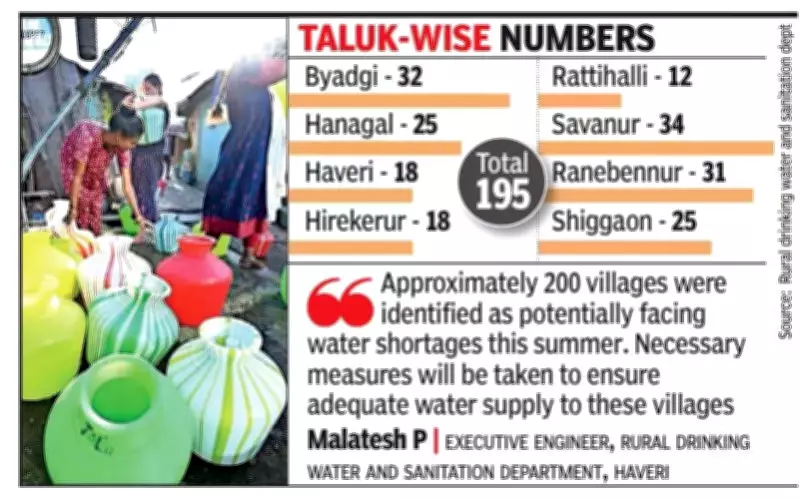
Estimates from the rural drinking water and sanitation department indicate that 195 villages across 125 gram panchayats in Haveri district may confront a drinking water crisis this summer. A taluk-wise breakdown of the projected number of villages facing issues is as follows:
- Byadgi - 32 villages
- Hanagal - 25 villages
- Haveri - 18 villages
- Hirekerur - 18 villages
- Rattihalli - 12 villages
- Savanur - 34 villages
- Ranebennur - 31 villages
- Shiggaon - 25 villages
- Total - 195 villages
Malatesh P, executive engineer of the rural drinking water and sanitation department in Haveri, stated, "Approximately 200 villages were identified as potentially facing water shortages this summer. Necessary measures will be taken to ensure adequate water supply to these villages." This declaration underscores the administration's recognition of the problem and their commitment to addressing it, though the effectiveness of these measures remains to be seen as the summer progresses.