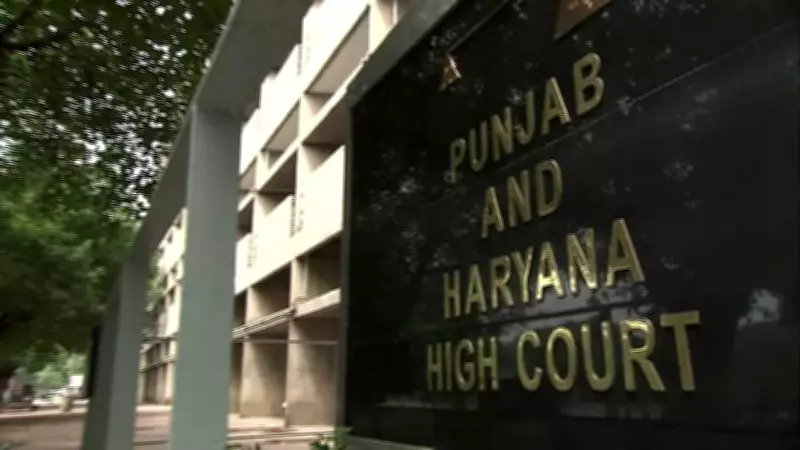
The Punjab and Haryana High Court has ruled that retired Indian Administrative Service (IAS) officer Ashok Khemka must be considered as an empanelled additional secretary for any future assignments. This decision comes as a notable development in the career of the officer, who gained national prominence in 2012 for his actions related to a land deal involving Robert Vadra, the son-in-law of Congress leader Sonia Gandhi.
Background of the Case
Ashok Khemka, a 1991-batch IAS officer of the Haryana cadre, served in various capacities before his retirement. In 2012, he was serving as the Director General of the Haryana State Archives when he cancelled the mutation of a land deal in Gurugram. The deal was linked to Robert Vadra, and Khemka's decision brought him into the national spotlight. Following this, Khemka faced a series of transfers and what he claimed were punitive postings, leading him to seek legal recourse.
The High Court's Directive
In its latest order, the Punjab and Haryana High Court directed that Khemka be treated as empanelled for the position of additional secretary in the Government of India. This means that for any future assignments, his candidature should be considered on par with other empanelled officers. The court's ruling effectively nullifies any previous administrative decisions that may have excluded him from such empanelment.

The court observed that Khemka's career progression should not be hindered by the controversy surrounding his 2012 action. It emphasized that the officer had a clean record and had served the state diligently in various roles. The ruling is seen as a vindication of Khemka's stance that he was targeted for his actions against alleged corruption.
Implications of the Ruling
This decision could have broader implications for the IAS cadre and the process of empanelment for senior positions. It underscores the judiciary's role in ensuring that administrative decisions are not influenced by extraneous factors. For Khemka, it opens the door to potentially serve in key roles in the central government, despite his retirement from the state cadre.
Legal experts have noted that the court's order is binding on the government and must be implemented. The Haryana government and the central government have been directed to comply with the ruling. Khemka's lawyer expressed satisfaction with the verdict, stating that it reaffirms the rule of law and the protection of honest officers.
The case has also reignited discussions about the treatment of whistleblowers within the bureaucracy. Khemka's actions in 2012 were praised by anti-corruption activists but criticized by political circles. The High Court's decision may encourage other officers to take a stand against irregularities without fear of reprisal.