

Himachal Pradesh Faces Financial Crisis as Revenue Deficit Grant Discontinued
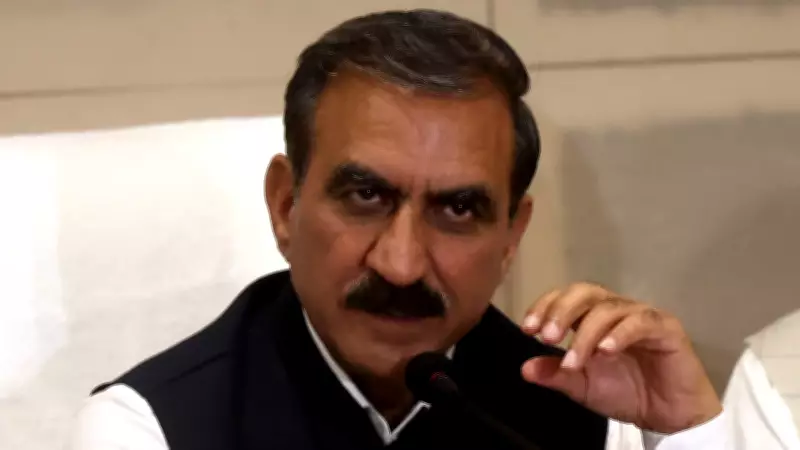
Himachal Pradesh Chief Minister Sukhvinder Singh Sukhu has announced plans to meet Prime Minister Narendra Modi to address the critical discontinuation of the Revenue Deficit Grant (RDG) by the Centre. The Chief Minister stated that moving the court against the 16th Finance Commission's decision is the last resort, emphasizing that the Prime Minister holds the authority to restore this vital financial support.
Severe Budget Impact and Fiscal Alarm
Sukhu warned that the proposed withdrawal of RDG would have an approximately 30 percent adverse impact on the state's annual budget. Following a special Cabinet meeting to assess the fiscal implications, he described how this decision could severely destabilize the state's finances. The meeting was briefed by Finance Secretary Devesh Kumar, who characterized the situation as financially alarming and projected a resource gap of around Rs 6,000 crore for the 2026-27 fiscal year.
"We are heading towards a major catastrophe. Our hands were tied. We need untied money, and that could only be possible through RDG," Kumar stated, highlighting that even aggressive fiscal reforms would not fully bridge the deficit.

Historical Dependence and Special Category Status
Revenue Deficit Grant is a post-devolution grant recommended by the Finance Commission to states whose revenue receipts fall short of their revenue expenditure, even after receiving their share of central taxes. Himachal Pradesh, as a special category hill state with difficult terrain, limited industrial base, and high infrastructure costs, has historically depended heavily on RDG to bridge its fiscal deficit.
The grant has been crucial for funding committed liabilities such as salaries, pensions, social sector schemes, and maintenance of public infrastructure. With the 16th Finance Commission revisiting fiscal transfers and reportedly discontinuing RDG support, the state government fears a massive resource gap that could undermine essential services and development projects.
Ecological Vulnerabilities and State Representation
Sukhu emphasized that the state had presented its ecological and disaster vulnerabilities before the Finance Commission. He noted that landslides were included under the National Disaster Response Fund coverage following persistent requests by the state government, given Himachal's high vulnerability to slope failures and extreme weather events.
Defending the government's fiscal management, Sukhu revealed that the state had generated Rs 3,000 crore to Rs 4,000 crore from its own resources over the last three years. However, he stressed that internal revenue alone could not compensate for the loss of RDG, which has historically acted as a financial lifeline for the hill state.
Projected Resource Gap and Future Implications
Finance Secretary Devesh Kumar's projection of a Rs 6,000 crore resource gap for FY 2026-27 excludes development works, pending liabilities, and state schemes. This alarming figure underscores the potential catastrophic impact on Himachal Pradesh's economy and public welfare programs.
The state's unique geographical challenges, combined with its limited revenue-generating capacity, make the continuation of RDG support essential for maintaining fiscal stability and ensuring the well-being of its residents.






