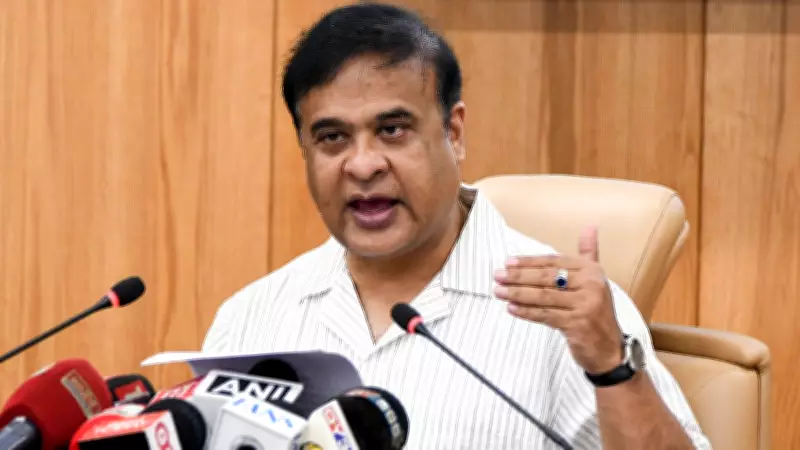
Assam CM's Polarizing Rhetoric: When Leadership Forgets Its Sacred Trust
In the complex tapestry of Indian politics, Assam Chief Minister Himanta Biswa Sarma's recent statements have sparked intense debate about constitutional morality and leadership responsibility. His open admission of directing BJP workers to file objections against members of the Bengali Muslim community during electoral roll revisions represents a troubling departure from democratic norms.
The Premchand Parable: Leadership as Sacred Duty
Premchand's timeless short story 'Panch Parmeshwar' ('The Holy Panchayat'), familiar to generations of Indian students through middle school textbooks, offers profound insights into leadership ethics. The narrative follows best friends Jumman Shaikh and Algu Chaudhary, whose friendship fractures when Algu, serving as a panchayat member, rules against Jumman in a property dispute with an elderly aunt.
When circumstances reverse and Jumman becomes the panch, he initially plans to rule against Algu in retribution. However, at the crucial moment of decision, he realizes that the office he holds represents a sacred trust that transcends personal grievances. The metaphorical kursi (chair) carries a weight that must shatter prejudice, pettiness, and personal loyalties for larger societal good.

Sarma's Controversial Statements: Crossing Constitutional Boundaries
Chief Minister Sarma's recent declarations mark a significant escalation in his political approach. He openly stated: "Whichever complaints have happened have been on my orders. I myself have told the BJP people that they should keep giving complaints against Miyas... I have told people that, wherever possible, they should fill Form 7s. So that they have to run around a little, are troubled, so that they understand that the Assamese people are still living."
These remarks reveal three fundamental constitutional problems:
- Identity Flattening: The term "miyan" in Assam's context historically referred to Bengali-speaking Muslims with diverse origins—some from Bangladesh, others from various parts of the subcontinent including India, and some with roots predating 1947. Sarma's rhetoric systematically flattens these layers, creating a homogenized identity that facilitates targeted political action.
- Constitutional Role Confusion: The Chief Minister has blurred the distinction between his constitutional position and his party's ideological agenda. The Special Intensive Revision (SIR) exercise conducted by the Election Commission represents an administrative, non-political process. Filing false objections using Form 7 constitutes a punishable offense under law, raising serious questions about a constitutional authority encouraging illegal activities.
- Institutional Undermining: Most critically, Sarma's approach threatens democratic institutions. By burdening the electoral system with politically motivated objections, he effectively undermines the Election Commission's authority, challenges Supreme Court directives, and weakens the Representation of the People Act's implementation.
The Political Context: From Dog Whistles to Open Admission
Sarma's political trajectory since joining the BJP, and particularly since assuming the chief ministerial office, has been marked by increasingly explicit anti-minority statements. Previous references to concepts like "love jihad," "land jihad," and "flood jihad" have now evolved into open admission of targeted political action.
His justification—that targeted individuals are "Bangladeshi" and "infiltrators"—provides thin cover for what appears to be systematic voter suppression. The Chief Minister's statement that "Assam is a polarised society, for the next 30 years, we have to practice politics of polarisation if we want to live" suggests a long-term strategy built on division rather than unity.
Institutional Silence and Democratic Erosion
The Election Commission's silence on these remarks stands in stark contrast to its usual responsiveness when criticized by non-BJP parties. This selective responsiveness raises questions about institutional independence and equal application of democratic principles.

Meanwhile, Sarma's approach finds explanation in realpolitik calculations. His polarizing rhetoric has yielded political dividends, mirroring strategies employed by other BJP leaders. His candid admission—"there is nothing to hide about this"—suggests either unprecedented transparency or a concerning normalization of previously covert tactics.
The Larger Question: What Has Changed in Indian Politics?
Political observers recall BJP architect Govindacharya's description of Atal Bihari Vajpayee, suggesting a transformation in what constitutes acceptable political behavior. The question arises: Has the definition of constitutional responsibility shifted so dramatically that elected leaders feel accountable only to party ideology rather than their oath of office?
Premchand's 'Panch Parmeshwar' continues to resonate because it speaks to universal leadership principles. The story's message—that positions of authority carry inherent responsibilities that transcend personal and political considerations—remains relevant for today's political landscape.
As Assam navigates these turbulent political waters, and as India watches this constitutional drama unfold, the hope persists that future leaders might remember the lessons from middle school textbooks. The sacred trust of public office demands more than political calculation—it requires the moral courage to rise above prejudice and uphold constitutional values, much like Premchand's fictional panch who discovered that true leadership means placing institutional integrity above personal vendetta.