

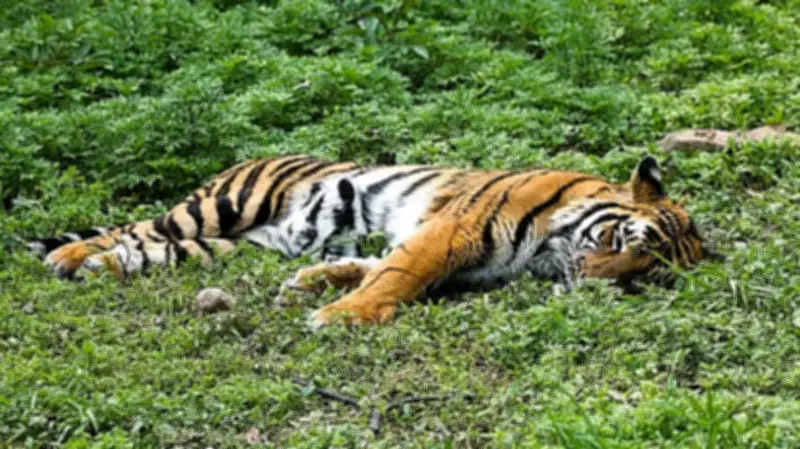
Injured Tiger Captured in Karnataka's Kodagu District After Series of Cattle Attacks
Wildlife officials in Karnataka have successfully captured an injured tiger in the Kodagu district, bringing relief to local residents after a week of escalating incidents. According to official reports, the tiger had sustained a significant injury to its leg and was found to be in poor overall health condition.
Week of Cattle Killings Creates Village Panic
Over the past seven days, the injured tiger had reportedly killed seven cattle in the region, creating substantial fear and anxiety among residents of nearby villages. The repeated attacks on livestock had heightened concerns about potential human-wildlife conflict in the area.
Officials confirmed that the tiger's deteriorating health condition likely contributed to its increased aggression toward domestic animals. The leg injury may have impaired the tiger's ability to hunt its natural prey in the forest, forcing it to target more accessible livestock near human settlements.

Capture Operation and Current Status
The capture operation was conducted by wildlife authorities who had been monitoring the tiger's movements following the series of cattle killings. The successful capture prevents further escalation of the situation and allows for proper medical assessment and treatment of the injured animal.
Village residents expressed relief following the capture, as the tiger's presence had created an atmosphere of fear and uncertainty in the community. Wildlife officials are now evaluating the tiger's condition to determine appropriate next steps, which may include rehabilitation or relocation depending on the severity of its injuries.
Broader Implications for Wildlife Management
This incident highlights ongoing challenges in managing human-wildlife interactions in regions where forest areas border agricultural and residential zones. The situation in Kodagu underscores the importance of prompt intervention when injured or distressed animals venture into populated areas.
Wildlife authorities emphasize that such captures are conducted with both human safety and animal welfare in mind, balancing the needs of local communities with conservation priorities. The incident serves as a reminder of the delicate balance required in regions where wildlife habitats intersect with human settlements.

