Seventy-eight years after one of Independent India's darkest chapters, the Jharkhand government has taken a significant step towards addressing a long-standing wound in the Adivasi community's collective memory. On January 1, 2026, Chief Minister Hemant Soren announced the formation of a high-level committee tasked with a solemn mission: to finally identify the victims of the 1948 Kharsawan police firing.
A Promise to Confront History
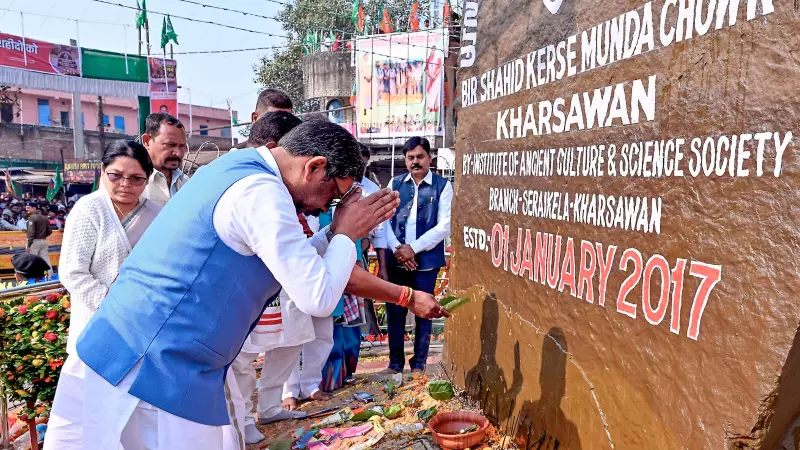
Standing at the memorial site in the Kolhan region on the massacre's 78th anniversary, the Jharkhand Mukti Morcha (JMM) chief offered floral tributes and declared a move that previous administrations had promised but never fulfilled. A draft proposal is ready for a committee that will include a retired judge, senior officials, local representatives, and social workers. This panel will scour government archives, historical documents, and, crucially, local oral traditions to put names to the martyrs. Once identified, these individuals will receive state honours, and their families will be provided financial assistance.
While politically significant in a region where the massacre has fueled Adivasi mobilization for generations, the announcement has been met with cautious skepticism by local communities and organizations. For them, Kharsawan is not merely a historical tragedy but a persistent symbol of the state's failure to acknowledge what many describe as Independent India's 'Jallianwala Bagh'.
The Day the Market Turned into a Killing Field
The tragedy unfolded barely five months after India gained independence. On January 1, 1948, thousands of Adivasis had converged at the weekly haat (market) ground in Kharsawan. The gathering was dual-purpose: it was a market day ahead of Makar Sankranti, and a large public meeting was scheduled where the iconic hockey player and tribal activist Jaipal Singh Munda, founder of the Jharkhand Party, was to speak.
Villagers had arrived from distant areas, carrying supplies and staying in temporary camps. A palpable hope, or anxiety, filled the air. There was a widespread belief that a decisive agreement regarding the contentious merger of the princely state of Saraikela-Kharsawan with Odisha would be reached, or that the dream of a separate Jharkhand state would move forward.
When Munda did not arrive by afternoon, other leaders addressed the restless crowd. The tension escalated when representatives returned from meeting Raja Ramchandra Singh Deo with news that the merger was finalized and irreversible. As the angry crowd resolved to continue its protest, police drew warning lines. Between 2:30 pm and 3 pm, police opened fire as the boundary was crossed. Local accounts suggest key leaders, including Munda, were prevented from reaching the venue, leaving less experienced local figures to manage the volatile situation.
Decades of Disputed Truth and Distrust
The exact death toll has been a point of bitter contention for 78 years, trapped between scant official records and rich oral history. A contemporary report in The Statesman mentioned 35 deaths, while other accounts, like that in former MP P.K. Dev's memoir, cite numbers as high as 2,000. Veteran journalist Anuj Kumar Sinha estimates the crowd itself was around 50,000. No official inquiry report has ever been made public, and no conclusive verification of casualties has been undertaken by the state.
This void has bred deep distrust. Adivasi scholars and activists have taken documentation into their own hands. Researchers like Ramchandra Soy from Kuchai block have collected local testimonies, including claims that Adivasi police personnel were confined to quarters anticipating a "major incident"—a detail that fuels the belief the firing was premeditated.
Through genealogies and village assemblies, social groups claim to have identified at least 23 martyrs from Kuchai block alone. They argue that a full count encompassing surrounding regions in Jharkhand, West Bengal, and Odisha would far exceed official estimates. To date, only two victims identified via government records have been formally recognized, with their families receiving compensation of Rs 1 lakh each in 2016.
The newly announced committee's mandate to consider oral traditions is a critical acknowledgment that Kharsawan's true history lives in community memory, not just in files. As this process begins, the fundamental question remains: Can official documentation ever truly capture the scale of the loss and trauma? And will political focus on Kharsawan evolve beyond ceremonial gestures into a genuine, lasting reckoning with the past?