The Jharkhand government's recent notification of rules for a landmark tribal empowerment law has triggered a major controversy, uniting political opponents and tribal activists in rare criticism. The move, intended to fulfill a decades-old promise, has instead opened deep political and social faultlines in the state.
A Historic Step or a 'Cold-Blooded Murder' of the Law?
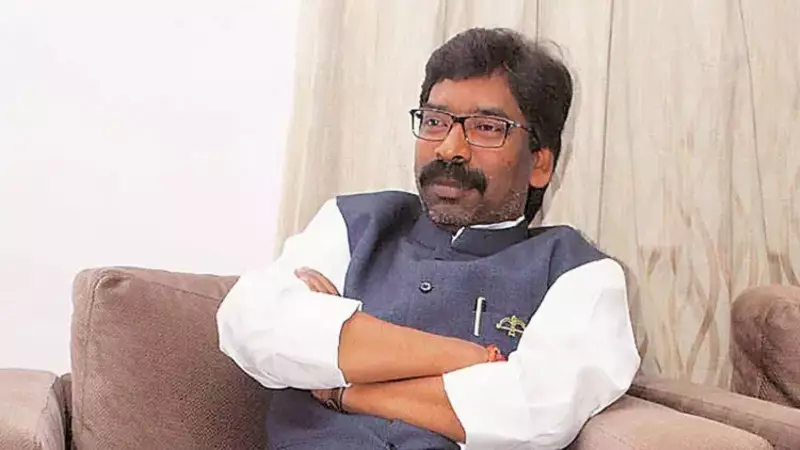
Last month, the Jharkhand Cabinet, led by Chief Minister Hemant Soren, approved the long-pending rules for implementing the Panchayats (Extension to Scheduled Areas) Act (PESA), 1996. The government hailed it as a historic stride towards strengthening tribal self-rule. However, the move has been met with fierce opposition.
Former Chief Minister and BJP's Khunti MP, Arjun Munda, launched a scathing attack, accusing the Soren government of "striking at the very soul" of PESA. In a press conference on Sunday, January 6, 2026, Munda termed the notified rules a "cold-blooded murder" of the original 1996 law. He argued that the framework dilutes the authority of gram sabhas—the bedrock of tribal democracy—and alters the traditional character of self-governance.
Munda emphasized that while states were empowered to frame rules for PESA's implementation, they were not meant to tamper with its core spirit. He criticized the rules for failing to clearly define the gram sabha in line with the Act's recognition of governance based on customary law, religious practices, and tradition.
Adivasi Outfits Echo Concerns, Fear State Overreach
Complicating the political narrative for the ruling JMM is the parallel opposition from Adivasi organizations. Groups like the Adivasi Bachao Morcha have publicly opposed the rules, claiming they violate PESA's original intent of empowering tribal communities.
Activist and former minister Geetashree Oraon stated that the rules strengthen state control instead of traditional systems. She alleged that by framing the rules under the Jharkhand Panchayati Raj Act (JPRA) of 2001, the door is open for higher-tier bodies and the state government to override gram sabha decisions.
These groups assert that while PESA grants gram sabhas veto power over development projects and ownership of minor forest produce, the new rules reduce them to a merely advisory role, placing forest departments and state agencies at the centre. They also allege the sidelining of traditional community leaders in favour of government-appointed officials, calling it a direct attack on Adivasi culture and autonomy.
JMM's Defence and the Underlying Challenge
The JMM has dismissed the criticism as "misleading" and "politically motivated." Party general secretary Vinod Pandey countered the BJP by highlighting its failure to implement PESA during its own long tenure in power, including under Arjun Munda's chief ministership.
Pandey asserted that the notified rules "strengthen rather than weaken the gram sabha" and provide a practical shape to tradition within the constitutional framework. He accused the BJP of spreading confusion and stated the government is open to constructive suggestions but will not tolerate misinformation.
Beyond the political sparring, the controversy underscores a persistent challenge for Jharkhand since its formation: integrating tribal customs and traditional self-rule into modern administrative frameworks without diluting their essence. The debate over PESA rules has become the latest flashpoint in this ongoing struggle, revealing the complex tensions between legal statutes, state authority, and the aspiration for genuine tribal autonomy.