Jammu and Kashmir Tourism Set for Full Reopening by May After Pahalgam Attack
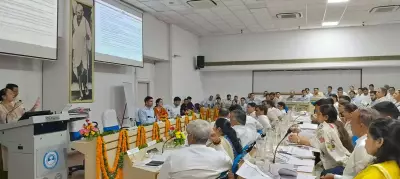
Jammu and Kashmir Chief Minister Omar Abdullah declared on Thursday that all tourist destinations currently closed following the devastating Pahalgam terror attack on April 22, 2025, are anticipated to reopen by May. This announcement came during the conclusion of discussions on Demands for Grants in the legislative Assembly, as reported by newsonair.
Gradual Restoration of Tourism Post-Attack
Abdullah emphasized that the administration has adopted a step-by-step approach to revive tourism in the Union Territory, despite initial fears within the industry that the attack would deter visitors for years. Following the incident, nearly 50 tourist spots were shut down. Approximately 25 of these locations have since resumed operations, with the remainder expected to reopen in the coming months.
"There are certain things I cannot state openly, but I can assure you that discussions have taken place with the Central government. They also have certain constraints. However, you can assume that by May, all these destinations will reopen," the Chief Minister stated. He noted that while the Centre has ordered the reopening of many sites, some remain closed due to ongoing constraints.

Focus on Infrastructure and Repeat Tourism
Abdullah highlighted the administration's extensive engagement with tourism stakeholders, aimed at rebuilding confidence through sustained outreach and gradually restoring activity, even as several destinations remained closed and restrictions persisted at key locations. He pointed out that improving tourist infrastructure is a key priority, as visitors often complain about inadequate basic facilities such as toilets in popular areas like Pahalgam, Gulmarg, and Sonamarg.
"The government is committed to addressing these gaps," Abdullah affirmed. He stressed that while attracting first-time visitors to Jammu and Kashmir is relatively easy, true success lies in ensuring they return. "Repeat tourism is the real benchmark of a strong and sustainable tourism industry, and that is where the government is now placing its focus."
Discussing the region's recovery, Abdullah added that hotels in winter destinations like Gulmarg and Sonamarg are operating at full capacity, and Srinagar is also experiencing significant tourist footfall. He reflected on the challenges faced, stating, "Tourism is a very important sector for Jammu and Kashmir. The reality is that when we were discussing the budget and grants last year, we had no idea that we would face such difficult circumstances."
Nine New Tourist Destinations Planned
The Chief Minister further revealed that the government is working to diversify tourism by opening nine new destinations. Initially planned under multilateral funding, the initiative faced obstacles, but now, in consultation with the Centre, it will proceed under a Centrally funded scheme.
"I had mentioned in this House last year that under multilateral funding, we wanted to open nine new destinations in J-K. The reality is that we had almost reached the stage of signing the multilateral funding agreement, but an obstacle arose which we could not overcome. Now, in consultation with the Centre, under a Centrally funded scheme, we will open nine new destinations. Their names will be released gradually," he explained.
Abdullah assured that Jammu will receive its fair share, noting projects like Jammu Lake and the Jammu Riverfront are nearing completion. He expressed intentions to extend the Riverfront project fully, drawing inspiration from Ahmedabad's Sabarmati Riverfront to enhance Jammu's pride and beauty.
Expanding Tourism Across Regions
Abdullah acknowledged that the government cannot force tourists to visit specific places but highlighted efforts to develop at least one tourist destination in every area, particularly in Jammu, which already attracts millions of pilgrims annually to the Mata Vaishno Devi shrine.

"If we can divert even 10 per cent of them, that is 10 lakh tourists, it can transform the entire economy of Jammu," he said. The government aims to retain visitors for six to seven days by promoting various tourism segments, including border tourism, pilgrimage tourism, golf tourism, and destinations like Bhaderwah.
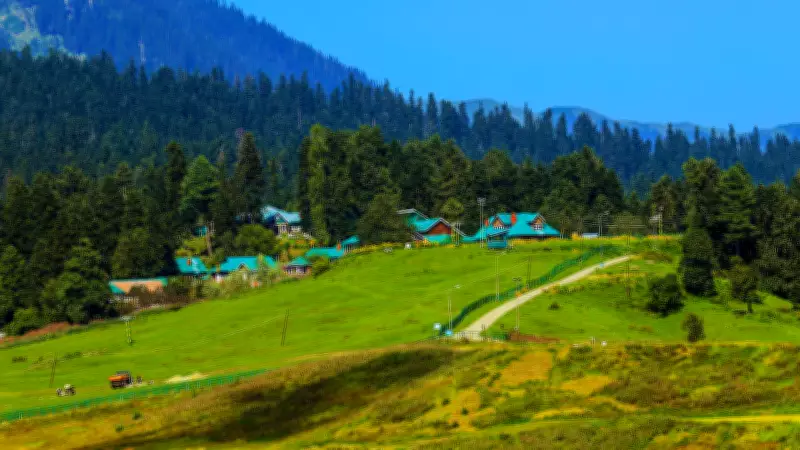
He stressed that Kashmir is no longer a summer-specific destination, with increased winter activity in Pahalgam, Gulmarg, and Sonamarg. The Tulip Garden in Srinagar and the newly developed Bagh-e-Gul-e-Dawood (Chrysanthemum Garden) have boosted footfall during traditionally lean periods like October–November. "Our effort will be to further develop it this year," Abdullah concluded.