

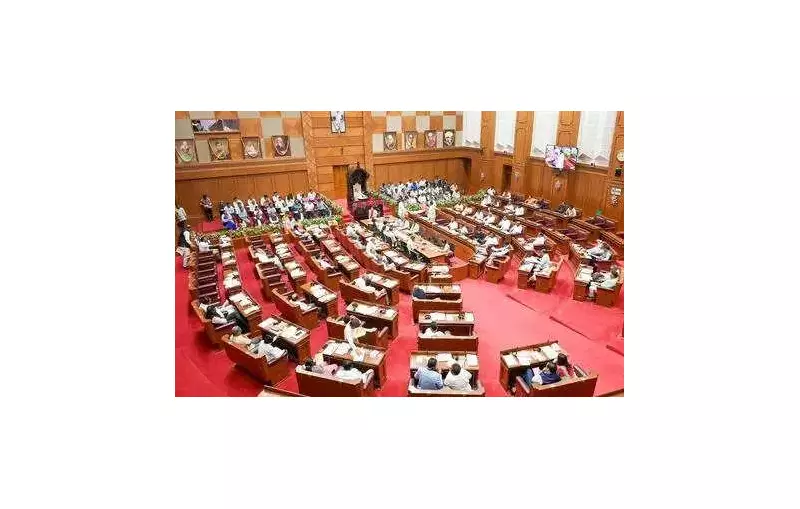
The Karnataka Legislative Assembly witnessed a stormy session as it passed a contentious bill aimed at curbing hate speech and hate crimes in the state. The Karnataka Hate Speech and Hate Crimes (Prevention) Bill, 2025, was pushed through by the ruling Congress government, overriding strong objections from the opposition Bharatiya Janata Party (BJP).
Uproar and Opposition in the Assembly
The bill, tabled on December 10 by state Home Minister G Parameshwara, led to significant uproar when Speaker UT Khader took it up for a vote. The situation escalated when BJP legislators stormed into the well of the House. This protest was triggered by a remark made by state minister Byrathi Suresha concerning coastal districts, which was later expunged from the records.
BJP leaders vehemently opposed the legislation, arguing that it infringes upon the constitutional right to freedom of expression. Leader of the Opposition R Ashoka labeled the proposed law as "draconian" and warned that it could be easily misused, posing a serious threat to free speech and a free press. He also questioned the necessity of a separate law when existing penal code provisions already address such offences.

Key Provisions of the New Anti-Hate Law
Home Minister Parameshwara outlined the stringent provisions of the bill during the debate. According to the proposed law:
- Anyone convicted of a hate speech or hate crime offence can face a jail term extending up to seven years along with a fine of Rs 50,000.
- For repeat offenders, the punishment is even harsher. They will face a mandatory two-year jail term, which can be extended to ten years, in addition to a hefty fine of Rs 1 lakh.
- Critically, all offences under this bill will be cognisable and non-bailable, meaning police can arrest without a warrant and bail is not a matter of right.
The bill provides a broad definition of hate speech. It covers any expression made in public view that is intended to cause injury, disharmony, enmity, hatred, or ill-will against a person or a community. The grounds for such speech include religion, race, caste, gender, sexual orientation, language, or tribe.
Political Fallout and Constitutional Concerns
The passage of the bill has intensified the political clash between the Congress and the BJP in Karnataka. BJP MLA V Sunil Kumar accused the government of ramming the bill through the House while completely ignoring the opposition's concerns. The debate also saw moments of bedlam when members objected to the Kannada term "dwesha aparadaha" used in the bill.
The core of the BJP's argument rests on the principle of freedom of expression. They contend that the law's expansive definitions and severe penalties could stifle legitimate political and social discourse. The ruling party, however, maintains that the law is essential to maintain social harmony and protect vulnerable groups from targeted hate campaigns in a diverse society.
The bill's journey is not yet over, as it will now be presented in the Legislative Council. Given the heated debate in the Assembly, its passage in the upper house is also likely to be fiercely contested, setting the stage for the next chapter in this political and legal battle.






