Karnataka Budget 2025: Excise Revenue Emerges as Key Fiscal Lever Amid Shortfalls
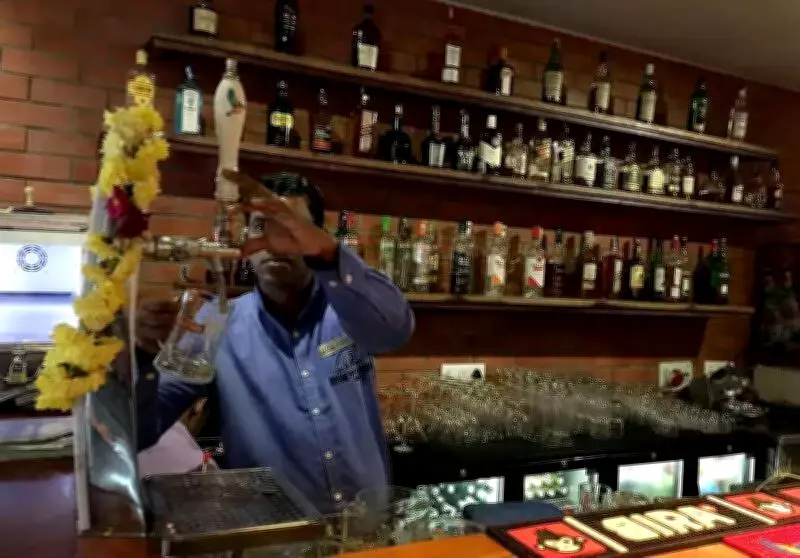
As Karnataka prepares for its upcoming state budget, excise revenue has become the most viable tool for resource mobilisation in a constrained fiscal environment. With limited opportunities to raise funds from other sources, the government is likely to heavily depend on liquor revenue to balance a larger spending plan, even as overall collections fall short of targets.
Fiscal Pressure and Revenue Shortfalls
The current fiscal numbers highlight significant pressure. Against the state's own tax revenue target of nearly Rs 2 lakh crore, the government has collected only around Rs 1.5 lakh crore until January. Bridging this shortfall before the end of March appears challenging, with key revenue streams underperforming.
Stamps and registration collections have notably lagged behind projections. The department mobilised Rs 20,350 crore against a target of Rs 28,000 crore. Officials indicate that the target may be revised down to Rs 25,500 crore, which is Rs 2,500 crore lower than the figure set by Chief Minister Siddaramaiah in his 2025-26 budget. One official stated, "We may end the fiscal with Rs 24,500 crore."
Non-tax revenue has also fallen short, with collections at Rs 9,654 crore as of January against a target of Rs 16,500 crore, expected to close at around Rs 11,500 crore. Historically, Karnataka has struggled to significantly increase receipts from user charges, dividends, mining royalties, and other administrative streams.
Limited Revenue Options Under GST
Under the GST regime, states have restricted independent taxation powers. Karnataka can augment revenue only through four major heads:
- Excise
- Stamps and registration
- Motor vehicle taxes
- Sales tax on petrol and diesel
With property registrations impacted by e-khata-related issues and limited scope to raise transport or fuel taxes, excise has remained the most buoyant source this fiscal year. Professor Krishna Raj, head of the Centre for Economic Studies and Policy, noted, "Commercial tax revenue suffered a short-term setback because of GST rate rationalisation. The revenue scenario indicates a slowdown driven by geo-politics. Since that's expected to continue, budget estimates for next fiscal need to be realistic."
Governance Disruptions and Structural Challenges
Officials cited governance disruptions for the decline in property-related revenues. One official explained, "Making e-khata mandatory to register property has hit us hard. While issuance of e-khatas was not free of hiccups, it adversely affected registration of properties. However, a general slowdown is evident, and it has affected all sectors."
Experts argue that a broader solution lies in structural reform. Vivek Mallay, an indirect taxation expert, said, "While states have limited room to manoeuvre, the Centre still controls direct taxes, retaining significant strength to mobilise revenue. State budgets are losing relevance. It calls for structural taxation reforms to ensure fiscal health of states."
Revenue Breakdown and Budget Focus
A detailed breakdown of revenue targets and collections up to January 2025 underscores the gaps:
- Commercial Taxes: Target Rs 1.2 lakh crore, Collections Rs 90,230 crore, Difference Rs 29,770 crore
- Excise: Target Rs 40,000 crore, Collections Rs 33,370 crore, Difference Rs 6,630 crore
- Stamps and Registration: Target Rs 28,000 crore, Collections Rs 20,350 crore, Difference Rs 7,650 crore
- Transport: Target Rs 15,000 crore, Collections Rs 10,594.6 crore, Difference Rs 4,405.4 crore
- Total: Target Rs 2 lakh crore, Collections Rs 1.5 lakh crore, Difference Rs 48,455 crore
As Chief Minister Siddaramaiah unveils his 17th budget, the focus will be on balancing higher spending with constrained revenues. With excise revenue likely to remain central to fiscal calculations, the government faces the challenge of navigating a tight fiscal landscape while addressing broader economic slowdowns and structural issues in state taxation.