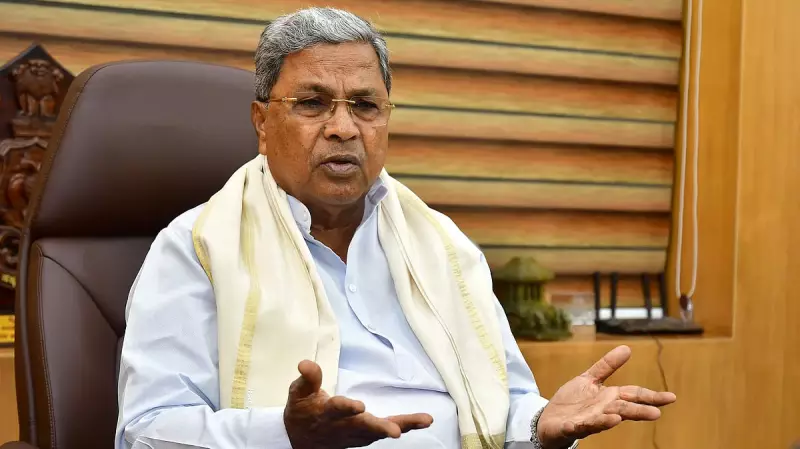
Karnataka Chief Minister Siddaramaiah has launched a sharp political attack, accusing the Bharatiya Janata Party (BJP)-led central government of attempting to erase the name of Mahatma Gandhi from the flagship rural employment scheme. The controversy centers on the recent rebranding of the Mahatma Gandhi National Rural Employment Guarantee Act (MGNREGA).
Allegation of a Deliberate Erasure
In a strong statement made on December 28, 2025, Siddaramaiah claimed that the decision to refer to the scheme as the 'VB-G RAM G Act' was not discussed or approved by the Union Cabinet. He framed this move as part of a broader, deliberate effort to diminish the Father of the Nation's legacy from public memory and policy.
"They are trying to erase Mahatma Gandhiji's name," the Chief Minister stated emphatically. He added a defiant note, asserting, "No matter what they try, Mahatma Gandhiji's name is permanent." This accusation brings the culture-war politics surrounding historical figures and symbols into the realm of central welfare schemes.

The Core of the Controversy: MGNREGA's Identity
The Mahatma Gandhi National Rural Employment Guarantee Act (MGNREGA) is one of the world's largest social security programs, guaranteeing 100 days of wage employment to rural households. Its prefix, linking it to Mahatma Gandhi, has been intrinsic to its identity since its inception. The alleged change in nomenclature, as highlighted by the Karnataka CM, is seen by the opposition Congress party as a significant ideological shift.
Siddaramaiah's remarks underscore a deepening political rift where the naming of schemes and institutions has become a battleground. The Chief Minister, a senior Congress leader, positioned himself as a defender of Gandhi's enduring legacy against what he perceives as a revisionist campaign.
Political Repercussions and Permanent Legacy
This incident is likely to fuel further debate in Karnataka and national politics. The state, with its history of competitive politics, often sees such issues gaining considerable traction. Siddaramaiah's statement serves multiple purposes:
- Mobilizing the Congress base around the protection of secular and historical icons.
- Challenging the central government's narrative on development and cultural heritage.
- Shifting public focus to ideological differences ahead of potential electoral battles.
The Chief Minister's core message remains clear: while names on official documents might be altered, the symbolic and moral authority of Mahatma Gandhi in India's public consciousness is unshakeable. The controversy highlights how welfare politics in India is increasingly intertwined with debates over history, legacy, and national identity.