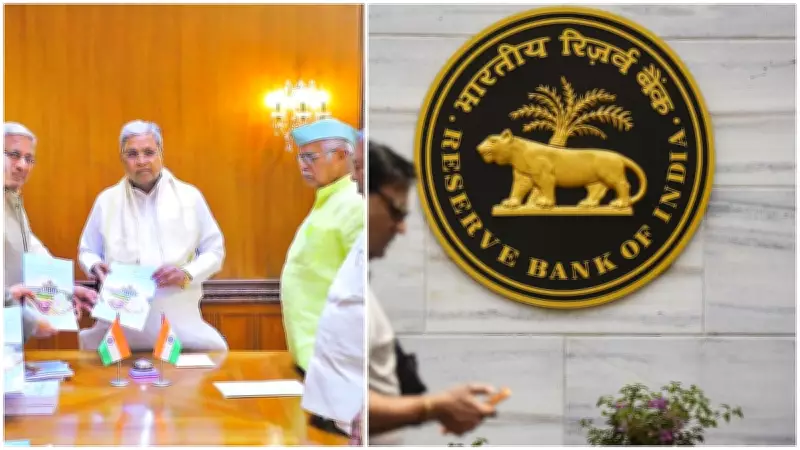
Karnataka Government Counters RBI's Debt Assessment
The Karnataka government has firmly contested a recent claim by the Reserve Bank of India (RBI) regarding the state's outstanding liabilities. According to the RBI, Karnataka's total liabilities have reached a staggering Rs 8.14 lakh crore, which would represent 26.5 per cent of the state's Gross State Domestic Product (GSDP). This figure breaches the permissible fiscal limit of 25 per cent set for state governments.
Government's Stance on Liabilities
In response, the Karnataka administration has maintained that its actual liabilities stand at 24.91 per cent of GSDP, well within the acceptable threshold. The government argues that the RBI's calculation includes items that are not actual debt obligations, thereby inflating the total. Officials emphasized that these figures encompass various assets and other financial instruments that do not constitute direct debt, leading to a misinterpretation of the state's fiscal health.
The dispute highlights a significant gap in how debt is assessed between central and state authorities. Karnataka's finance department has clarified that their accounting methods align with standard practices, and the reported liabilities are manageable and compliant with fiscal norms. This contention comes amid broader discussions on state finances and economic stability in India.
Implications for Fiscal Policy
The RBI's report, if accepted, could have implications for Karnataka's borrowing capacity and economic planning. However, the state government's rebuttal suggests confidence in its financial management. This ongoing debate underscores the importance of transparent and consistent reporting in public finance. Stakeholders, including investors and policymakers, are closely monitoring the situation to understand its impact on Karnataka's economic trajectory.
As the matter unfolds, further clarifications from both sides are expected to provide a clearer picture of the state's debt scenario. The Karnataka government's proactive stance aims to reassure citizens and markets about its fiscal discipline and commitment to sustainable growth.