

Karnataka Opposition Leader R Ashoka Launches Scathing Attack on State Budget
In a fiery critique delivered on Tuesday, Karnataka opposition leader R Ashoka launched a comprehensive assault on the state government's budget for the fiscal year 2026-27. Ashoka leveled serious allegations of widespread financial mismanagement, accusing the administration of accumulating debts even to the most vulnerable sections of society.
Allegations of Neglect Towards Vulnerable Populations
Ashoka made startling claims regarding the government's handling of welfare funds. He asserted that the administration collects a 3% cess specifically designated for transfer to the Central Relief Committee (CRC), which is responsible for the welfare of beggars. However, Ashoka alleged that the government has failed to hand over a substantial sum of Rs 23.4 crore to the CRC. "In that sense, the government is in debt to the beggars' colony," he declared, highlighting what he portrayed as a profound failure in social responsibility.
The opposition leader further intensified his criticism by addressing the plight of orphaned children. He revealed that the government has stopped paying monthly pensions of Rs 4,000 to these vulnerable minors. According to Ashoka, more than 26,000 children have lost their parents due to various tragedies including the Covid-19 pandemic, accidents, murders, and other reasons. He stated that these crucial monthly payments were abruptly halted seven months ago, resulting in accumulated dues exceeding Rs 73 crore. "What is the use of giving Rs 2,000 to women by stopping payments to orphaned children?" he questioned rhetorically, challenging the government's priorities in social welfare allocation.

Accusations of Fund Diversion and Unimplemented Projects
Ashoka expanded his critique to include broader financial irregularities. He alleged that several projects announced in the previous year's budget have not been implemented, suggesting a pattern of unfulfilled promises and inefficient governance.
Perhaps most controversially, Ashoka accused the government of systematically diverting funds meant for Scheduled Castes and Scheduled Tribes under the Scheduled Caste Sub-Plan (SCSP) and Tribal Sub-Plan (TSP). He claimed these allocations are being redirected to finance the government's guarantee schemes instead of their intended purpose of supporting Dalit welfare.
The opposition leader provided specific figures to substantiate his claims. He stated that large portions of funds earmarked for Dalit welfare have been diverted for other schemes over the past four years. In the current financial year alone, Ashoka alleged that Rs 14,198 crore has been diverted from SCSP and TSP allocations. "If money meant for Dalits is looted, can that be called social justice?" he asked pointedly, framing the issue as a fundamental betrayal of constitutional commitments to marginalized communities.
Chief Minister's Response and Historical Context
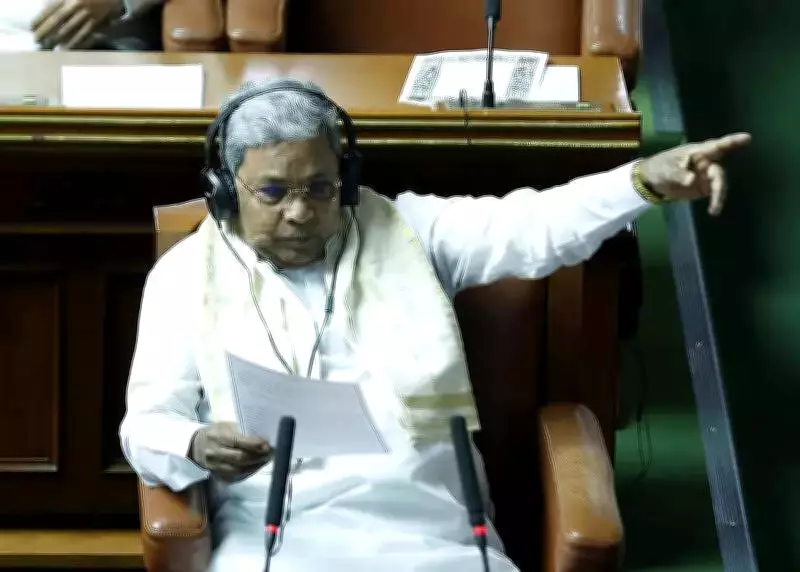
Responding to the allegations later, Chief Minister Siddaramaiah offered a different perspective by invoking historical context. He credited former Prime Minister H.D. Deve Gowda for his own record of presenting 17 state budgets, revealing that he became finance minister in 1994 at Gowda's insistence.
Siddaramaiah addressed Ashoka's jibes by recounting his initial reluctance to take the finance portfolio. He explained that he had originally sought the revenue portfolio, but it was assigned to R.L. Jalappa instead. Gowda then persuaded him to accept the finance portfolio despite his reservations. This response came after Ashoka recalled historical criticism of Siddaramaiah, mentioning how some had questioned how a "shepherd who could not count sheep" would present a budget—a reference to Siddaramaiah's background from the shepherds' community.
The exchange highlights the deep political divisions in Karnataka's fiscal governance, with the opposition alleging serious financial mismanagement affecting the state's most vulnerable citizens, while the government emphasizes historical continuity and experience in budget management.






