

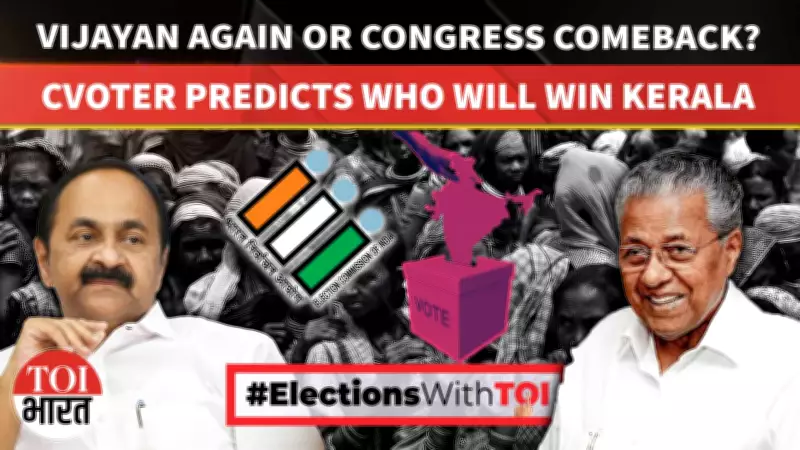
Kerala Election 2026: CVOTER Survey Predicts Intense Political Showdown
As Kerala prepares for the crucial 2026 assembly elections, political temperatures are rising with the release of the latest CVOTER survey. The poll indicates a highly competitive race between the incumbent Left Democratic Front (LDF) led by Chief Minister Pinarayi Vijayan and the opposition United Democratic Front (UDF) spearheaded by the Congress party. This comprehensive analysis delves into voter sentiment, key issues, and what the numbers suggest about Kerala's political future.
Survey Methodology and Overall Findings
The CVOTER survey, conducted across multiple constituencies in Kerala, employed a robust methodology involving face-to-face interviews and digital polling. The results show a remarkably close contest, with both major fronts securing nearly equal vote shares. This suggests that the 2026 election could be one of the tightest in Kerala's recent political history, with every seat potentially determining the final outcome.
Voter Sentiment and Major Issues
Economic concerns dominate the electoral landscape, with unemployment, inflation, and development projects emerging as primary factors influencing voter decisions. The survey reveals significant dissatisfaction with current economic policies, particularly among youth and middle-class voters. Additionally, governance efficiency and corruption allegations have become pivotal discussion points, with both fronts trading accusations.

Regional variations in voter sentiment are particularly noteworthy:
- Northern Kerala shows stronger support for LDF, citing infrastructure development
- Central regions demonstrate a swing toward UDF, emphasizing employment generation
- Southern constituencies remain divided, with local issues taking precedence
LDF's Strengths and Challenges
The ruling LDF, under Pinarayi Vijayan's leadership, maintains several advantages according to the survey. The government's welfare schemes, particularly in healthcare and education, continue to resonate with certain voter segments. However, the survey indicates growing discontent regarding implementation gaps and bureaucratic delays. The CVOTER data suggests that while the LDF retains a solid base, it faces significant erosion in urban areas and among younger demographics.
UDF's Comeback Strategy
The Congress-led UDF appears poised for a potential resurgence, capitalizing on anti-incumbency sentiments and economic dissatisfaction. The survey highlights several factors working in UDF's favor:
- Strong organizational restructuring at the grassroots level
- Effective messaging around alternative development models
- Strategic alliances with smaller regional parties
- Focus on local governance issues neglected by the current administration
Regional Dynamics and Caste Equations
Kerala's complex social fabric plays a crucial role in electoral outcomes. The CVOTER survey meticulously analyzes caste and community voting patterns, revealing significant shifts from previous elections. Muslim and Christian minority votes, traditionally divided between the fronts, show increased consolidation patterns. Meanwhile, the Nair and Ezhava communities demonstrate evolving political preferences that could determine the final tally.
Potential Scenarios and Government Formation
Based on the survey projections, three distinct scenarios emerge for the 2026 Kerala elections:
Scenario 1: A narrow victory for LDF, requiring strategic alliances with smaller parties to form government
Scenario 2: UDF securing a slim majority, marking a significant political comeback
Scenario 3: A hung assembly necessitating complex coalition negotiations
The survey emphasizes that Kerala's political landscape remains fluid, with approximately 15-20% of voters still undecided. These floating voters, concentrated in key swing constituencies, could ultimately determine which front crosses the majority mark.

Comparative Analysis with Other State Elections
Interestingly, the CVOTER survey places Kerala's political dynamics in broader context by comparing trends with simultaneous elections in Assam, Tamil Nadu, and West Bengal. While each state demonstrates unique characteristics, common themes of anti-incumbency, economic anxiety, and regional identity politics emerge across the board. This comparative analysis suggests that Kerala's election results may reflect larger national political shifts.
As the 2026 Kerala assembly elections approach, the CVOTER survey provides crucial insights into one of India's most politically conscious states. With both LDF and UDF demonstrating strengths and vulnerabilities, the final outcome remains unpredictable. The coming months will likely see intensified campaigning, strategic realignments, and heightened political activity as Kerala decides its future direction.





