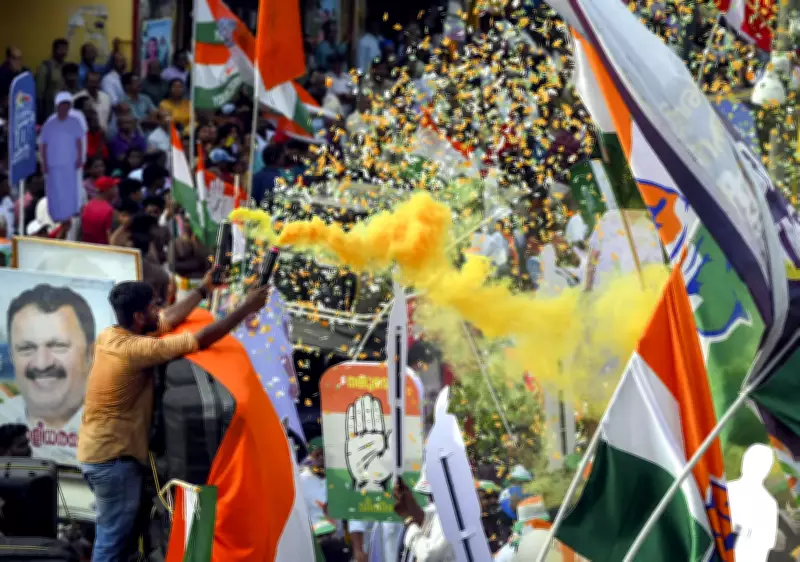
NEW DELHI: With not a very large gap between the Left-led LDF and the Congress-led UDF, the exit polls have predicted a neck-and-neck contest between both rival factions. According to the poll of polls, the UDF is expected to cross the majority mark with 72 seats in the 140-member Kerala Assembly.
Exit Poll Predictions
Pollsters predict a BJP win in Bengal and Assam, a DMK win in Tamil Nadu, and a UDF edge in Kerala. In Tamil Nadu, exit polls give an edge to the DMK, with the TVK expected to make a slight dent. Bengal exit polls show the BJP winning 150-175 seats.
However, the LDF is expected to be not far behind the Congress-led faction, with pollsters suggesting 63 seats for the ruling Front. Axis My India has predicted the widest margin between the LDF and the UDF, with 55 and 83 seats, respectively. PMARQ exit poll, on the other hand, has predicted a majority for the ruling LDF with 75 seats.

Political Context
In Kerala, the Congress-led UDF is seeking to replace the LDF government that is currently in power. Kerala's electoral history has typically been defined by alternating LDF and UDF governments. However, the LDF's consecutive victory in 2021 under Chief Minister Pinarayi Vijayan disrupted that pattern, making the 2026 contest a test of whether traditional anti-incumbency sentiment remains intact. A defeat for the LDF would also diminish the presence of the CPM in its last major stronghold.
Campaign Narrative Shifts
The campaign narrative has also undergone notable shifts. Early phases were dominated by issues such as corruption allegations, economic concerns, backdoor appointments, the Sabarimala gold heist controversy, and rehabilitation concerns of Wayanad landslide victims, alongside scandals involving opposition leaders. However, as campaigning intensified, these issues gave way to sharper political attacks, including allegations of covert alliances, communal polarisation debates, and direct exchanges between senior leaders.
Key Promises and Counter-Narratives
The LDF has framed the election as a referendum on the Pinarayi model, highlighting welfare expansion, infrastructure development, and administrative centralisation. It has also promised an expanded welfare agenda if voted back to governance.
The UDF, on the other hand, has advanced a counter-narrative of welfare with accountability, questioning the efficiency, transparency, and fiscal sustainability of the government's programmes while banking on voter fatigue and economic concerns.
About the Author: The TOI News Desk comprises a dedicated and tireless team of journalists who operate around the clock to deliver the most current and comprehensive news and updates to the readers of The Times of India worldwide. With an unwavering commitment to excellence in journalism, our team is at the forefront of gathering, verifying, and presenting breaking news, in-depth analysis, and insightful reports on a wide range of topics. The TOI News Desk is your trusted source for staying informed and connected to the ever-evolving global landscape, ensuring that our readers are equipped with the latest developments that matter most.