Kerala Government's Development Claims Under Scrutiny as Assembly Records Reveal Information Gaps
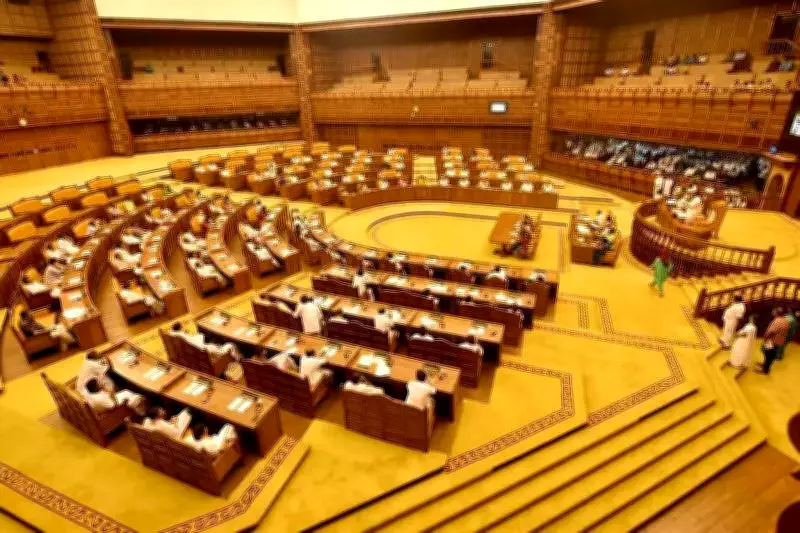
As the Kerala state government prepares to face upcoming elections by highlighting its development achievements, assembly records paint a concerning picture of administrative preparedness. Multiple questions raised by ruling and opposition MLAs regarding key government projects have received responses stating that "information is being collected" or remains unanswered entirely, raising questions about the government's ability to substantiate its development claims.
Pattern of Unanswered Questions Emerges in Assembly Records
The issue came to light when ruling MLA K V Sumesh sought details of major projects implemented by the state government from 2021 to 2026. The official response was brief and revealing: "Information is being collected." This reply has drawn significant attention because the government is widely expected to present these very development projects as its key achievements during election campaigning.
Assembly records from the last session show this response is part of a broader pattern where several questions addressed to Chief Minister Pinarayi Vijayan remain unanswered weeks and even months after submission. Notably, some of these unanswered questions were raised by senior ruling front MLAs themselves, including CPM state secretary M V Govindan and LDF convener T P Ramakrishnan.
Specific Projects and Schemes Awaiting Information
A set of questions raised by Govindan, along with O S Ambika, Sujith Vijayanpillai and M Mukesh, sought crucial details about the Institute of Advanced Virology (IAV) at Thonnakkal Life Sciences Park. The MLAs asked whether the government had reviewed the institute's progress, whether investors from other states or abroad had approached the facility for research collaborations, and what steps were being taken to develop it into a major center for virology research in the country.
The institute was specifically conceived to strengthen Kerala's capacity to diagnose infectious diseases such as Covid-19 and Nipah without depending on laboratories outside the state. Despite its importance, assembly records confirm these questions did not receive replies.
Ramakrishnan raised another unanswered question regarding the Chief Minister's entrepreneurship development scheme, asking how many people were able to start enterprises under the program and the total amount spent so far. Similarly, ruling front MLA U R Pradeep sought details of the state's much-publicized start-up ecosystem without receiving a response.
Financial Transparency Questions Also Unanswered
Questions relating to the Chief Minister's Distress Relief Fund (CMDRF) also remained unanswered in assembly records. Job Michael, MLA, sought comprehensive details including the number of applications received seeking financial assistance (including medical aid) since the present government assumed office, how many applicants were granted assistance, the total amount disbursed, and a panchayat-wise breakdown of beneficiaries.
Another ruling MLA, D K Murali, asked for the total amount distributed from the CMDRF since the previous government's tenure and the number of beneficiaries. These queries too did not receive replies, raising concerns about financial transparency.
Opposition MLAs faced similar situations, with IUML MLA P K Basheer asking the government to provide department-wise details of temporary appointments made since the present government assumed office. The response recorded that the information was not compiled.
Systemic Issues in Information Management
Assembly records indicate that many delayed or sensitive queries follow a similar pattern in the replies eventually filed. In several cases, responses simply state that data "was not compiled and kept" or that "information is being collected." Under assembly procedures, MLAs submit questions approximately ten days before the session begins. These are forwarded by the Legislature Secretariat to concerned administrative departments, which then collect required information from field departments before preparing replies.
Since assembly answers must be precise, information often has to be collated from multiple departments, which can understandably lead to delays. However, prolonged delays sometimes render answers irrelevant by the time they are provided. Sources in the legislature secretariat revealed that it has been repeatedly insisted that delayed replies should be filed along with a delay statement during the same session, or at the latest on the first day of the next session.
Successive speakers have issued rulings criticizing the casual approach of government departments in furnishing replies to written (unstarred) questions raised by MLAs. This systemic issue raises broader questions about administrative efficiency and transparency as the government prepares to present its development record to voters in upcoming elections.