Kochi's Notorious 'Death Trap' Highway to Finally Shine After 10 Years of Darkness
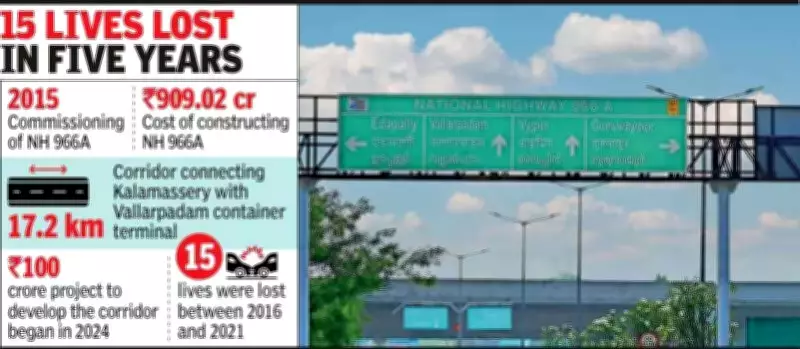
In a major breakthrough for road safety in Kerala, the long-dark Container Terminal Road (NH 966A) in Kochi is finally poised to receive illumination, ending a decade-long period of hazardous nighttime travel. The 17.2-kilometer highway, which critically links Kalamassery with the International Container Transhipment Terminal (ICTT) at Vallarpadam, has been operating without functional streetlights since its commissioning in 2015, earning it the grim moniker of a "death trap."
Bureaucratic Deadlock Resolved with Drastic Cost Reduction
The path to lighting this vital corridor was cleared after the Kerala State Electricity Board (KSEB) agreed to a substantial reduction in installation and connection charges. Following prolonged negotiations, KSEB submitted a revised estimate of just Rs 40 lakh, a dramatic drop from their initial demand of Rs 1.05 crore. This resolution effectively ends the financial impasse that had stalled progress for months.
"KSEB submitted a revised estimate with a reduced cost of Rs 40 lakh. After KSEB sets up two more transformers, the newly installed streetlights will be made functional on a war-footing," confirmed a senior National Highways Authority of India (NHAI) official. A KSEB official added that the payment issue was settled "amicably" and that power connection would be provided immediately upon receipt of NHAI's acceptance letter.

Infrastructure Upgrades to Stabilize Electrical Load
To support the new lighting system, significant electrical upgrades are underway. KSEB is installing two dedicated 100 KVA transformers specifically for the streetlights, while also upgrading an existing transformer to 160 KVA capacity. These measures are designed to stabilize the electrical load and ensure reliable operation of the illumination infrastructure along the busy highway.
A Tragic History of Accidents and Fatalities
The absence of streetlights on this crucial corridor has had devastating consequences. Official records reveal that between 2016 and 2021 alone, 15 lives were lost in accidents along the unlit stretch. The primary cause of these tragedies was poor visibility on bridges and culverts, leading to smaller vehicles colliding with stationary trucks.
The highway handles immense daily traffic, exceeding 35,000 passenger car units. This includes a constant flow of over 1,500 heavy trucks and trailers. The combination of dense logistics traffic and inadequate infrastructure, particularly the lack of dedicated bays, created exceptionally dangerous conditions after sunset.
Modernization Efforts and Installation Timeline
As part of a comprehensive Rs 100-crore development initiative launched in 2024 to modernize the corridor, infrastructure improvements included the installation of more than 1,100 energy-efficient LED lamps. These streetlights were physically installed in April 2025, but their activation was delayed due to the dispute over transformer installation costs and responsibility.
While NHAI had agreed to install and fund the hardware, KSEB's subsequent financial demands brought the project to a standstill. NHAI officials maintained they should pay the standard rate of approximately Rs 8 lakh per transformer, but KSEB's initial estimate of Rs 1.05 crore included what NHAI described as "disproportionately high" labor charges of Rs 49.11 lakh, which lacked detailed justification.
The conflict escalated from an initial KSEB Vypeen division request of Rs 18.01 lakh for power connection, which NHAI found higher than expected and requested a detailed breakdown. KSEB then escalated their estimate to the controversial Rs 1.05 crore figure before the final compromise was reached.
With the financial obstacle now removed, authorities are working urgently to activate the lighting system that promises to transform one of Kerala's most dangerous highways into a safer passage for all travelers.