

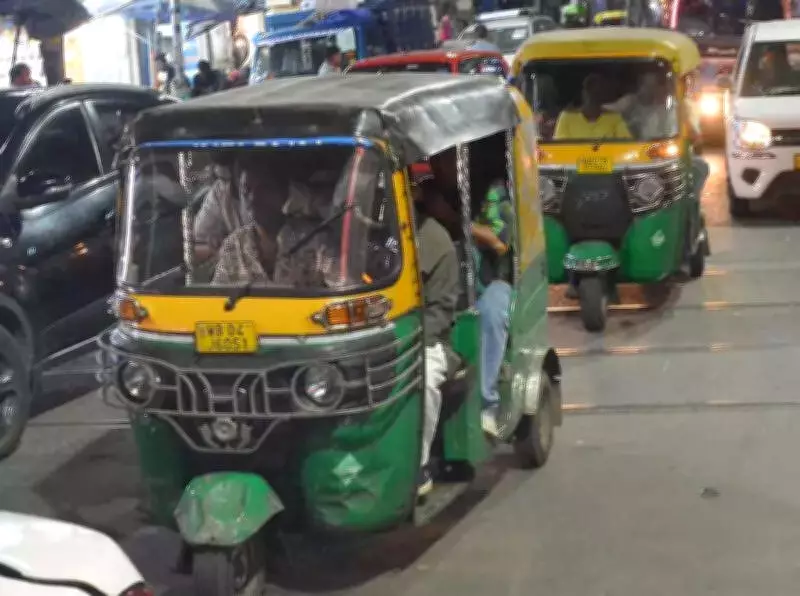
Kolkata Auto Commuters Hit Hard by Soaring Fares Amid Fuel Shortage Crisis
Daily commuters across Kolkata and its southern and eastern suburbs are facing severe financial strain as auto-rickshaw fares have skyrocketed to three times their normal rates. This unprecedented surge stems from auto operators abruptly truncating their routes to conserve fuel amid shortages linked to the ongoing West Asia geopolitical crisis.
From Single Ride to Patchwork of Short Hops
What was once a straightforward, single-ride commute has transformed into a frustrating patchwork of short hops. Passengers are now forced to change autos multiple times to complete their journeys, significantly increasing both travel time and cost.
"I queued up in the morning on Tuesday, but the pump was dry. I finally managed to refuel just 20 litres in the evening. The entire day I didn't earn a rupee," explained Aloke Das, an auto operator on the Garia–Baruipur route. "We have no option but to shorten routes to conserve fuel."

Route Splitting Creates Financial Burden
The impact is particularly severe on key intra-city and suburban routes:
- Kadapara–Machua Route: Previously costing Rs 20, this route is now divided into three segments: Suktara Cinema to Sishu Hospital (or Rail Quarters), Sishu Hospital to Rajabazar, and Rajabazar to Machua. Each segment now costs Rs 15, pushing the total fare to Rs 45.
- Baruipur–Garia Corridor: Via Rajpur and Narendrapur, along with suburban links like Sonarpur–Garia, these routes that earlier cost around Rs 20 are now broken into two or three segments, with passengers paying up to Rs 50 for the same journey.
- Longer Routes Hit Hardest: The Baruipur–Shapoorji (ST12) route connecting Garia, Ruby, Science City and New Town has been divided into multiple sections. Commuters who previously paid Rs 45 now shell out between Rs 90 and Rs 110.
- Inner-City Routes Affected: Even short routes like Beleghata–Sealdah are feeling the impact, with autos now running in segments between Ragini Cinema, CIT More and Sealdah, pushing fares from Rs 15 to Rs 45.
Commuters Voice Their Struggles
"None of the autos go the full length any more," lamented Srirajul Sheikh, who travels daily from Machua to deliver stationery near Suktara Cinema. "Since there is no proper bus alternative, I'm forced to change three autos. I end up spending more than double my usual. A big chunk of my earnings is now going into transport."
Aninda Kar, who travels daily from Sealdah to Building More, confirmed the pattern: "Even short inner-city routes are feeling the heat."
Operators Cite Survival Strategy
Auto operators argue that without assured fuel supply, running full-length routes has become economically unviable. "If we run the entire stretch and run out of fuel midway, we lose both time and money. Short trips help us survive the day," explained an operator at Garia stand.
All auto operators indicated that the Trinamool trade union opposes any fare hike during the current election season in Bengal, leaving them with route shortening as their only practical response to the fuel crisis.
Exposing Public Transport Deficiencies
Commuters say the crisis has starkly revealed the lack of reliable public transport alternatives in many city areas. "With no bus and no regulation on fares, we are at the mercy of autos," said Anamika Bose, a school teacher from Beleghata.
The situation highlights how global geopolitical tensions can have direct, tangible impacts on local economies and daily life, with Kolkata's transportation network becoming an unexpected casualty of international conflicts affecting fuel supplies.






