

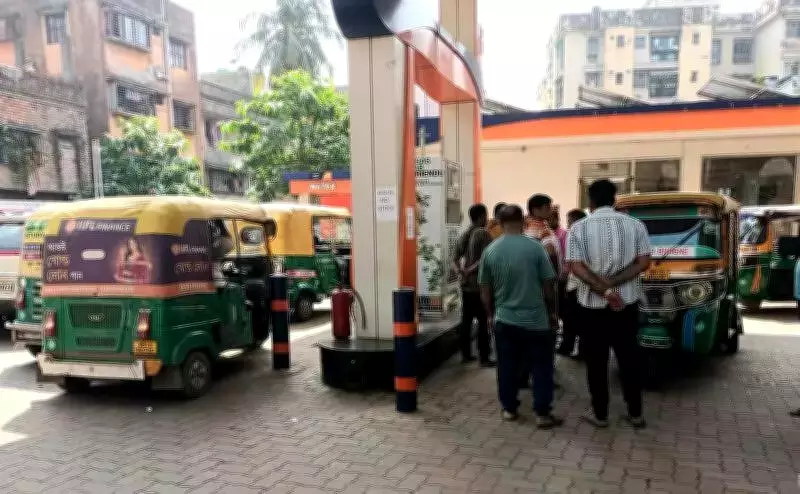
Kolkata Faces Sunday Transport Crisis as Auto Numbers Plummet
A dramatic reduction in the availability of auto-rickshaws across Kolkata on Sunday created significant difficulties for commuters throughout the city. Many residents reported extensive waiting periods and were forced to resort to costly alternative transportation options to reach their destinations.
Operators Cite Fuel Costs and Supply Constraints
According to statements from auto operators and route committee representatives, an estimated 60% to 70% of autos remained off the roads. The primary reasons cited include rising fuel expenses and ongoing supply limitations affecting the auto-rickshaw community.
Auto-rickshaws serve as the essential backbone for last-mile connectivity within Kolkata, particularly during weekends when bus and metro services operate with reduced frequency and experience higher crowding levels. The unexpected scarcity of autos disproportionately impacted leisure travelers and individuals visiting friends or relatives, who encountered substantial challenges securing transportation for their return journeys.

Commuters Share Their Ordeal
"I visited my cousin's residence in south Kolkata. By evening, available autos were extremely scarce. I waited approximately 40 minutes before ultimately booking a cab at surge pricing," recounted Rituparna Dey, a resident of Entally.
Suman Chatterjee from Kalighat expressed similar frustrations, stating, "Autos represent the only reliable option for short-distance travel. When they vanish on Sundays, the entire transportation system effectively collapses."
Economic Pressures on Auto Operators
Asim Naskar, an operator on the Rashbehari–Ballygunge Station route, provided detailed insight into the operational challenges. "Auto gas prices increased by Rs 13 this month. Additionally, we are receiving only 10 litres of LPG, which proves insufficient for a full day's operation. Our route committees are prohibiting fare increases. Under these conditions, operating an auto without a full complement of passengers becomes financially unviable. On Sundays, securing all four passengers for a single trip is particularly difficult."
Auto drivers emphasize that the current economic model is unsustainable. With typical daily distances ranging from 120 km to 170 km and fuel efficiency averaging 16 km to 17 km per litre, the existing fuel cap compels many operators to either shorten their trips or abstain from operating entirely.
"If we cannot complete sufficient trips with full passenger loads to cover fuel costs and daily expenses, it becomes more prudent to cease operations," explained another driver from the Garia route.
Route Committees Acknowledge Complex Situation
Members of south Kolkata route committees recognize the severity of the problem but indicate that fare adjustments do not present a straightforward solution. "We comprehend the hardships faced by operators, but raising fares would directly increase the financial burden on passengers. We are attempting to balance both perspectives while also escalating the matter to leadership," stated a route committee member.
Shift from Illegal to Authorized LPG Exacerbates Issues
Historically, numerous autos operated using 'kata' gas, which refers to pilfered domestic LPG. However, this alternative has also become economically unfeasible as it is increasingly diverted to commercial LPG cylinders and sold at premium rates.
The situation has deteriorated following a transition from illegal 'kata' gas to authorized LPG, which has substantially amplified demand at official distribution outlets. While this shift was intended to enhance safety and regulatory compliance, it has inadvertently generated significant supply pressure within the system.
Officials Report Surging Demand Figures
Official data indicates a remarkable surge in demand in recent days. On March 16 and 17, peak demand reached 47.6 tonnes and 47.5 tonnes respectively—figures far exceeding the January–February daily average of 10.4 tonnes. Approximately 20 auto-LPG stations across Kolkata are reportedly experiencing difficulties maintaining adequate supply levels.

For commuters, the immediate concern remains practical mobility. "If this pattern continues, Sundays will transform into a logistical nightmare for anyone without access to a private vehicle," cautioned Dey, highlighting the broader implications of the ongoing transport crisis.





