Kolkata's Underground Liquor Trade Booms During Election Dry Spell
The fine art of bootlegging, once considered a fading relic of Kolkata's past, has made a dramatic and widespread comeback across the city. This resurgence is directly fueled by the unprecedented 9.5-day liquor ban imposed ahead of the elections, creating a perfect storm of restricted supply and skyrocketing demand.
Covert Operations and Soaring Prices
From shadowy roadside exchanges to discreet home deliveries, an extensive underground network of illegal liquor sales has sprung to life. On Tuesday, a resident of New Alipore undertook a significant journey to Pailan to purchase alcohol from a makeshift outlet operating out of an under-construction building. In Bhowanipore, another individual tapped into his personal network to arrange home delivery by a biker, paying a steep premium for the service.
These stories highlight the extraordinary lengths Kolkata residents are going to during this enforced dry period. What was once a routine purchase has transformed into a covert exercise, with buyers relying on informal contacts, coded exchanges, and navigating sharply inflated prices.

Black Market Hubs and Price Surges
Several areas have quickly emerged as prominent black-market hubs for illicit alcohol sales. Key locations include:
- Pailan in Behala
- Stretches near the Dakshineswar Bridge
- The vicinity of Hanuman Mandir near College Street
- Pockets such as Goborjhuri in Behala and Jadavpur
- Gholesahapur Bajar
Prices have surged dramatically across all categories. Premium liquor such as Scotch is being sold at nearly 50% above standard retail rates, while lower-end whisky, vodka, and rum are fetching almost double their usual market price.
Historical Context and Current Realities
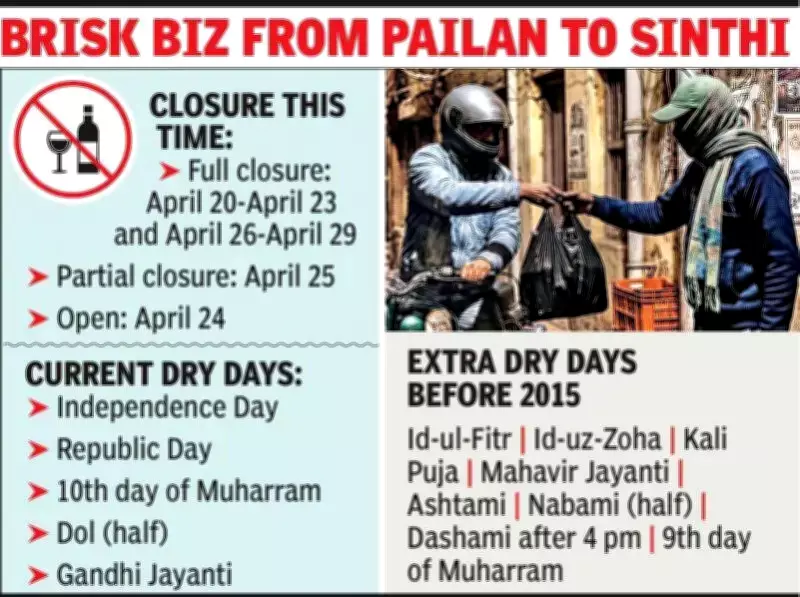
This situation has revived memories of the pre-2015 period when Kolkata residents routinely navigated frequent dry days, with as many as 13 imposed annually. In recent years under the Trinamool government, this number had been significantly reduced to approximately four and a half days per year.
The impact of the sudden shutdown was immediately visible in areas like Chiriamore on BT Road, where liquor shops closed their shutters promptly after the order. However, supply chains have persisted remarkably. On Monday evening, customers were observed lingering near closed outlets, while others slipped into nearby lanes and returned with plastic packets containing bottles.
A middle-aged man waiting outside one such lane reported that he managed to procure a bottle through a familiar shop owner but had to pay an additional Rs 300. An IT professional from Sinthi More described a more organized setup, with home delivery arranged through a contact at an extra cost of Rs 400 per bottle.
Duration and Election Linkages
Industry insiders note that the current nine-and-a-half-day dry spell ranks among the longest in recent memory, surpassed only by the Covid-19 lockdown restrictions. Traditionally, dry days were limited to a few national holidays and select occasions throughout the year.
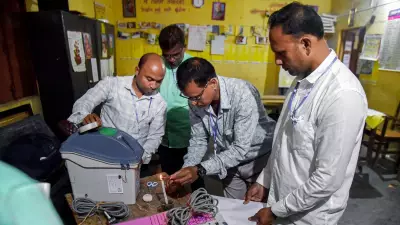
The present restrictions are directly linked to the election schedule, with voting spread across April 23 and April 29. This has prompted a prohibition period from April 20 to April 29, with only limited relaxation permitted in between these dates.
The underground liquor trade's dramatic revival underscores how policy decisions can inadvertently stimulate black market economies, with Kolkata's bootlegging networks demonstrating remarkable adaptability and resilience in the face of official restrictions.