

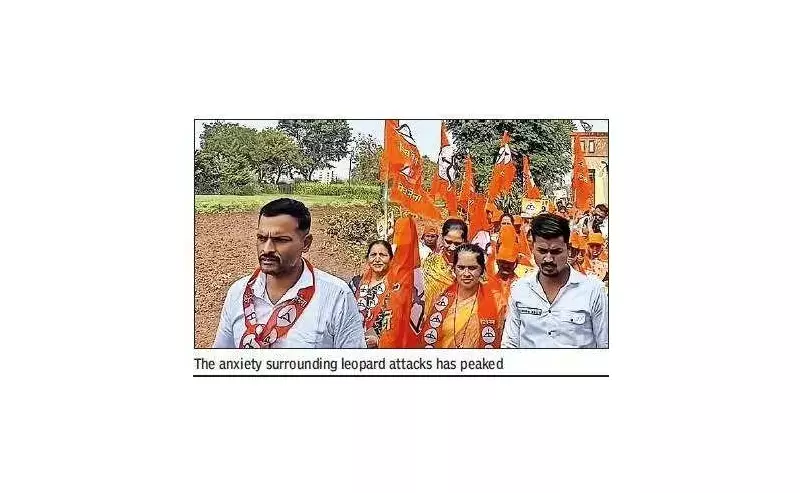
A shadow far more formidable than political rivalry is dictating the rhythm of election campaigns in parts of Pune district. As the state heads to the polls on December 2, the pervasive fear of leopard attacks in the regions of Manchar, Ambegaon, and Junnar has forced a dramatic and unsettling shift in how politicians connect with voters.
Campaigning Against the Clock
The setting sun now acts as a hard deadline for even the most seasoned political candidates. Rajeshree Ganjale, a Shiv Sena candidate contesting the Manchar nagar panchayat election, exemplifies this new reality. Her campaigning concludes sharply at 6:30 PM, a decision driven not by convenience but by the genuine threat of leopard encounters after dark.
This sentiment is echoed across the three regions, where candidates, scarred by repeated leopard sightings and attacks, have confined their outreach strictly to daylight hours. The prime evening hours, traditionally ideal for voter interaction, have transformed into a tense race against dusk.

A Community Gripped by Fear
The anxiety is not limited to politicians. Voters are equally apprehensive, firmly declining evening visits from campaigners and refusing to step outdoors after sunset. The usual bustling groups of party workers, which often number 40 to 50 during the day, dwindle rapidly to a mere 5 to 10 individuals as night falls.
With just one day remaining before the December 2 elections, every minute of daylight has become precious. The gravity of the situation has even influenced top party leaders, who have rescheduled their rallies to the morning or afternoon. Deputy Chief Ministers Eknath Shinde and Ajit Pawar were among the senior figures who adapted to daytime campaigning, a significant departure from the typical preference for evening events when people are more relaxed.
"Fear of leopards has changed the strategy," stated Junnar's Vishal Patil, highlighting the profound impact on electoral tactics.
Leopard Crisis Dominates the Political Agenda
The escalating leopard crisis has become a central issue in election manifestos, reflecting the urgency felt by the local electorate. Proposals from candidates range from sterilization drives to the strategic relocation of the big cats.
Ambegaon resident Varsha Raut articulated the daily struggle, pointing out that while candidates can visit in the morning, the community's fight for safety is constant. "Every day, farmers go to their fields fearfully," she said.
The demand for concrete solutions is a common thread in voter sentiment. Mandakini Bankhale emphasized the need for population control and traps at strategic points, citing children's safety as the paramount concern. The frustration is palpable among residents like Manchar farmer Tukaram Khandge, for whom the problem is year-round, affecting even festivals and weddings as people avoid the dark.
Senior citizen Vitthal Shinde provided a stark assessment of the situation, claiming, "There are at least 50 leopards in our area — as common as street dogs. Their numbers will go up as they multiply. Candidates with concrete solutions will get our votes." This powerful statement underscores how the leopard threat is now a decisive factor at the ballot box.






