

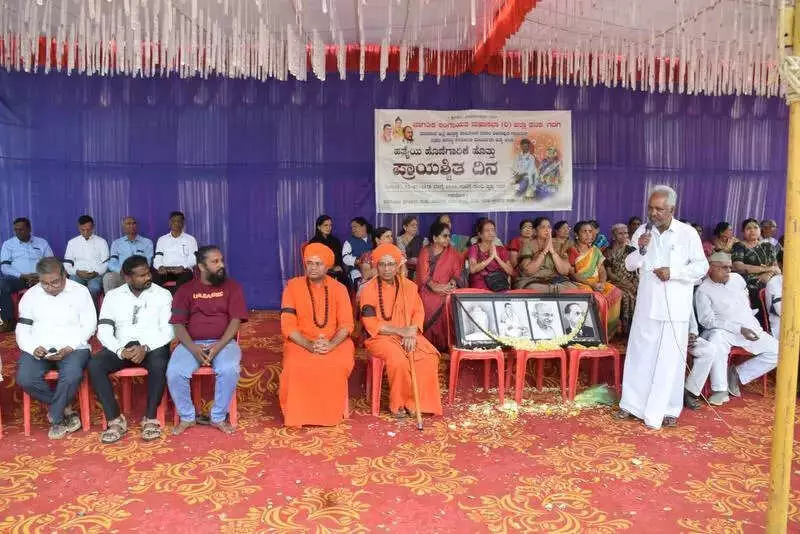
Public anger is mounting in Karnataka over the perceived silence of prominent Lingayat organisations and religious seers following the brutal honour-killing of Manya Patil, a young pregnant woman from the community. The incident, which occurred in late last month, has sparked a significant social reckoning, leading a key Lingayat body to break its silence in a powerful gesture of solidarity and remorse.
A Tragic Case of Caste Violence
Manya Patil, a 20-year-old Lingayat woman who was seven months pregnant, was allegedly assaulted by her family members in Inam Veerapur village, Dharwad district. She later succumbed to her injuries. Her crime, in the eyes of her family, was marrying Vivekanand Doddamani, a man from the Dalit community. The police have since arrested her father, Prakashgouda, and two of his relatives, who are also accused of assaulting members of Vivekanand's family.
While Dalit rights groups swiftly rallied behind the victim's husband's family to demand justice, the initial response from many major Lingayat groups was notably muted. This silence became a point of intense criticism on social media and among activists, creating a growing rift within the social discourse.

Breaking the Silence: A Day of Repentance
In a significant development, the Gadag district unit of the Jagatika Lingayat Mahasabha (JLM) decided to break this silence. This past Friday, they observed a solemn 'Repentance Day,' joining hands with members of the Dalit community. The event marked a public acknowledgment of the community's role in the ongoing scourge of caste-based violence.
Prominent seer Tontada Siddharam Mahaswamiji of Tontarya Math addressed the gathering, emphasizing that the Indian Constitution grants every adult the right to marry a person of their choice. He lamented that despite the 12th-century Sharanas' efforts to eradicate the caste system, it still leads to such tragedies. He welcomed the government's move to frame a stricter law against honour killings but stressed the need for greater public awareness on inter-caste marriages.
Ashok Baragundi, a JLM functionary, stated that this Repentance Day, observed by the very community to which Manya and her accused family belong, should serve as a model for upper-caste communities across India. The event saw participation from various Lingayat leaders including Shantalinga Swamiji of Bhairanahatti, Girija Badigannavar, and S S Harlapur, among others. Songs on social awareness were performed by the Dalita Kala Mandali.
Growing Calls for Accountability and Action
The observance has amplified calls for other Lingayat organisations and seers to publicly condemn the killing. Functionaries from groups like Basava Kendra, Basavad Dala, Akkana Balaga, and Kadali Mahila Vedike clarified they never defended the accused simply because they were Lingayats. They pointed to historical precedent, noting that inter-caste marriages, even between Brahmins and Dalits, were accepted in the 12th century by the Sharanas.
Writer Basavaraj Sulibhavi said the Repentance Day was meant to highlight humane qualities and good sense. However, the silence of other influential seers continues to be questioned. Lingayat scholar Ramjan Darga argued that seers who often invoke the name of Basavanna, the revered 12th-century social reformer, must launch a campaign against casteism. "Their silence is an insult to Basavanna," he commented. Columnist Kusuma Ayarahalli accused community leaders of using Basavanna as a political tool when they fail to condemn atrocities by their own community members.
The movement sparked by Manya Patil's death is gaining momentum, with indications that more Lingayat groups are likely to come forward openly to protest the killing, setting the stage for a broader community-led stand against honour-based violence.






