

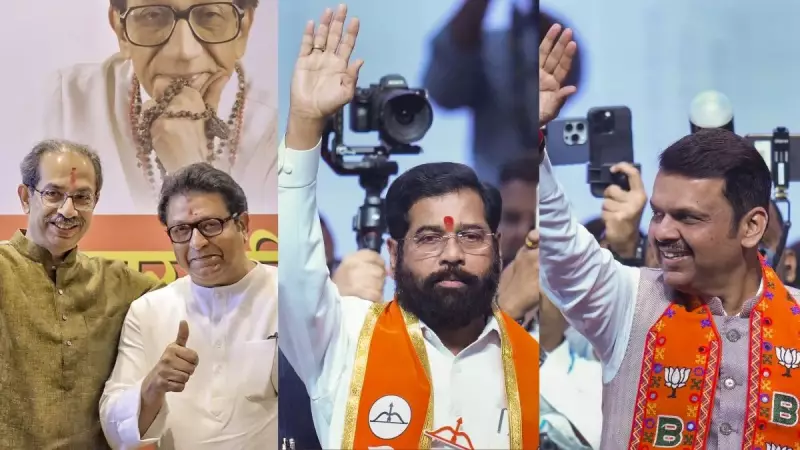
Political activity in Maharashtra has intensified well ahead of schedule as major parties kickstart their preparations for the pivotal elections to various municipal corporations, including the Brihanmumbai Municipal Corporation (BMC), scheduled for 2026. This early maneuvering underscores the high stakes involved in controlling India's richest civic body and other key urban local bodies across the state.
Early Bird Campaigning and Manifesto Promises
Traditionally, campaigns for civic polls gain momentum only in the year of the elections. However, the political landscape in Maharashtra has witnessed a significant shift. Parties are now engaging in groundwork and public outreach nearly two years in advance. This strategy involves conducting internal surveys, identifying local issues, and formulating draft manifestos to connect with the electorate on pressing civic concerns.
The focus of these early campaigns is expected to revolve around core urban issues. Voters can anticipate promises and debates centered on improved water supply, efficient waste management systems, better public health infrastructure, and solutions to chronic traffic congestion. Housing for the urban poor and transparent governance in civic contracts are also likely to be key differentiators among competing parties.

Key Players and Their Strategic Moves
The electoral battlefield will see major national and state parties vying for dominance. The Bharatiya Janata Party (BJP), which has long coveted control over the Mumbai civic body, is expected to launch a highly organized campaign. Their strategy will likely emphasize administrative efficiency and development projects undertaken by the central and state governments.
The Shiv Sena, historically a powerhouse in Mumbai's civic politics, will aim to defend its legacy and highlight its deep-rooted connection with the city's Marathi-speaking populace and grassroots networks. The party's performance will be a critical test of its current organizational strength.
The opposition Maharashtra Congress and the Nationalist Congress Party (NCP) are working to consolidate their traditional voter bases and present a united front to challenge the ruling alliance. Their campaigns will likely focus on holding the incumbent state government accountable for civic shortcomings and promising alternative models of urban governance.
Furthermore, smaller parties and influential players like the Vanchit Bahujan Aghadi (VBA) could play a decisive role, especially in fragmented multi-cornered contests. Their ability to mobilize specific voter segments may influence the final outcome in several wards.
The High-Stakes Battle for BMC and Beyond
The Brihanmumbai Municipal Corporation (BMC) election is the crown jewel, given its massive annual budget exceeding that of several small Indian states. Control over BMC is not just about administrative power but also about immense financial resources and political influence in the country's financial capital. The party that wins Mumbai gains a significant symbolic and material advantage in state politics.
However, the 2026 polls are not limited to Mumbai. Elections will be held for numerous other municipal corporations across Maharashtra, including those in Thane, Pune, Nagpur, Nashik, and others. These regional urban centers are crucial for any party aiming to establish statewide dominance. The results will serve as a key mid-term referendum on the performance of the state's ruling Mahayuti alliance and the opposition Maha Vikas Aghadi.
The early campaign start indicates that all parties recognize the complexity of urban electorates and the need for sustained engagement. With voter concerns centered on hyper-local issues, the ability to manage booth-level machinery and address neighborhood-specific problems will be as important as grand political narratives.
As the countdown to 2026 begins, Maharashtra's political corridors are abuzz with strategic meetings, candidate screenings, and alliance calculations. The outcome of these municipal elections will undoubtedly reshape the political map of the state and set the tone for the subsequent assembly elections.






