

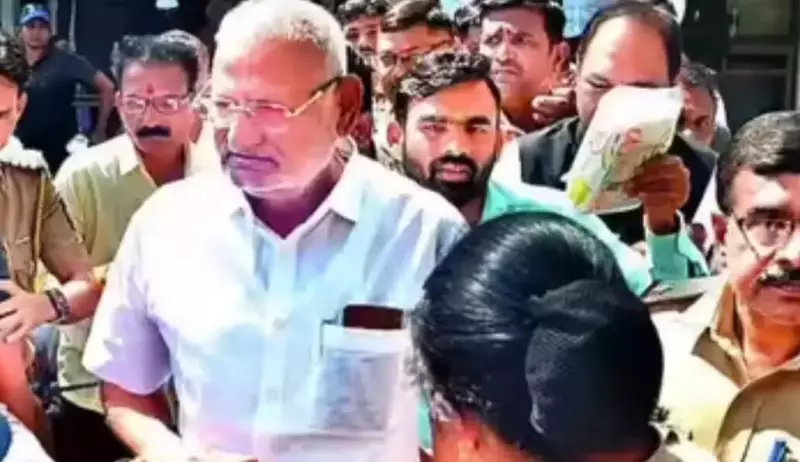
A conviction for cheating in a 1995 housing scheme has placed Maharashtra's Sports Minister and sitting MLA, Manikrao Kokate, in a precarious political and legal position, threatening his continuation in the state cabinet and the legislative assembly.
Court Upholds Conviction in EWS Quota Fraud Case
In a significant legal setback, a Nashik sessions court on Tuesday upheld a trial court's February 20 judgment that convicted and sentenced Kokate, a Nationalist Congress Party (NCP) functionary, and his brother Vijay Kokate to two years of rigorous imprisonment. The case pertains to the brothers fraudulently securing two flats under a 10% Economically Weaker Sections (EWS) quota in 1995 by declaring incomes lower than the eligibility threshold.
The sessions court confirmed the conviction and sentence but set aside the trial court's additional direction to the Maharashtra Housing and Area Development Authority (MHADA) and the deputy collector to cancel the allotment and restore possession of the flats.

Immediate Threat of Disqualification Looms Large
This ruling triggers the imminent risk of "immediate disqualification" for Kokate as the Sinnar (Nashik) MLA under the Representation of the People Act, which mandates disqualification for any sentence of two years or more. Public prosecutor Sudhir Kotwal emphasized that the disqualification is certain unless the minister secures a suspension of his sentence and a stay on his conviction from the Bombay High Court.
"Even with urgent circulation, this may take eight to 10 days. There is no bar on disqualification in the intervening period," Kotwal stated, citing a Supreme Court ruling from 2013 that affirms disqualification is immediate despite a three-month window to appeal.
However, Kokate's lawyer, Avinash Bhide, contested this view, claiming they have a month to secure a stay from the high court. Following the initial trial court ruling, Kokate had obtained bail and a stay on conviction from the sessions court on March 5, but that protection lapsed after the conviction was upheld on appeal.
Prosecution's Case: Falsified Income Affidavits
The prosecution's case rested on the brothers submitting affidavits declaring an annual income of Rs 25,000 each, just below the Rs 30,000 eligibility ceiling for the EWS quota. Prosecutors argued that Kokate failed to disclose his improved financial status, presenting documents that showed he supplied substantial quantities of sugarcane—70 tonnes, 80 tonnes, and 120 tonnes in 1993, 1994, and 1995 respectively—to the Kopargaon cooperative sugar mill, which would have yielded significant earnings.
"Allotment relied on affidavits. When falsity emerged, the onus lay on the deponents to prove otherwise," Kotwal said, adding that this evidence strongly influenced the sessions court's decision to affirm the conviction.
Political Fallout and Opposition's Reaction
The conviction has sparked a political storm, with opposition parties accusing the BJP-headed state government of double standards. They contrasted the swift disqualification of Congress MP Rahul Gandhi after his 2023 defamation conviction with the continued tenure of Kokate.
Maharashtra Congress chief Harshvardhan Sapkal demanded the government immediately dismiss Kokate from the cabinet. NCP state president Sunil Tatkare said the party would decide its next course of action after discussing the ruling with party chief and Deputy Chief Minister Ajit Pawar.
Assembly Speaker Rahul Narwekar stated he had not yet received the court's order. The legal and political future of Manikrao Kokate now hinges on the Bombay High Court's decision on his plea for a stay on the conviction.






