

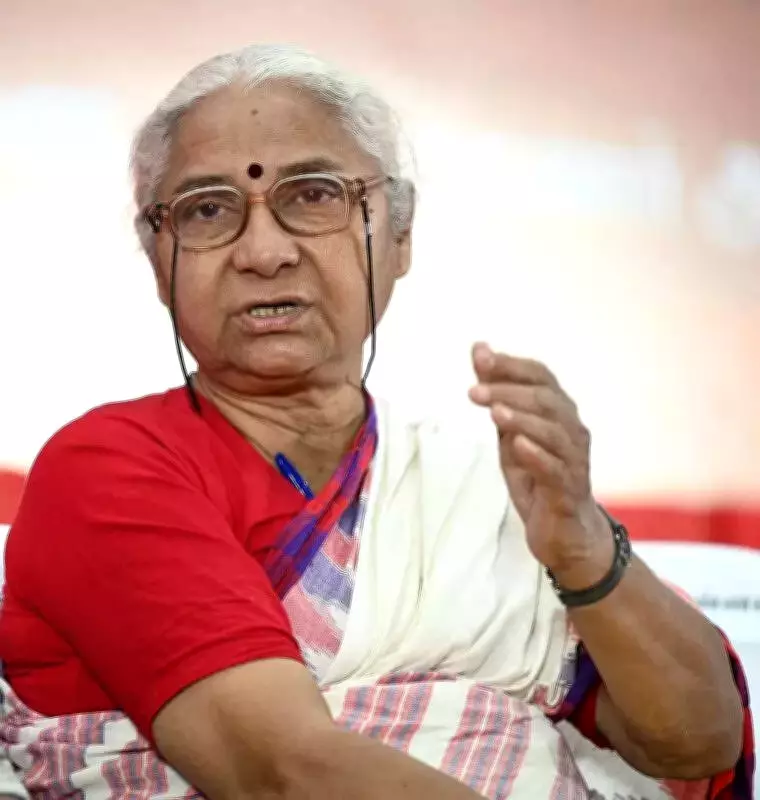
Medha Patkar Calls for Immediate Halt to Musi Riverfront Development Project in Hyderabad
In a significant development concerning urban infrastructure in Telangana, National Alliance of People's Movements (NAPM) founder member Medha Patkar has formally requested Chief Minister A Revanth Reddy to suspend the unveiling of the detailed project report for the Musi riverfront development plan. The activist has demanded a minimum 60-day period to allow for the submission of suggestions and objections from all stakeholders involved in this ambitious project.
Demand for Comprehensive Dialogue and Public Hearings
In her letter to the chief minister dated Wednesday, Medha Patkar emphasized that "a detailed dialogue should take place under your leadership with representatives of the affected communities and Musi Jan Andolan, along with Musi River Development Corporation Limited (MRDCL) and other concerned officials, as well as public hearings in the Musi-affected communities." This call for participatory governance comes amidst growing concerns about the project's implementation framework.
Patkar received an official invitation through email from the MRDCL managing director, titled 'Invitation: Musi River Rejuvenation Phase 1 Unveiling by CM on March 13', which announced the unveiling of detailed project plans. However, she expressed serious reservations about the current approach, stating that "the programme is described as culminating in 'partnership discussions' for 'meaningful engagement with stakeholders and partners'. Regrettably, this framework starkly excludes grassroots and indispensable voices."

Proposal for Independent Review Committee
The veteran social activist has asked the Telangana government to constitute an independent committee for a comprehensive review of the entire Musi riverfront project. This committee would need to address several critical aspects:
- Re-envisioning the project from a river basin approach instead of what she terms a "faulty riverfront approach"
- Addressing alleged violations of the Right to Fair Compensation and Transparency in Land Acquisition, Rehabilitation and Resettlement (RFCTLARR) Act, 2013
- Examining shortcomings in the environmental impact assessment process
- Conducting a holistic evaluation of the socio-ecological consequences of the riverfront development
Patkar stressed that this review must include full participation from the Musi Jan Andolan and affected communities, ensuring that those most impacted by the project have a meaningful voice in the decision-making process.
Immediate Withdrawal of Land Acquisition Notices
In her strongly worded letter, Medha Patkar has called for the immediate withdrawal of all land acquisition notices issued for the Musi project. She specifically highlighted notices invoking the 2017 LARR amendments, arguing that these are "violative of the 2013 Act and is also causing a lot of trauma amongst affected people."
The activist identified several groups that she believes are being excluded from the current stakeholder engagement framework:
- Directly affected families, particularly those who have received land acquisition notices
- Environmental experts and social activists with relevant expertise
- Collectives like the Musi Jan Andolan, representing both upstream and downstream community concerns
Appeal to Governance Principles and International Standards
Despite her strong criticisms of the current process, Medha Patkar expressed optimism about the administration's potential alignment with the ethos of "Praja Palana" (People's Rule). She noted that "your administration's vision and actions must be marked by transparency and accountability."

Patkar also raised an important point regarding international financing, stating that "since some international financial institutions are being approached for this project, they too would endorse these imperatives for socio-ecological compliances, as per their review mechanisms towards equitable development." This suggests that proper stakeholder consultation and environmental safeguards are not just local governance issues but also requirements for potential international funding partners.
The Musi riverfront development project represents a significant urban transformation initiative for Hyderabad, but Medha Patkar's intervention highlights the complex challenges of balancing development goals with community rights, environmental protection, and transparent governance processes. Her letter puts substantial pressure on the Telangana government to reconsider its approach to this high-profile infrastructure project.





