

Mumbai Builder's Office Vandalized in Political Protest Over Caste Abuse Allegations
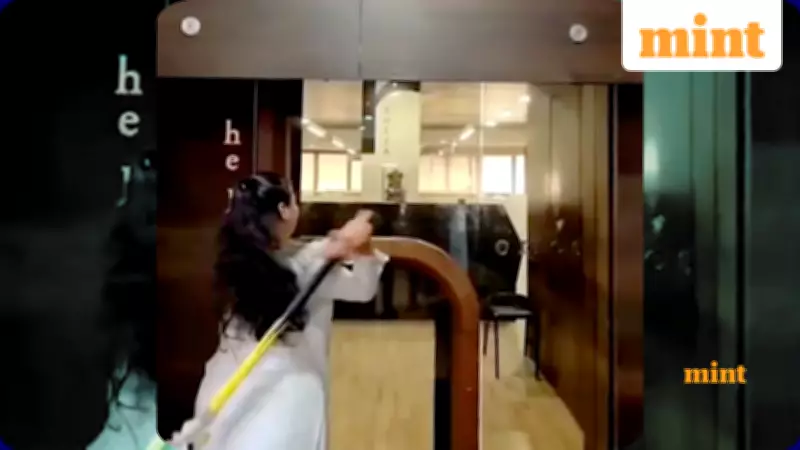
On February 8, workers affiliated with the Vanchit Bahujan Aghadi (VBA) allegedly vandalized the Chembur office of prominent builder Sushil Raheja. The incident, captured on video and widely circulated on social media, quickly became a topic of intense discussion. However, the conversation took an unexpected turn as viewers became fascinated not by the political conflict, but by an unusually resilient glass door that repeatedly withstood attacks.
The Viral Glass Door That Stole the Spotlight
During the alleged vandalism, protesters used hockey sticks and stones to damage property at Raheja's office on Dr. CG Gidwani Road in Chembur. Yet, one particular glass door proved remarkably resistant, failing to break despite multiple direct impacts. This unexpected durability distracted many social media users from the serious allegations behind the protest, with numerous comments praising the apparent quality of the material.
"Good quality glass door," observed one viewer, while another asked, "Anyone knows the glassmaker?" The conversation quickly shifted to speculation about the manufacturer, with some users suggesting it might be a Saint-Gobain product and others humorously proposing the video should be used in advertising campaigns.

One user commented, "I will not be surprised if this was a marketing strategy for the glass company," while another referenced a popular cement advertisement by asking, "Bhai, ye deewaar tootti kyu nahi?" (Why doesn't this wall break?). Technical observers suggested the door was likely made from reinforced or toughened safety glass, specifically designed to absorb heavy impact without shattering into dangerous fragments.
The Serious Allegations Behind the Protest
The vandalism followed serious allegations against builder Sushil Raheja, who has been accused of abusing and assaulting a Marathi employee using casteist remarks. According to the complaint filed at the Govandi police station, the incident occurred during routine work at Raheja's office when complainant Rahul Jadhav made a minor stapling mistake during a meeting.
Jadhav claimed he was verbally abused, physically assaulted, and publicly humiliated in what he described as a caste-based attack. Police registered a case under Section 115 of the Bharatiya Nyaya Sanhita along with relevant provisions of the Scheduled Castes and Scheduled Tribes (Prevention of Atrocities) Act.
VBA party workers initiated the protest after alleging that police had failed to take strict action against Raheja despite the serious charges. According to the VBA's official statement, there was selective police action that allowed Raheja to remain free while party leaders protesting the incident were detained.
Legal Developments and Police Action
Following the incident, Mumbai Police arrested VBA President Snehal Sohani and detained youth leader Sagar Gavai along with others for alleged vandalism at Raheja's office. However, when police produced the accused before the Bhoiwada court, they faced harsh criticism from the judiciary.
The judge termed the arrests illegal and ordered the release of the detained activists, citing legal provisions that require prior notice for arrests in cases involving offences punishable by less than seven years' imprisonment. According to Supreme Court guidelines, arrest is unnecessary when the accused cooperates with investigators in such cases.
The VBA has claimed that police filed false cases under pressure from Raheja and alleged political interference in the investigation. The party maintains that their protest was a legitimate response to what they characterize as inadequate police action in a serious case of alleged caste discrimination and abuse.
While the unusual durability of the glass door created viral social media content, the incident highlights ongoing tensions around caste discrimination allegations, police response protocols, and the intersection of political activism with property damage during protests in urban Maharashtra.






