

Babri Masjid Construction in Murshidabad Faces Delays Amid Political Crossfire
"Rajneeti nie kichu bolbo na," or "we will not speak about politics," has become a common refrain among workers and staff at the Babri Masjid construction site in Beldanga, Murshidabad. This cautious silence reflects the palpable tension surrounding a project that has drawn national and international attention, yet now moves at a sluggish and uneven pace.
Political Storm Surrounds Key Figure Humayun Kabir
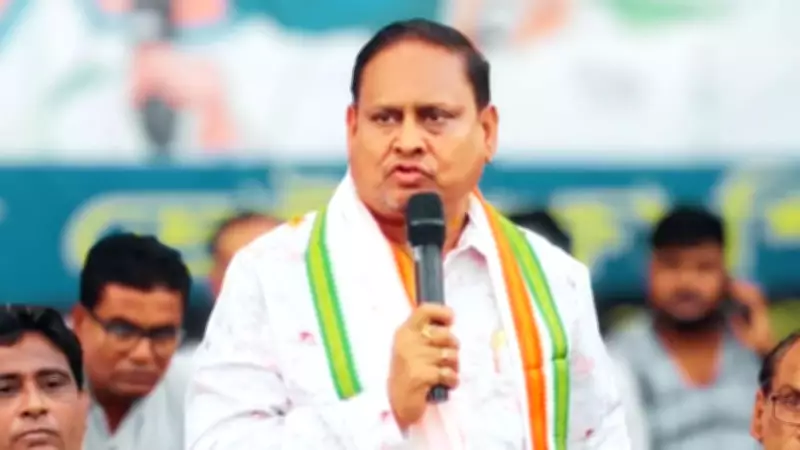
The future of this ambitious mosque project appears intricately linked to the electoral fortunes of former TMC MLA Humayun Kabir, the driving force behind its inception. Kabir's newly formed party, AJUP, has already suffered a setback with AIMIM withdrawing from their alliance, following a leaked tape controversy. A purported clip, released by Trinamool Congress and not independently verified, allegedly shows Kabir discussing a Rs 1,000 crore deal with the BJP and misleading Muslim voters.
Kabir initially dismissed the recording as fake and AI-generated, but later changed his stance, claiming it was real but selectively edited from a longer conversation. This scandal has placed Kabir in a politically precarious position, contesting from two nearby seats, Rejinagar and Naoda, while facing pressure from both major political fronts.

Union Home Minister Amit Shah has declared that no Babri Masjid would be permitted in Bengal if the BJP assumes power, while Trinamool's Abhishek Banerjee has accused Kabir of effectively aiding the BJP in the district. This political squeeze from opposing sides raises critical questions about Kabir's ability to muster the necessary political leverage and financial resources to see the project through to completion.
Symbolic Beginnings and Current Stagnation
The foundation ceremony for the mosque was held on December 6 last year, a date marking the anniversary of the Babri Masjid demolition in Ayodhya, an unmistakable symbolic gesture. Initially, there was visible excitement with reported donations and people arriving with bricks for construction. Kabir had outlined plans for a structure modelled on the original Babri Masjid, accompanied by a larger complex including a hospital and guest house.
However, a current visit to the site reveals a different reality. Bricks remain stacked and unused, with construction activity minimal. Locals attribute the slowdown to the intense heat and the ongoing election season. The project, spread across approximately 11 bighas, relies solely on donations, making its timeline uncertain. Around two dozen workers are present, engaged in building boundary walls, with masonry work ongoing and shuttering having commenced earlier. Workers' shifts vary between nine to twelve hours daily, depending on the payment system.
Some associated with the site estimate a three-year completion timeline for the mosque, while others are less specific. Nothing at the location suggests imminent finishing, with the sombre mood among workers contrasting sharply with the initial enthusiasm.
Commerce Outpaces Construction at the Site
Interestingly, commerce has advanced more rapidly than the physical construction. A small "Babri economy" has emerged around the site, with white mugs and T-shirts sourced from Kolkata and printed locally with Babri branding. These modestly priced items serve as tokens for visitors, though local shopkeepers note that footfall has decreased compared to earlier periods.
The existence of this merchandise economy is telling, indicating that the market has already recognized the emotional and symbolic value of the project, even before the mosque itself materializes. This commercial activity underscores the deep cultural and political resonance the Babri Masjid name carries in the region.
Kabir's Political Journey and Project's Uncertain Fate
Humayun Kabir is no marginal figure in Murshidabad's political landscape. His career has traversed multiple parties: beginning with the Congress, moving to Trinamool, facing expulsion, joining the BJP, losing the 2019 Lok Sabha election from Murshidabad, returning to Trinamool, and being suspended again in December 2025 after championing the Babri Masjid project. His subsequent launch of AJUP adds another layer to this complex political narrative.

Formal construction began in February, but the project's dependence on donations and the prevailing political climate cast a shadow over its progress. In the evenings, people continue to visit the site—some out of curiosity, others out of sympathy, and many perhaps to witness a location whose significance extends far beyond its physical boundaries.
Awaiting the Verdict of the Ballot Box
As the election results approach, Beldanga awaits clarity on what this moment truly represents: a genuine project of faith, an elaborate piece of political theatre, or a high-stakes gamble that may have outgrown its originator. For now, the bricks remain stacked, the work proceeds slowly, and the silence enveloping the site speaks volumes more than any surrounding slogans.
In Murshidabad, the Babri Masjid remains under construction, but the intense politics swirling around it have already been fully built and are actively shaping its uncertain future.





