

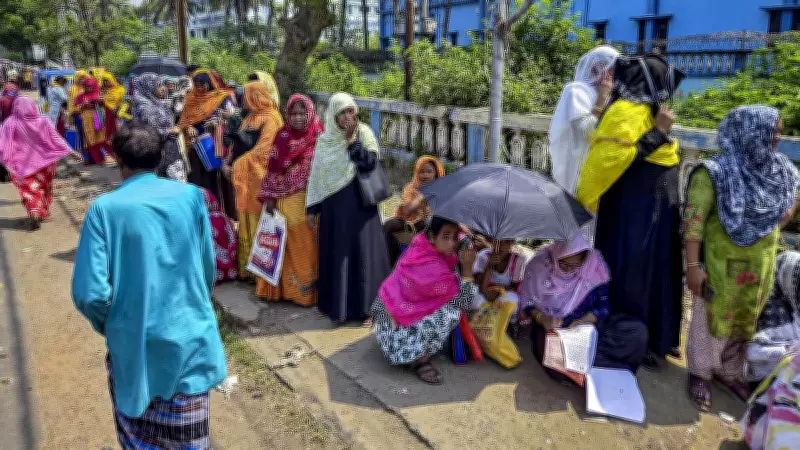
Border Villages in Murshidabad Caught in Whirlpool of Infiltration Politics and Identity Fears
In the remote villages of West Bengal's Murshidabad district, situated along the porous border with Bangladesh, residents are finding themselves at the center of a heated political storm. The issue of alleged infiltration has become a flashpoint, intertwining with deep-seated identity fears and transforming daily life into a complex web of suspicion and uncertainty.
The Geographic and Demographic Context
Murshidabad, a district with a rich historical legacy, shares a long and often unguarded border with Bangladesh. This geographical proximity has made it a focal point for discussions on migration and security. The border villages, home to a mix of communities, are characterized by their reliance on cross-border trade and familial ties that span the international divide. However, this interconnectedness is now being scrutinized under the lens of national security and political rhetoric.
Political Dynamics and Allegations
Local and national political parties have seized upon the infiltration narrative, using it as a tool to mobilize support and cast aspersions on opponents. Allegations of illegal immigration are frequently leveled, with claims that undocumented individuals from Bangladesh are settling in these villages, altering demographic balances and straining resources. This has led to:

- Increased surveillance by border security forces, affecting the movement of legitimate residents.
- Political rallies that amplify fears and polarize communities along ethnic and religious lines.
- Accusations and counter-accusations between ruling and opposition parties, further muddying the waters.
The discourse often overlooks the humanitarian aspects, reducing complex migration patterns to simplistic narratives of threat and illegality.
Identity Fears Among Residents
For the villagers, the political noise translates into tangible anxieties about their own identities and futures. Many families have lived in the region for generations, with roots that predate the partition of India and Bangladesh. The constant labeling of certain communities as "infiltrators" has sown seeds of doubt and discrimination. Key concerns include:
- Documentation issues: Lack of proper papers makes residents vulnerable to harassment and statelessness.
- Social ostracization: Fear of being branded as outsiders affects social cohesion and access to services.
- Economic instability: Restrictions on cross-border activities impact livelihoods dependent on trade.
These fears are compounded by a sense of neglect from authorities, who are often seen as more focused on political gains than on addressing grassroots problems.
Impact on Daily Life and Community Relations
The infiltration politics have permeated every aspect of life in these border villages. Trust between neighbors has eroded, with suspicion replacing camaraderie. Community events and religious gatherings are sometimes viewed through a political prism, leading to tensions. Moreover, the constant media spotlight and political grandstanding have created an atmosphere of perpetual unease, where residents feel caught between their heritage and the accusations hurled at them.
Local leaders and activists report a rise in cases of identity-based violence and discrimination, though many go unreported due to fear of reprisal. The youth, in particular, express frustration over being stereotyped and limited in their opportunities due to the prevailing narrative.
Looking Ahead: Challenges and Possible Resolutions
Addressing the situation in Murshidabad's border villages requires a multifaceted approach that goes beyond political point-scoring. Experts suggest:

- Enhanced dialogue: Involving community representatives in discussions to bridge gaps and build trust.
- Streamlined documentation: Implementing fair and transparent processes for residency and citizenship proofs.
- Economic development: Investing in local infrastructure and job creation to reduce dependence on cross-border activities.
- Security with sensitivity: Balancing border control measures with respect for human rights and community needs.
Ultimately, the resolution lies in recognizing the humanity of the residents and moving away from divisive politics that exploit fears for electoral gains. As Murshidabad continues to navigate these turbulent waters, the hope is for a future where identity is celebrated rather than weaponized.





