

MVA Confronts Crucial Unity Challenge in Upcoming Elections
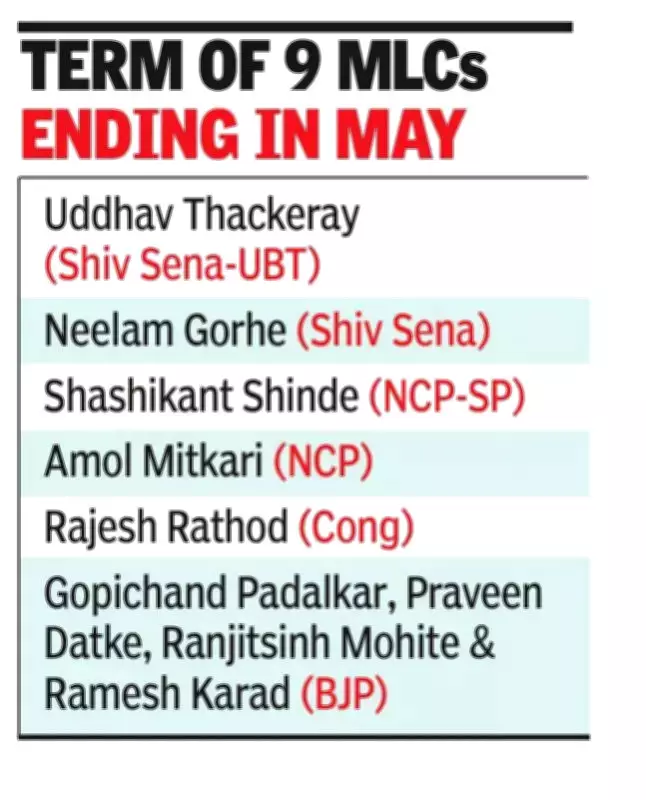
The Maha Vikas Aghadi (MVA) alliance in Maharashtra is facing a critical test of unity as it prepares for two significant electoral battles. The coalition must not only work together to secure the election of NCP (SP) chief Sharad Pawar to the Rajya Sabha but also ensure the re-election of Shiv Sena (UBT) president Uddhav Thackeray to the legislative council. Thackeray's current term, along with those of eight other members, is set to expire in May, creating an urgent political imperative for the alliance.
Numerical Disadvantage and Strategic Coordination
With only 20 MLAs, the Shiv Sena (UBT) lacks the individual strength to guarantee Thackeray's re-election, highlighting the necessity for cross-party support within the MVA. Sanjay Raut, a prominent Sena (UBT) MP, has confirmed that party functionaries have actively urged Thackeray to seek another term. Raut emphasized that mutual assistance among MVA constituents will be essential for success in both the legislative council and Rajya Sabha polls, underscoring the alliance's interdependent political dynamics.
Political Landscape and Electoral Projections
Despite these efforts, political observers anticipate a dominant performance by the ruling Mahayuti coalition in the legislative council elections, potentially limiting the MVA to just one seat. This prediction is grounded in the current assembly composition: Mahayuti commands 235 MLAs, while the MVA holds 48, including support from the CPM. Additionally, three MLAs represent other parties, and two seats remain vacant. An official noted that if by-elections for these vacant seats are conducted before the council election, all 288 MLAs could participate, potentially influencing the outcome.

Historical context adds depth to this scenario. In 2020, nine members—five from the MVA and four from the BJP—were elected unopposed to the council, reflecting past political equilibriums that have since shifted.
Rajya Sabha Elections and Alliance Dilemmas
The Rajya Sabha polls for seven seats are expected to precede the legislative council election, further complicating the MVA's strategic calculations. Based on current numbers, the alliance is projected to secure only one Rajya Sabha seat. This limitation poses a significant challenge: if that seat is allocated to one party, another might receive a council seat, leaving the third alliance partner without representation. Political observers suggest that the MVA will need to devise a careful formula to balance these competing interests and maintain coalition harmony.
The upcoming elections thus represent not just an electoral contest but a pivotal moment for the MVA's cohesion and future political trajectory in Maharashtra.






