

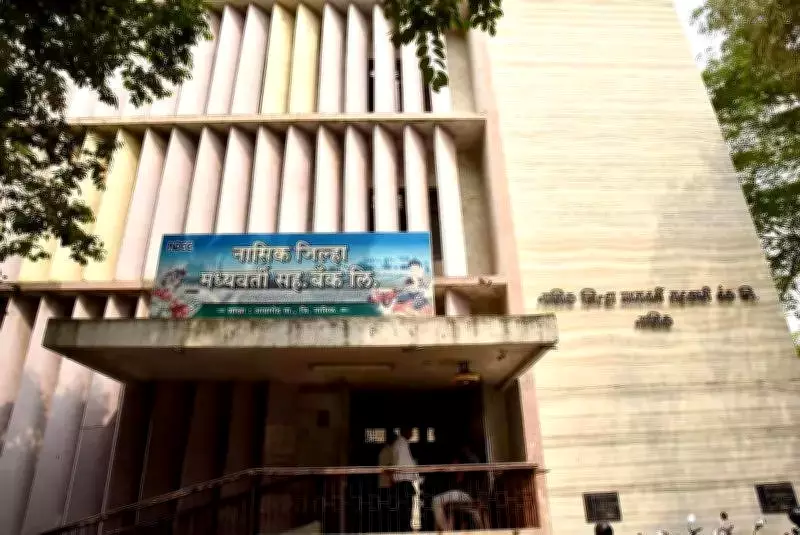
Nashik Bank Poised for Rs 240 Crore Boost from State's Farm Loan Waiver Proposal
The Maharashtra state government's recent budget proposal to waive agricultural loans of up to Rs 2 lakh per eligible farmer could result in a significant financial injection of approximately Rs 240 crore for the Nashik District Central Cooperative (NDCC) Bank. However, the final amount is contingent upon the specific terms and conditions that the government will ultimately announce.
Bank Details and Account Statistics
According to Ratnakar Hiray, the general manager of NDCC Bank, the institution currently holds 32,911 loan accounts with outstanding amounts, including interest, that do not exceed Rs 2 lakh each. Hiray noted that some farmers maintain multiple accounts, and these figures do not account for factors such as income tax status or previous beneficiaries of government loan waivers. The total outstanding amount across these accounts is precisely Rs 240 crore.
Historical Context of Loan Waiver Schemes
This new proposal follows earlier state initiatives aimed at alleviating farmer debt. In June 2017, the Chhatrapati Shivaji Maharaj Shetkari Sanman Yojana provided waivers for loans up to Rs 1.5 lakh taken between 2001 and March 2016. Subsequently, the Mahatma Phule Shetkari Karjmukti Yojana in December 2019 covered outstanding loans up to Rs 2 lakh that were taken between April 1, 2015, and March 31, 2019, and were overdue as of September 2019.

Uncertainties and Bank's Financial Challenges
Hiray emphasized that the exact impact of the new waiver will depend on the conditions set by the government, with figures likely to be revised once these details are disclosed. The NDCC Bank, which is currently cash-strapped and struggling to retain its banking licence, has already received Rs 672 crore in government assistance. It has submitted a revival plan focused on recovering dues from defaulters.
More than 6,800 defaulters, all of whom are farmers, collectively owe the bank Rs 1,900 crore. In response, the bank has introduced one of its most attractive one-time settlement (OTS) schemes, available only until the end of the current financial year. After this period, the bank plans to resume stricter loan recovery measures to improve its financial stability.






