

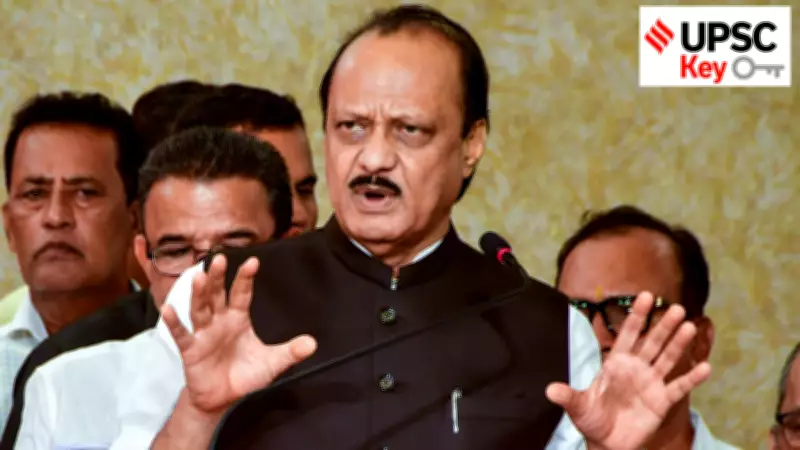
NCP Factions See Fortunes Rise in Rural Maharashtra After Ajit Pawar's Death
The tragic death of Maharashtra Deputy Chief Minister Ajit Pawar in a plane crash on January 28, 2026, has cast a long shadow over state politics. However, a strategic move by the two factions of the Nationalist Congress Party (NCP) to contest the Zilla Parishad elections together has yielded significant political dividends, particularly in rural areas.
Common Symbol and Seat Sharing Strategy Proves Effective
The decision to use a common symbol, the Clock, in most seats and implement a tacit seat-sharing arrangement across several districts has revitalized the NCP's performance. This approach, strongly advocated by Ajit Pawar before his untimely demise, aimed to consolidate votes and prevent split voting that had previously weakened both factions.
In Pune district, the Pawar family's home turf, the NCP emerged as the single largest party with an absolute majority in the 73-member Zilla Parishad, securing over 40 seats. Both factions contested on the common Clock symbol, with only a few friendly contests in the Ambegaon region. This move effectively consolidated support and delivered a clear majority.

Success Across Western Maharashtra
The strategy extended beyond Pune, showing positive results in other key districts of western Maharashtra, a traditional NCP stronghold:
- Kolhapur: The NCP became the single largest party in the 68-member Zilla Parishad, winning 20 seats. It is set to install its president, with the Mahayuti alliance backing an NCP leader.
- Sangli: Although no formal alliance was announced, the two NCP factions contested on mutually agreed seats. The NCP(SP) emerged as the largest party with 19 seats and is likely to install its Zilla Parishad president with Congress support.
- Satara: The NCP maintained an understanding with allies, winning 18 seats and emerging as the second largest party in the Zilla Parishad.
These results underscore the effectiveness of coordination and common symbols in rural local body elections, a vision championed by Ajit Pawar to strengthen the party's position.
Merger Talks and Political Implications
The rural local body arrangement was viewed as a preliminary step toward a merger of the two NCP factions led by Ajit Pawar and his uncle, Sharad Pawar. NCP (SP) chief Sharad Pawar indicated that a formal announcement on the merger was scheduled for February 12, following the declaration of the Zilla Parishad election results.
Sources reveal that Ajit Pawar had been a key proponent of both the alliance and the merger, arguing that the split in votes was diminishing the political space for both factions. The Zilla Parishad results in western Maharashtra appear to validate this perspective, showing that unified efforts can lead to electoral success.
An NCP SP MLA commented, "The decision was taken by the senior party leadership to contest together or to have understanding while seat sharing. It has helped the party considerably. We hope that the results will now be analysed in detail by our leaders."
This development marks a significant shift in Maharashtra's political landscape, as the NCP factions leverage cooperation to regain ground in rural areas, setting the stage for potential reunification and future electoral strategies.






