Nitish Kumar Files Rajya Sabha Nomination, Ending Historic Bihar CM Tenure
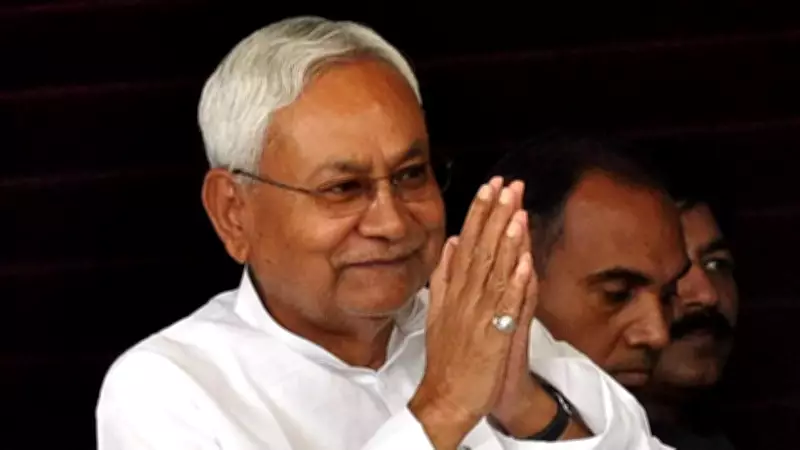
In a stunning political development, Bihar Chief Minister Nitish Kumar submitted his nomination for the Rajya Sabha on Thursday in Patna. This abrupt decision has triggered a significant realignment in Bihar's political landscape, concluding the tenure of the state's longest-serving chief minister, who held power for more than two decades.
Sudden Move Sparks Disbelief and Political Upheaval
Nitish Kumar, aged 75, announced his intention to contest the Rajya Sabha elections via a social media post. He wrote, "I seek to become a member of the Rajya Sabha in the elections being held this time. I want to assure you with complete honesty that my relationship with you will continue in the future as well, and my resolve to work together with you to build a developed Bihar will remain steadfast. The new government that will be formed will have my full cooperation and guidance."
For nearly two decades, Kumar governed Bihar through complex coalitions, never leading a party with an outright majority in the state assembly. His party, the Janata Dal (United), consistently relied on alliances with larger partners, showcasing his skills as a master negotiator. Power in Bihar under his rule depended not just on electoral strength but on forging coalitions across caste and ideological divides.
Internal and External Reactions to the Transition
Within the JD(U), the reaction has been one of shock and disbelief. Senior party leader and Bihar's Social Welfare Minister Madan Sahni publicly questioned whether the move reflected Kumar's personal choice, stating, "We are stunned to see whatever is happening. It is hard to believe that this could have been Nitish Kumar’s own decision." Sahni noted that Kumar had long expressed a desire to serve in all three legislative arenas—state assembly, Lok Sabha, and Rajya Sabha—framing this as fulfilling that ambition.
Outside the party office in Patna, JD(U) workers gathered in anger, with police deployed to prevent marches toward the chief minister’s residence. Many supporters refused to accept that their leader of decades would step down so abruptly.
Opposition leaders viewed the moment differently. Tejashwi Yadav, leader of the opposition and son of Lalu Prasad Yadav, argued that Kumar's predicament resulted from his own political decisions, saying, "The BJP has done a Maharashtra in Bihar. But Nitish Kumar has only himself to blame. While in alliance, we supported him as chief minister despite having more MLAs, but he chose to walk away on two occasions."
Political Journey: From Engineering to Chief Ministership
Nitish Kumar was born on March 1, 1951, in Bakhtiarpur, Patna district. His father, Ram Lakhan Singh, was an Ayurvedic practitioner and freedom fighter associated with the Congress during the independence movement. Kumar studied electrical engineering at the Bihar College of Engineering (now NIT Patna) and briefly worked at the Bihar State Electricity Board before entering politics.
His political identity emerged from the socialist movement led by Jayaprakash Narayan during the anti-Emergency agitation. Alongside Lalu Prasad Yadav, he rose within the same political tradition, both belonging to backward caste communities empowered by the Mandal revolution of the 1990s. However, their styles diverged sharply: Lalu thrived on mass mobilization and confrontational politics, while Kumar preferred administrative detail and strategic positioning.
In 1995, Kumar broke away from the Janata Dal, marking the start of a long rivalry with Lalu Prasad Yadav. He experimented with alliances, including with the CPI(ML) Liberation, before concluding that defeating Lalu required a broader coalition. This led him to the Bharatiya Janata Party (BJP) in 1996.
Formation of JD(U) and Record-Setting Tenure
One of Kumar's most consequential moves was persuading socialist leader Sharad Yadav to unite their factions, creating the Janata Dal (United). The JD(U) became the central pillar of the BJP-led National Democratic Alliance in Bihar, with the BJP allowing JD(U) to contest more seats in the 2005 assembly elections. This strategy proved decisive, delivering a comfortable NDA victory and making Kumar chief minister in November 2005.
Over his career, Kumar became Bihar's longest-serving chief minister, holding office for over two decades across multiple terms. He first assumed office briefly in March 2000, but his enduring tenure began in November 2005. Last November, he took oath as chief minister for a record-extending tenth time.
Flip-Flops and Governance Legacy
Kumar's shifting alliances earned him the nickname "Paltu Ram", reflecting his controversial political maneuvers. He first broke with the BJP in 2013 over Narendra Modi's rise, rejoined in 2017, broke away again in 2022, and returned in 2024. Despite this, he built a reputation as 'Sushasan Babu' (man of good governance), focusing on law and order, infrastructure, and social welfare.
His administration launched initiatives like the Mukhyamantri Balika Cycle Yojana, which provided bicycles to schoolgirls to boost education, and implemented liquor bans that rallied women voters. These efforts helped change Bihar's governance narrative after years of turmoil.
Unique Political Strategies and Future Implications
A distinctive aspect of Kumar's career was his repeated use of the Legislative Council route to remain chief minister, often serving as a Member of the Legislative Council (MLC) rather than contesting assembly elections directly. Supporters viewed this as focusing on statewide governance, while critics saw it as avoiding direct electoral contests.
For years, Kumar criticized dynasty politics, but as his son Nishant Kumar prepares to enter public life, this position may face scrutiny. Regardless, his ability to remain central to Bihar's politics for over three decades remains undisputed.
This Rajya Sabha nomination marks a pivotal moment, potentially reshaping Bihar's political future and ending an era defined by negotiation, governance, and frequent realignments.